
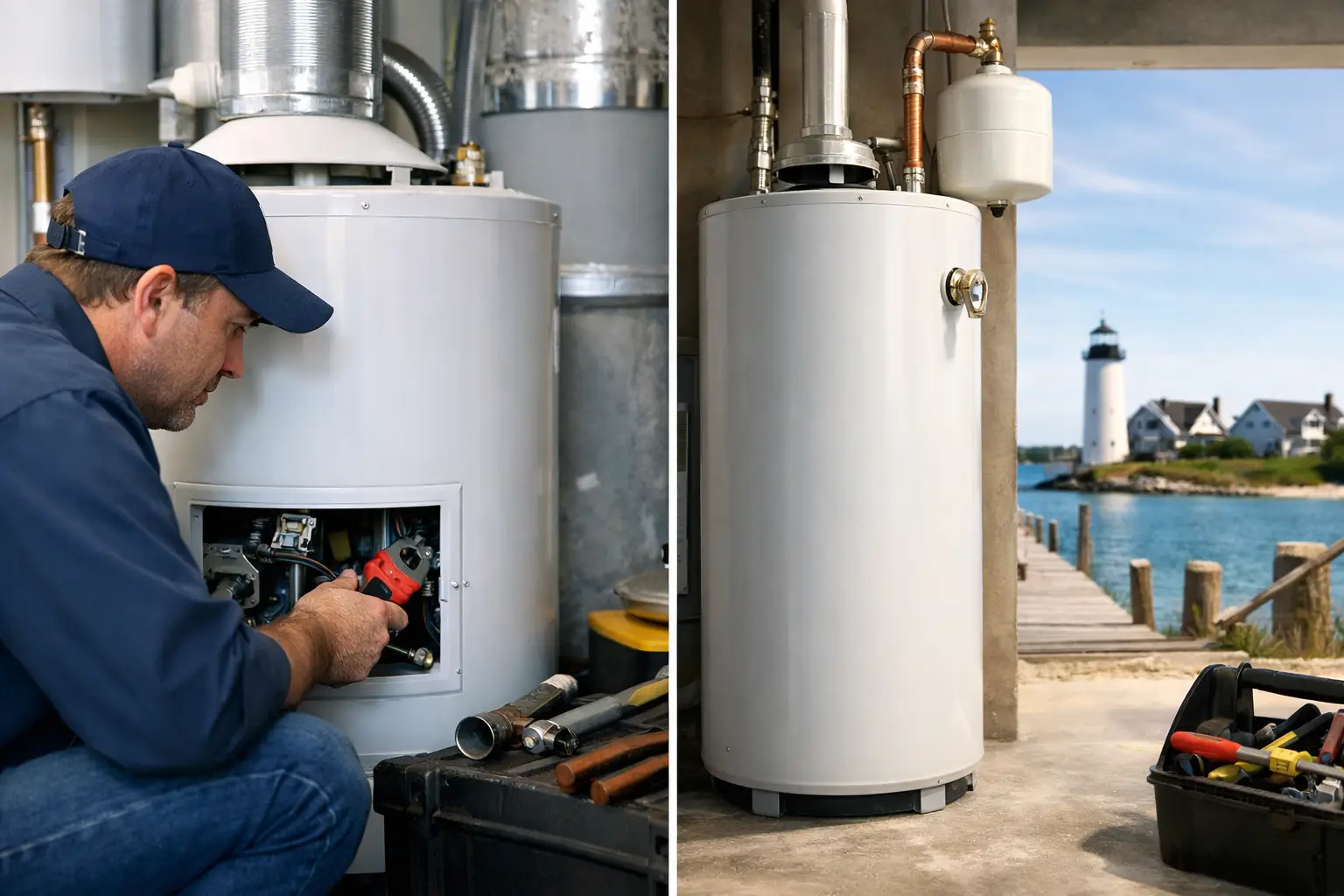
A cold shower is bad enough. Water pooling around the water heater, rusty water from the tap, or a unit that quits during a busy rental turnover can create a much bigger problem. If you need water heater Hyannis MA service, the first decision is usually whether a repair will safely buy you time or whether replacement is the smarter investment.
The right answer depends on the unit’s age, condition, fuel type, hot-water demand, and the plumbing layout of the property. A licensed technician can assess those details quickly, but knowing the warning signs helps you make a confident call before a small issue becomes water damage or a complete loss of hot water.
When a Water Heater Needs Immediate Attention
Some water heater problems should not wait for a convenient appointment. Turn off the water supply to the unit if you see active leaking from the tank or its connections. If you smell gas near a gas-fired water heater, leave the area, avoid switches or open flames, and contact your gas utility or emergency service provider right away.
For most other problems, a prompt service call can prevent a longer disruption. Common signs include water that never gets fully hot, hot water that runs out much faster than it used to, banging or popping sounds from the tank, discolored water, or moisture around the base of the unit.
Not every leak means the tank has failed. A loose fitting, failing temperature and pressure relief valve, worn drain valve, or condensation issue may be repairable. Water coming through the body of a corroded tank is different. Once the tank itself is leaking, replacement is generally the only dependable solution.
Repair or Replace Your Water Heater in Hyannis, MA?
A repair often makes sense when the water heater is relatively young and the issue is limited to a serviceable part. Thermostats, heating elements, igniters, thermocouples, gas control components, pressure relief valves, and anode rods can all fail without requiring a new tank. Electric units may need an element or thermostat replacement, while gas units may have burner, venting, or ignition-related issues.
Replacement becomes more practical when a standard tank water heater is nearing the end of its expected service life. Many conventional units last roughly eight to 12 years, though maintenance, water quality, installation quality, and usage all affect that range. A tank that is old, heavily rusted, repeatedly repaired, or no longer sized correctly for the home can cost more to keep than it is worth.
For a Hyannis homeowner, timing matters. Replacing a marginal unit before it fails can help avoid an emergency installation, potential water damage, and the scramble to restore hot water for family, guests, or tenants. Property managers may also find planned replacement easier to schedule around occupancy than an after-hours failure.
Choosing the Right Type of Water Heater
A new water heater should fit the property, not just occupy the same spot as the old one. Household size, number of bathrooms, laundry habits, available fuel, electrical capacity, venting, and installation space all play a part.
Conventional tank water heaters
A traditional storage-tank water heater remains a practical choice for many homes. It stores a set amount of heated water, usually 40 to 80 gallons for residential applications, and provides a familiar, straightforward installation. Upfront costs are often lower than higher-efficiency alternatives, especially when replacing a similar existing unit.
The trade-off is standby heat loss and limited stored hot water. A tank that is too small can leave a household waiting between showers. A tank that is oversized can add unnecessary equipment and operating cost. Proper sizing matters more than simply choosing the largest option.
Tankless water heaters
Tankless systems heat water as it flows through the unit. They can provide a long supply of hot water when properly sized, take up less wall space than a large tank, and may offer energy savings for the right household.
They are not automatically the best fit for every property. Tankless installation may require upgraded gas piping, new venting, electrical work, water-treatment considerations, or changes to the existing plumbing. Their capacity is based on flow rate and incoming water temperature, so a professional calculation is essential. Running several showers, appliances, and fixtures at once can exceed an undersized unit’s output.
Heat pump water heaters
Heat pump water heaters use electricity to move heat from surrounding air into the tank rather than generating all heat directly through electric resistance. They can be an efficient option for homeowners looking to reduce energy use and may qualify for available incentives or Mass Save rebates, depending on the equipment and current program requirements.
The installation location is especially important. These units need adequate surrounding air and can cool and dehumidify the space where they operate. A basement, utility room, or garage may work well, while a very small enclosed space may not. They also have a higher initial cost than many standard electric units, so the value depends on energy savings, available rebates, and long-term plans for the home.
Local Conditions That Affect Water Heater Decisions
Cape Cod properties have different needs than a year-round home with predictable daily use. Seasonal residences, vacation rentals, and second homes may sit empty for extended periods, making water heater maintenance and winterization more important. A small leak in an unoccupied property can become a major cleanup before anyone notices it.
If a home will be vacant during freezing weather, the water heater and connected plumbing should be protected as part of a complete winterization plan. Simply turning down the thermostat may not protect exposed pipes or prevent damage during a prolonged outage. Property owners should also know where the water shutoff is located and make sure it is accessible.
Older homes can present another consideration: existing venting, gas lines, electrical panels, and tight mechanical spaces may limit equipment choices. That does not rule out an upgrade, but it means the installation should be evaluated as a complete system rather than priced as a simple swap.
What a Professional Installation Should Include
Water heater replacement involves more than setting a new unit in place. The installation should account for safe venting on gas equipment, correct gas connections, electrical requirements, code-compliant relief-valve piping, expansion control where required, drainage, shutoff access, and proper startup testing.
For tankless and heat pump models, sizing and site preparation are just as important as the equipment itself. A high-efficiency unit installed without the necessary gas capacity, condensate management, ventilation, or electrical support will not deliver the performance a homeowner expects.
Durfee Plumbing & Heating LLC provides water heater repair and installation with licensed technicians, stocked trucks, and 24/7 availability for urgent plumbing needs. Asking about the equipment warranty, labor coverage, permit requirements, and financing options before work begins can also make a larger replacement project easier to plan.
Simple Steps That Help a Water Heater Last
Regular maintenance can reduce sediment buildup, catch leaks early, and support safer operation. The exact schedule depends on the equipment type and water conditions, but a professional inspection is particularly worthwhile for aging units and properties with high hot-water use.
Homeowners can also periodically look for rust, dampness, unusual sounds, and changes in water temperature. Keep the area around the unit clear, avoid storing combustible items near gas equipment, and do not cap or block the temperature and pressure relief valve discharge pipe. If the relief valve is releasing water, it needs professional attention rather than a quick workaround.
Do not wait for the tank to fail on the busiest day of the year. If your water heater is aging, noisy, inconsistent, or showing signs of leaking, schedule an evaluation while you still have time to choose the repair or replacement that best fits your home or property.



