
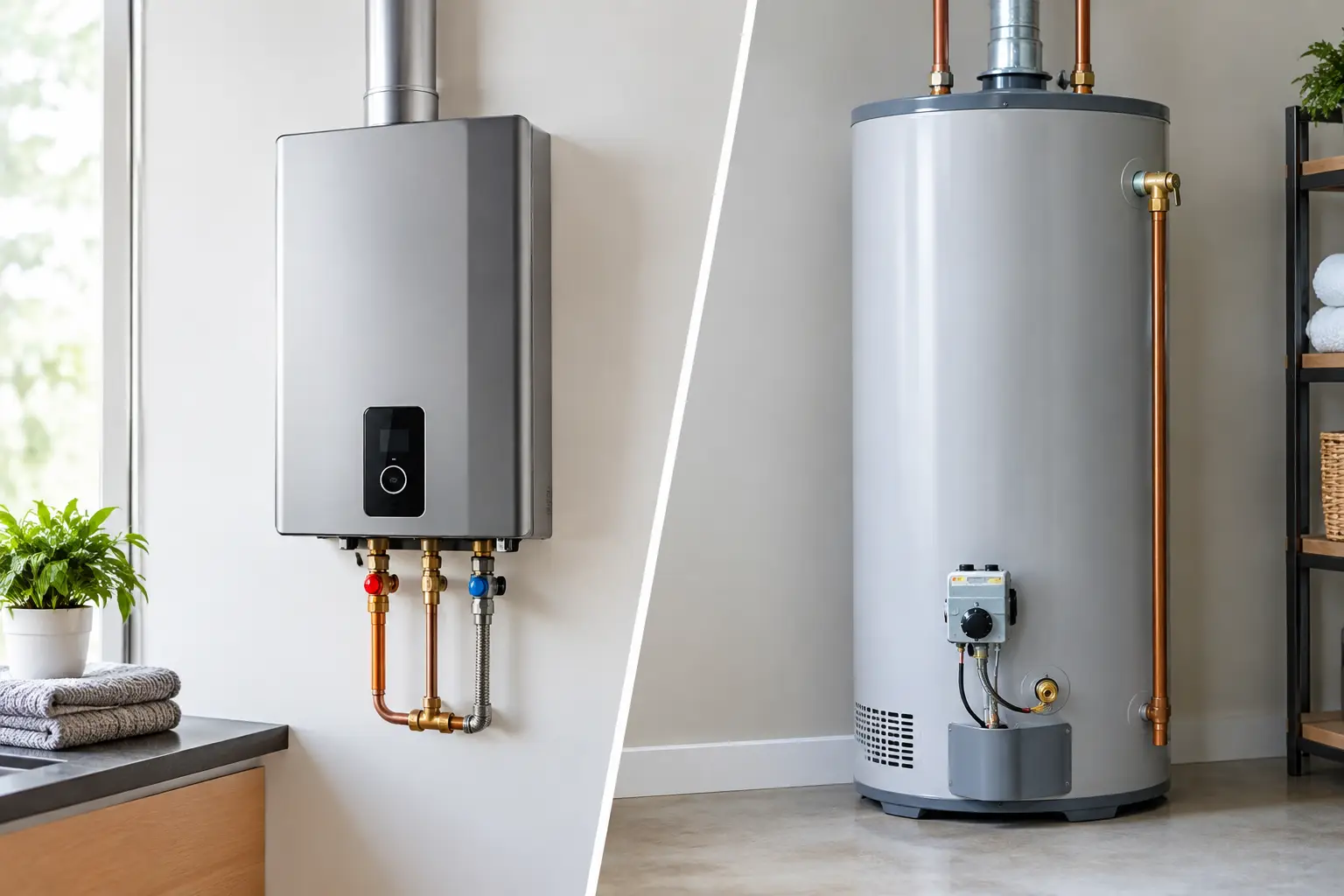
A water heater usually gets attention at the worst possible time: when the shower turns cold, the utility-room floor is wet, or a rusted tank starts showing its age. When replacement is on the table, tankless versus storage water heaters is not simply a question of newer versus older technology. The right choice depends on how your property uses hot water, what fuel and venting are available, and what will hold up reliably through Cape Cod winters.
How Storage Water Heaters Work
A conventional storage water heater keeps a supply of hot water in an insulated tank, commonly 40 to 80 gallons in a home. Gas burners or electric heating elements bring the water to the set temperature, and the unit cycles periodically to replace heat lost while the water sits in the tank.
The biggest advantage is straightforward, dependable performance. A properly sized tank can handle a high-demand period, such as several showers in a row, laundry, and dishwashing, because it has a reserve of heated water ready to use. Installation is often less complicated when replacing a similar existing unit, which can help control upfront cost.
The trade-off is standby heat loss. Even with modern insulation, the tank uses energy to maintain water temperature when no one is using hot water. Tanks also occupy more floor space and have a finite supply. Once that supply is depleted, occupants may need to wait for the water to reheat.
For many Cape Cod households, especially homes with predictable routines and moderate hot-water use, a storage tank remains a practical, cost-effective choice. It can also be the better fit when a property lacks the gas capacity, electrical service, or venting changes a tankless installation may require.
How Tankless Water Heaters Work
Tankless water heaters heat water only when a fixture calls for it. Cold water travels through a heat exchanger, where a gas burner or electric element raises its temperature before it reaches the faucet, shower, or appliance. There is no large tank holding a reserve of hot water.
Because they avoid most standby loss and take up far less room, tankless units are appealing for compact mechanical rooms, condos, and homes where efficiency matters. A correctly sized unit can provide hot water for a long time without running out in the way a tank can.
That does not mean tankless systems produce unlimited hot water under every condition. They have a maximum flow rate. If multiple showers, a washing machine, and a dishwasher all run at once, demand can exceed what one unit can heat to the desired temperature. The colder the incoming water, the harder the unit has to work.
That last point matters in Massachusetts. During colder months, incoming groundwater can be significantly colder than it is in summer. A tankless water heater that feels generous in July may have a lower available flow rate in January. Proper sizing is not optional.
Tankless Versus Storage Water Heaters: Key Differences
The best comparison starts with your daily hot-water demand rather than a product label or a price tag.
Hot-water capacity
Storage water heaters are rated by tank size and first-hour rating, which estimates how much hot water the unit can deliver during a busy first hour. Tankless models are rated by flow rate at a given temperature rise. A licensed technician should calculate demand based on the number of bathrooms, fixtures, appliances, occupants, and expected simultaneous use.
A family with two teenagers taking back-to-back showers may do well with a properly sized high-recovery tank or a tankless unit designed for that demand. A large home with multiple bathrooms may need a high-capacity tankless model, two tankless units, or a carefully selected storage system. There is no one-size-fits-all answer.
Upfront installation cost
A conventional tank replacement is often less expensive because the plumbing, venting, gas line, or electrical connections may already be in place. A tankless installation can cost more, particularly if it requires a larger gas line, upgraded venting, condensate drainage, electrical work, or a new location.
That investment can make sense over time, but it should be evaluated honestly. The most efficient equipment is not automatically the best value if it is oversized for the property or requires extensive changes to install correctly. Financing can make a larger upgrade more manageable, but it does not eliminate the need to choose the right system.
Energy use and operating cost
Tankless units generally use less energy when hot-water use is moderate because they do not continually reheat stored water. High-efficiency gas tankless models can be especially attractive for households that want to reduce standby losses.
However, actual savings depend on fuel prices, hot-water habits, maintenance, and equipment sizing. A home with very high, concentrated demand may see less dramatic savings than a smaller household with staggered hot-water use. Electric tankless units deserve extra scrutiny because their electrical demand can be substantial and may require a service-panel upgrade.
Lifespan and maintenance
Storage tanks often last roughly 8 to 12 years, although water quality, maintenance, and installation conditions make a difference. The tank itself is vulnerable to corrosion over time. Replacing the anode rod when appropriate and addressing small leaks early can help protect the investment.
A tankless water heater can last longer, often 15 years or more with regular service, because there is no tank holding water around the clock. But tankless equipment has its own maintenance needs. Mineral buildup can restrict the heat exchanger and reduce performance, so periodic flushing is particularly important in areas with mineral-heavy water.
Both options benefit from professional installation, correct pressure settings, proper venting, and routine inspection. Skipping maintenance may save money briefly, but it can shorten equipment life and create avoidable repair calls later.
Consider the Property, Not Just the Household
Cape Cod properties present a few considerations that do not always show up in a standard product brochure. Seasonal homes may sit unused for long periods, and winterization is critical when a property is vacant. A water heater replacement is a good time to review shutoffs, drainage, pipe protection, and the overall condition of the mechanical space.
Older homes may have limited clearance, aging vent systems, or undersized gas piping. Commercial properties and rental units can have sharply different usage patterns than a single-family home. A restaurant, salon, multi-unit building, or vacation rental may need a system designed around peak demand, recovery time, and downtime risk rather than average daily use.
Fuel availability matters too. Natural gas, propane, electric service, and existing venting all affect the options. Heat pump water heaters can also be worth considering in the right location, especially where there is enough surrounding air volume and a homeowner wants to prioritize electric efficiency. They are a separate category from both standard electric tanks and tankless models, so they should be evaluated on their own merits.
When a Storage Water Heater Is Usually the Better Fit
A storage water heater is often the sensible choice when the existing setup is working well, the budget is tight, and the household has predictable demand. It is also a strong option when a property needs a straightforward replacement quickly or when the upgrades needed for tankless equipment would be disproportionate to the expected benefit.
Modern high-efficiency tank models can provide dependable service with better insulation and recovery performance than older equipment. For homeowners who want familiar operation and a lower initial cost, that reliability has real value.
When a Tankless Water Heater Is Usually the Better Fit
Tankless equipment is often a strong match for homeowners who want to free up space, reduce standby energy use, and have long-duration hot water without the limits of a stored supply. It can be especially appealing for smaller homes, additions, renovated bathrooms, and households that plan to stay in the property long enough to benefit from the investment.
It is also worth considering when an aging water heater is being replaced alongside other upgrades, such as gas-line work, a renovation, or a mechanical-room redesign. Combining projects can make installation changes more practical than handling them separately.
Get the Sizing Right Before You Buy
Brand and model matter, but sizing matters more. Before selecting either option, document how many showers, faucets, appliances, and occupants can demand hot water at once. Include seasonal use, guests, rental turnover, and any plans for a bathroom addition.
A licensed plumbing professional can assess flow requirements, incoming-water temperature, fuel supply, venting, drainage, and local code requirements before recommending equipment. Durfee Plumbing & Heating can help Cape Cod property owners compare practical installation options and avoid replacing one problem with another.
The best water heater is the one that delivers dependable hot water when your property needs it, fits the infrastructure you already have or can reasonably upgrade, and can be maintained for years to come.



