
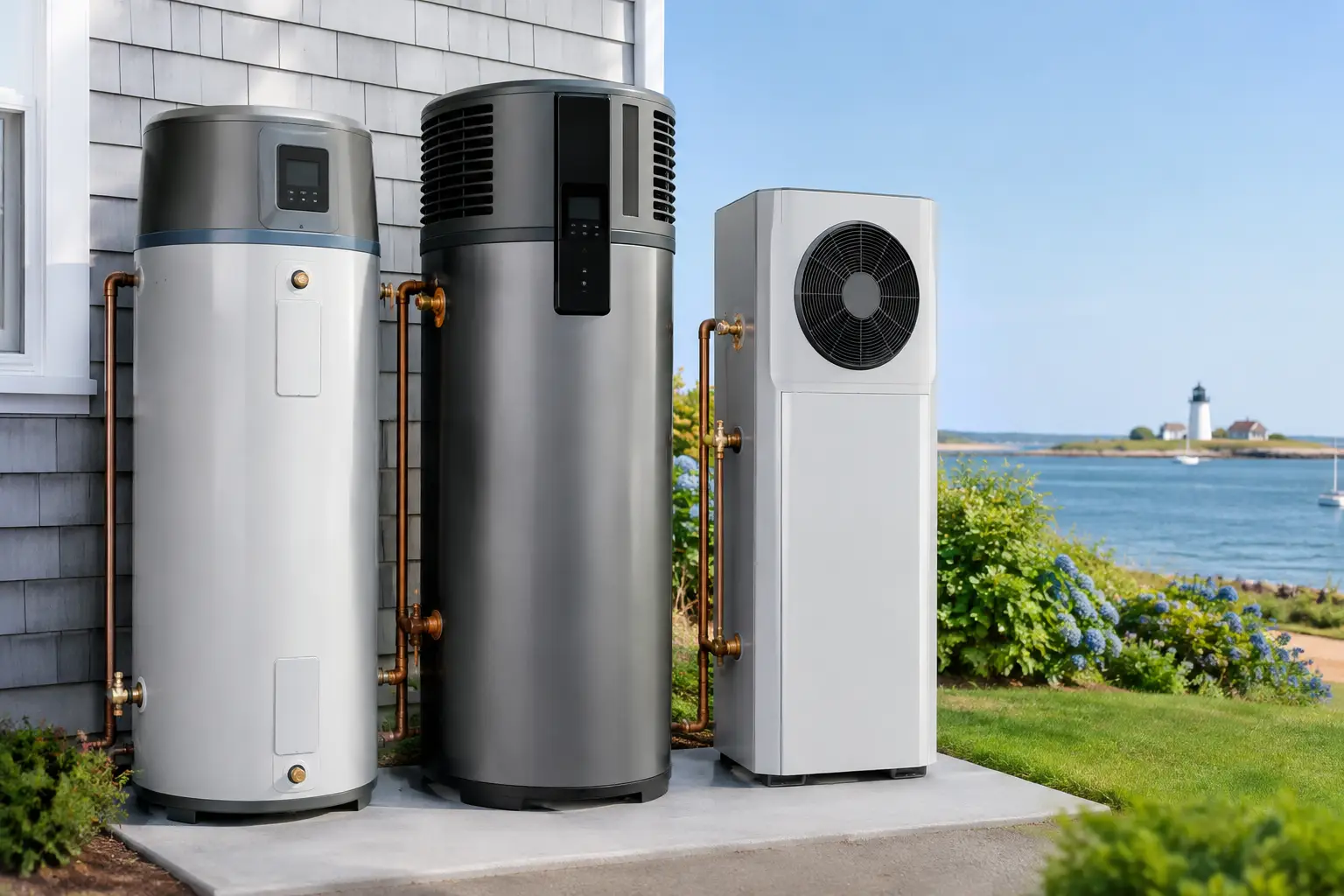
A water heater can quietly become one of the largest energy users in a home, especially when an older electric tank is running in a basement year after year. A heat pump water heater comparison helps Cape Cod property owners look beyond the purchase price and decide whether the energy savings, installation requirements, and available rebates make sense for their property.
Unlike a conventional electric water heater that creates heat with electric resistance elements, a heat pump water heater pulls heat from surrounding air and transfers it into the tank. Think of it as an air conditioner working in reverse for your hot water. That difference can significantly reduce water-heating electricity use, but it also means location, household demand, and installation quality matter.
Heat Pump Water Heater Comparison: Start With Your Current System
The best comparison begins with the fuel and equipment you have now. Replacing an aging electric tank is usually the clearest case for a heat pump water heater. Standard electric tanks are dependable and relatively simple, but they can be expensive to operate because every unit of heat is made directly with electricity.
A heat pump water heater generally costs more up front than a basic electric tank. In return, it can use far less electricity in heat-pump mode. For a household with steady hot-water use, those savings can help offset the higher initial investment over time. Available Mass Save incentives may improve the numbers further, although program requirements, equipment eligibility, and rebate amounts can change.
Replacing a gas water heater requires a more careful evaluation. Natural gas can still be cost-effective, particularly in homes with existing gas service and high hot-water demand. A heat pump unit may be a strong fit if you want to reduce fossil-fuel use, avoid combustion venting, or are planning broader electrification upgrades. The right answer depends on local utility costs, the condition of the existing equipment, and the space available for the new tank.
Tankless gas water heaters are another alternative. They provide hot water on demand and save space, but they may require significant gas-line, venting, and electrical work. A heat pump water heater stores hot water in a tank, so it takes more floor space but can be simpler to integrate where a tank-style water heater already exists.
Where Heat Pump Water Heaters Perform Best
Heat pump water heaters need surrounding air from which to draw heat. That makes an unfinished basement, utility room, garage, or mechanical area a natural location. They work best where there is enough air volume, reasonable temperatures, and a way to manage condensate.
Cape Cod homes often have basements that stay cool and damp for much of the year. A heat pump unit can help dehumidify the space while it operates, which may be a welcome side benefit. However, because it cools the air around it, the installation location should not be treated as an afterthought. In a small, enclosed utility closet, the unit may struggle to operate efficiently unless the space is properly designed or ducted.
Cold location performance is also worth discussing honestly. Modern heat pump water heaters can continue providing hot water in cooler conditions, often by using built-in electric elements when needed. But a cold garage, seasonal property, or poorly insulated basement can reduce heat-pump efficiency. A licensed installer should assess the room temperature, ventilation, insulation, and drainage before recommending a unit.
Noise and Cooling Are Real Trade-Offs
A heat pump water heater has a fan and compressor, so it makes more sound than a conventional electric tank. The noise is often comparable to a household appliance, but placement matters. It is usually not a concern in a basement or dedicated mechanical room. It may be less comfortable near a bedroom, home office, or living space.
The cooling effect is another trade-off. During summer, removing heat and moisture from a basement can be helpful. During winter, the unit draws warmth from the surrounding space. If that space is within the heated envelope of your home, your heating system may need to replace some of that heat. The overall efficiency can still be excellent, but this is one reason a local assessment is more useful than a generic estimate.
Capacity Matters More Than Most Homeowners Expect
A heat pump water heater comparison should not focus only on efficiency ratings. Tank size and recovery capacity determine whether everyone gets a comfortable shower during busy mornings or holiday weekends.
For smaller households with moderate hot-water use, a 50-gallon model may be appropriate. Families with multiple bathrooms, soaking tubs, frequent laundry, or several consecutive showers often benefit from a larger tank. Many heat pump models include operating modes that prioritize efficiency, faster recovery, or a balance between the two.
Efficiency mode provides the greatest savings when demand is predictable and the unit has time to recover. Hybrid or high-demand modes bring electric elements into the process more often, allowing faster recovery when guests are visiting or the household schedule is unusually busy. Those modes offer flexibility, but frequent reliance on electric resistance heat reduces the savings advantage.
For property managers and commercial customers, sizing needs to account for occupancy patterns rather than average daily use alone. A rental home that turns over on weekends, a small inn, or a facility with concentrated morning demand may need a different approach than a year-round single-family home. In some cases, multiple units or another water-heating strategy may be more practical.
Installation Details That Affect Long-Term Results
A heat pump water heater installation is not simply a tank swap. The unit needs a suitable electrical connection, adequate clearance, a level location, and a safe way to drain condensate. Depending on the model and existing setup, electrical upgrades may be needed.
Condensate is easy to overlook. Like an air conditioner, a heat pump water heater creates water as it removes humidity from the air. That water needs to drain reliably to a suitable location or be handled with a condensate pump. On Cape Cod, where many homes have basements and seasonal moisture concerns, a proper drain plan protects the equipment area from avoidable water damage.
Plumbing connections should also be inspected rather than reused automatically. Older shutoff valves, corroded fittings, aging expansion tanks, and missing safety components can turn a straightforward upgrade into a future service call. A professional installation should address the complete system, not just set a new tank in place.
Consider the Age of the Whole Water-Heating Setup
If your current water heater is leaking, rusting, or more than a decade old, replacement should not wait for a full failure. A sudden tank leak can damage finished basements, flooring, storage, and nearby equipment. Planning the replacement gives you time to compare options, confirm rebate requirements, and choose a size that fits your household.
If the water heater is still operating but utility bills are high, compare annual operating costs before deciding. The lowest-priced unit on installation day is not always the lowest-cost option over its service life. On the other hand, a heat pump water heater is not automatically the best choice for every small closet, unconditioned outbuilding, or property with unusual demand.
Cost, Rebates, and Financing Considerations
Up-front cost is often the main hesitation. Heat pump water heaters typically cost more than standard electric tanks, and the installation may involve electrical or drainage work. However, lower energy use and qualifying rebates can narrow that gap substantially.
Before selecting equipment, ask for a clear estimate that separates the unit, labor, electrical changes, condensate management, permit-related work where applicable, and removal of the old water heater. If rebates are available, confirm the required model, installation documentation, and submission process before work begins. Financing can also make a high-efficiency upgrade more manageable when a replacement cannot wait.
Durfee Plumbing & Heating can evaluate the existing water heater location, household demand, and installation requirements so you receive a recommendation based on how your property actually operates, not a one-size-fits-all sales pitch.
When a Heat Pump Water Heater Is the Right Choice
A heat pump water heater is often a strong choice when you are replacing an electric tank, have adequate basement or utility-room space, and want to reduce ongoing electricity use. It can also make sense for homeowners pursuing energy-efficiency improvements and qualifying Mass Save incentives.
It may be less suitable when space is extremely tight, the installation area stays very cold, noise is a concern, or hot-water demand is unusually concentrated. In those situations, a conventional tank, tankless system, or a different equipment configuration may better serve the property.
The practical next step is to have the space and existing system evaluated before the old tank fails. A properly sized, professionally installed water heater can provide dependable hot water, control operating costs, and prevent a routine upgrade from becoming an emergency.



