
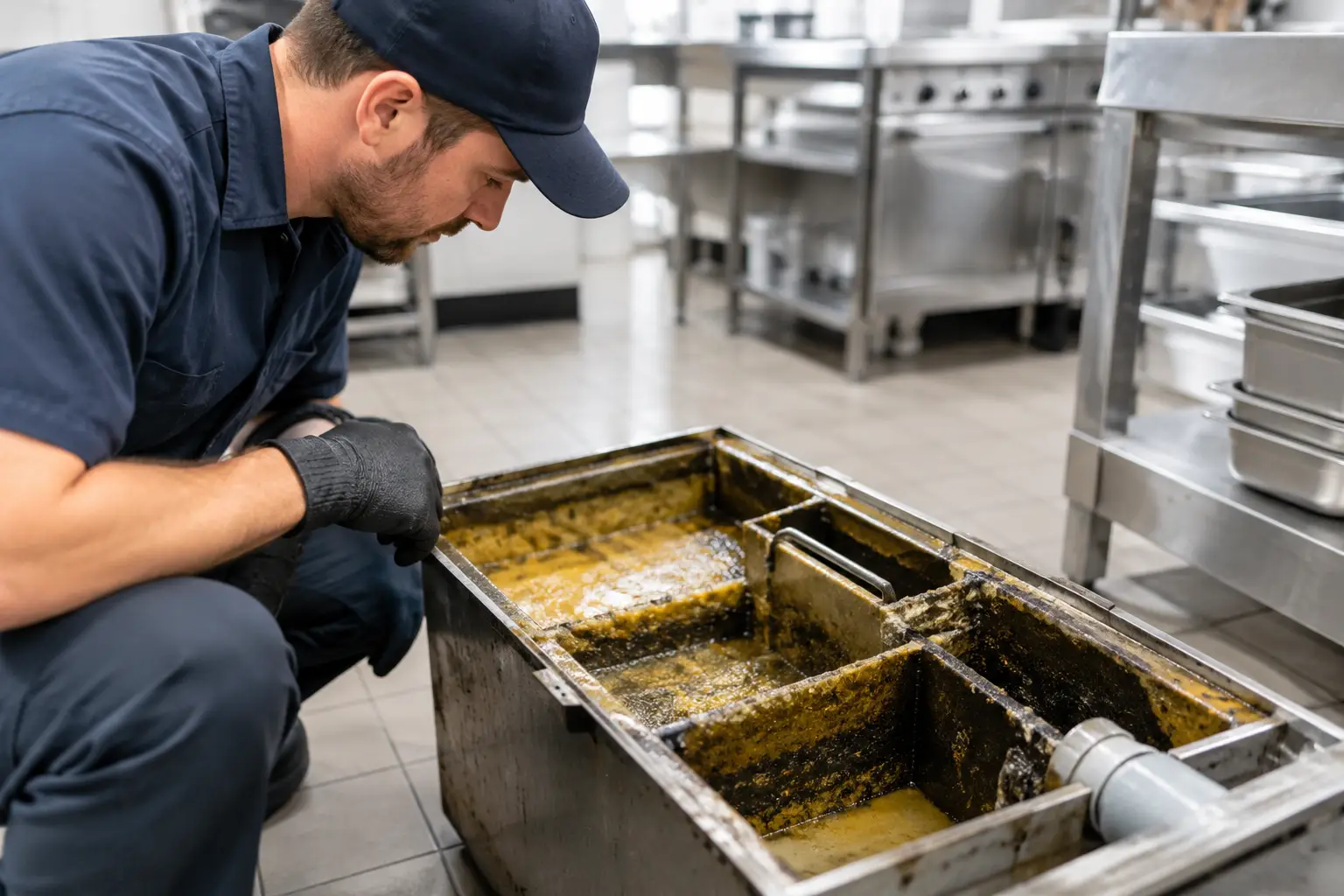
A lunch rush can turn into a shutdown in minutes when restaurant grease trap failures send wastewater backing up through a floor drain, sink, or dishwasher line. The immediate problem may look like a clogged drain, but the cause is often a grease interceptor that has reached capacity, been maintained improperly, or has a damaged component. For Cape Cod restaurant owners and property managers, quick action protects the kitchen, staff, customers, and business operations.
What Happens When a Grease Trap Fails
A grease trap is designed to slow wastewater long enough for fats, oils, and grease to separate from water. Grease rises to the top, heavier food particles settle at the bottom, and the remaining water exits through the outlet line. When the trap is working correctly, it helps keep grease from collecting farther down the building drain or sewer connection.
Failure starts when that separation process breaks down. A full trap has less room for wastewater, so grease and solids can move into the outlet pipe. In other cases, a blockage prevents water from leaving the trap at all. The result can be slow fixtures, foul odors, gurgling drains, standing water, or a sewage backup in the kitchen.
This is not a problem to wait out between shifts. A backup can create unsanitary conditions, damage flooring and equipment, and interrupt service when your business can least afford it.
Common Causes of Restaurant Grease Trap Failures
The most common cause is simple: the trap has not been pumped and cleaned often enough. Grease traps need regular service based on their size, the number of meals prepared, menu items, dishwashing volume, and local requirements. A high-volume seafood restaurant, for example, may need more frequent attention than a small cafe with limited cooking.
Even a regularly scheduled pumping program can fall short if the interval is based on a calendar rather than the actual condition of the trap. Once grease and settled solids take up too much of the tank, wastewater has no effective separation area left. Grease then escapes into downstream piping, where it cools, hardens, and catches food debris.
Kitchen habits also matter. Staff may scrape plates poorly, wash food scraps down a sink, or rinse grease-covered pans with very hot water. Hot water can temporarily liquefy grease, but it does not remove it. As that wastewater cools in the plumbing system, the grease congeals and creates a blockage farther along the line.
Mechanical issues can cause trouble as well. Damaged baffles, loose lids, missing flow-control fittings, cracked seals, or incorrectly installed piping can keep the interceptor from doing its job. A trap that was undersized from the beginning may become overloaded during busy periods, even if the kitchen follows good maintenance practices.
Drain Line Problems Can Look Like a Trap Problem
A grease trap is not always the only source of the failure. The outlet line may already have a heavy grease buildup, or the main drain may be restricted by scale, roots, damaged pipe, or another obstruction. Pumping the trap without inspecting the connected drain line can leave the underlying issue in place.
That is why diagnosis matters. A licensed commercial plumber should determine whether the restriction is inside the trap, at the outlet, in a branch line, or farther into the building sewer. The right repair may involve pumping, drain cleaning, camera inspection, component replacement, or a combination of services.
Warning Signs to Address Before a Backup
Grease trap problems usually give warning before they become an emergency. Slow drainage at multiple kitchen fixtures is one of the clearest signs. If the three-compartment sink, floor drain, and dishwasher area are all draining slowly, the restriction may be beyond one individual fixture.
Strong grease or sewer odors around the trap, kitchen sinks, or floor drains also deserve attention. Odors can indicate accumulated organic material, a lid or seal problem, or gases moving back through a partially blocked line. Gurgling sounds, water rising in a floor drain, and recurring clogs after basic clearing are other signals that should not be ignored.
Watch for visible grease around the trap lid or nearby floor. This can mean the unit is overfilled, the cover is not sealed, or wastewater is surcharging during peak use. A sudden increase in pest activity around drains may also point to food solids and grease buildup.
Why Quick Fixes Can Make the Problem Worse
When water is backing up, it is tempting to use chemical drain cleaner or pour boiling water into the sink. Neither approach is a reliable solution for a grease trap failure. Chemical products can harm piping, create hazardous working conditions, and fail to remove the thick layer of grease and solids inside the trap. Boiling water may move grease temporarily, only for it to solidify farther down the drain.
Avoid using a garbage disposal as a substitute for scraping dishes. Ground-up food still adds solids to the grease trap and makes pumping needs more frequent. Enzyme and bacteria additives are sometimes marketed as an easy answer, but they should never replace proper cleaning and should be reviewed carefully against local rules and your plumbing professional's recommendations.
If wastewater is rising from a floor drain or sink, stop using the affected fixtures if possible. Keep employees away from contaminated water, move food and portable equipment from the area, and call for commercial plumbing service. Continuing to run dishwashers or sinks can turn a contained issue into a larger cleanup.
Preventing Grease Trap Problems in a Busy Kitchen
A dependable prevention plan combines scheduled pumping with daily kitchen practices. The service frequency should be based on the trap's actual grease and solids levels, not guesswork. Keep service records, including pumping dates, observations, and any repairs performed. Those records help identify whether the current schedule is adequate and can support compliance inspections.
Train kitchen staff to dry-wipe pots, pans, utensils, and plates before washing. Collect grease in designated containers rather than sending it down a drain. Use sink strainers to capture food solids, empty them consistently, and keep employees from dumping mop water, sauces, flour, coffee grounds, or food scraps into fixtures connected to the grease system.
The equipment itself needs occasional inspection. Check that the lid fits securely, seals are intact, and the area around the trap is accessible for service. If the kitchen has changed its menu, expanded hours, added equipment, or increased seating, have the grease trap capacity reviewed. What worked for a smaller operation may no longer be sufficient.
Build Service Around Your Actual Volume
There is no single pumping schedule that fits every restaurant. A seasonal Cape Cod location may see a major jump in wastewater volume during summer, while a year-round establishment may experience heavy traffic on weekends and holidays. Adjusting maintenance before those busy periods is far less disruptive than responding to a backup during service.
Property managers should also consider who is responsible for the trap, connected drain lines, and documentation under the lease. Clear responsibility prevents missed service and delays when a problem appears.
When to Call a Commercial Plumber
Call for professional help when drainage is slow across multiple fixtures, odors persist after routine cleaning, grease is escaping the trap, or water is backing up into the kitchen. These issues can affect sanitation and may require more than standard trap pumping.
A commercial plumbing team can assess the interceptor, clear grease-laden drain lines, inspect for damage, and recommend repairs that address the cause rather than only the symptom. For urgent restaurant grease trap failures, a fast response can be the difference between a manageable repair and a lost day of service.
Durfee Plumbing & Heating provides commercial plumbing support for businesses that need clear answers and prompt action. If your kitchen drains are slowing down or a grease trap is showing signs of trouble, schedule service before the next rush puts your operation at risk.



