
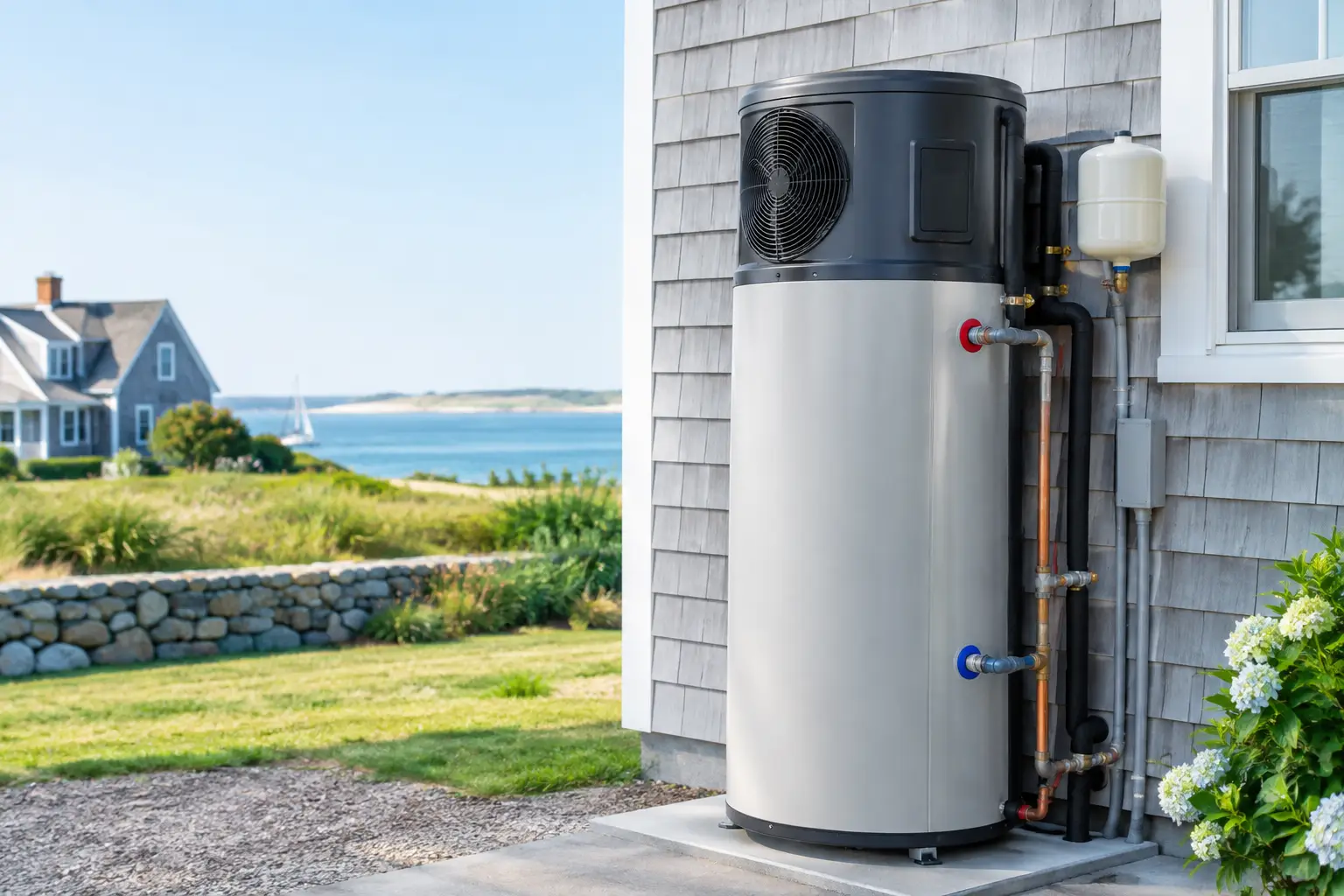
A water heater can keep working long after it stops being a good value. If your tank is nearing the end of its life, driving up electric bills, or struggling to keep up with household demand, this heat pump water heater guide can help you decide whether an upgrade makes sense for your Cape Cod home.
Heat pump water heaters use a different approach than standard electric tank units. Rather than creating heat directly with electric resistance elements, they pull heat from the surrounding air and transfer it into the water tank. That simple difference can significantly reduce the electricity needed to make hot water, but it also means the installation location, available space, and household habits matter.
How a Heat Pump Water Heater Works
A heat pump water heater has a storage tank, much like a conventional electric water heater, along with a heat pump mounted on top. The heat pump draws in warm air, removes heat from it, and uses that energy to warm the water. It also produces cool, dry air as a byproduct.
For many homes, this is an efficient trade-off. The unit uses electricity to move heat rather than generate all the heat itself. In heat pump mode, it can use substantially less electricity than a typical electric tank water heater.
Most models also include backup electric elements. Those elements can help the unit recover faster during periods of unusually high hot water use or when the surrounding air is too cold for efficient heat pump operation. Homeowners can usually select operating modes that prioritize maximum efficiency, faster recovery, or a balance between the two.
Where These Water Heaters Work Best
Location is one of the first things a qualified installer should evaluate. A heat pump water heater needs access to enough surrounding air to operate properly. Large utility rooms, unfinished basements, garages, and mechanical rooms are often good candidates. A cramped closet may not be, unless the installation is designed with proper ducting and ventilation.
Cape Cod homes vary widely, from older cottages with limited utility space to newer homes with dedicated mechanical areas. Basement installations are common, but conditions should be checked carefully. The unit will cool and dehumidify the room, which can be a welcome benefit in a damp basement during warmer months. In a small or heated space during winter, however, the water heater may draw heat that your home heating system needs to replace.
A garage can work well if temperatures remain within the manufacturer’s operating range. An unheated garage that gets extremely cold may reduce efficiency and cause the system to rely more often on its electric backup elements. That does not automatically rule out the equipment, but it changes the expected savings.
The installation also requires a nearby electrical connection, water supply and drain connections, a pressure relief valve discharge line, and a way to manage condensate. Because the heat pump removes moisture from the air, it creates condensate that must drain safely. This detail is especially relevant in basements where an existing floor drain, condensate pump, or properly planned drain route may be needed.
The Savings Question: What Can You Expect?
A heat pump water heater often costs more upfront than a basic electric tank model, but lower operating costs can make up for much of that difference over time. The actual savings depend on your current fuel source, local electricity rates, tank size, installation conditions, and hot water use.
Homes replacing an older electric resistance water heater frequently see the clearest energy savings. Replacing a gas water heater is a more individual calculation. Natural gas may have lower operating costs in some situations, while a heat pump unit can still be attractive for homeowners who want to reduce on-site fossil fuel use, take advantage of available incentives, or modernize an all-electric home.
Do not base the decision on the equipment price alone. A proper estimate should account for electrical work, plumbing updates, condensate drainage, removal of the old unit, permit requirements, and any space modifications. It should also consider rebates and financing options that can make a higher-efficiency upgrade more manageable.
Massachusetts homeowners may qualify for energy-efficiency incentives, including Mass Save rebates, depending on current program requirements and the equipment selected. Because rebate rules, qualifying models, and available amounts can change, it is smart to verify the details before scheduling installation.
Choosing the Right Tank Size
Sizing is about more than the number of people in the house. A two-person household with low-flow fixtures and staggered showers may be comfortable with a smaller tank than a family of four who all need hot water before school and work. Laundry habits, soaking tubs, multiple bathrooms, dishwashers, and rental occupancy can all affect the right choice.
Recovery time deserves attention with heat pump models. In their most efficient operating mode, they may reheat water more slowly than a conventional electric unit using full resistance heat. A larger tank can help provide enough stored hot water during morning and evening peak use without forcing the unit into a less efficient mode.
For many households, a 50-gallon to 80-gallon model is worth considering. The correct answer depends on your home’s demand profile and the unit’s first-hour rating, not just the label on the tank. Property managers should also consider occupancy patterns. A seasonal home, year-round rental, or multi-unit property may have very different demand than a primary residence.
Noise, Maintenance, and Other Trade-Offs
Heat pump water heaters are not silent. Their fan and compressor make a sound similar to a dehumidifier, refrigerator, or window air conditioner. In a basement or garage, that is usually not a concern. In a utility room near a bedroom, office, or living area, it should be discussed before installation.
Maintenance is generally straightforward, but it should not be ignored. The air filter needs periodic cleaning so the heat pump can move air efficiently. The condensate drain should remain clear, and the water heater itself still benefits from standard tank maintenance, including checking the anode rod and flushing sediment when appropriate.
Like any tank-style water heater, it also has a finite service life. Local water conditions, maintenance, installation quality, and usage all affect longevity. A one-year parts and labor warranty from the installing contractor can provide added confidence during the first year, while manufacturer coverage may apply to specific components for longer periods.
When a Heat Pump Water Heater May Not Be the Best Fit
A heat pump water heater is not automatically the right answer for every property. Tight spaces, extremely cold installation areas, high-demand commercial use, or homes that need very fast recovery may point toward another option. A tankless water heater, a high-recovery conventional tank, or a different system design may better match the property’s needs.
The same is true when an existing water heater has failed and hot water is urgently needed. The right replacement should be installed promptly, but a rushed decision can create years of higher energy costs or poor performance. A stocked service vehicle and an experienced technician can help separate immediate needs from the long-term upgrade decision.
Questions to Ask Before You Install
Before choosing a model, ask your installer whether the proposed location has enough air volume, how condensate will be drained, whether electrical upgrades are needed, and what operating mode is recommended for your household. Ask for the unit’s first-hour rating and estimated annual energy use, not just the tank capacity.
You should also ask how the installation will affect the room in winter, what maintenance is expected, and which rebates may apply. These questions help avoid the common mistake of choosing equipment based only on a promotional efficiency rating.
A properly selected heat pump water heater can lower hot water costs while helping dehumidify a suitable basement or utility space. If your current unit is aging, leaking, or expensive to run, schedule an assessment with a licensed local technician who can evaluate the space, demand, and installation details before the old tank makes the decision for you.



