
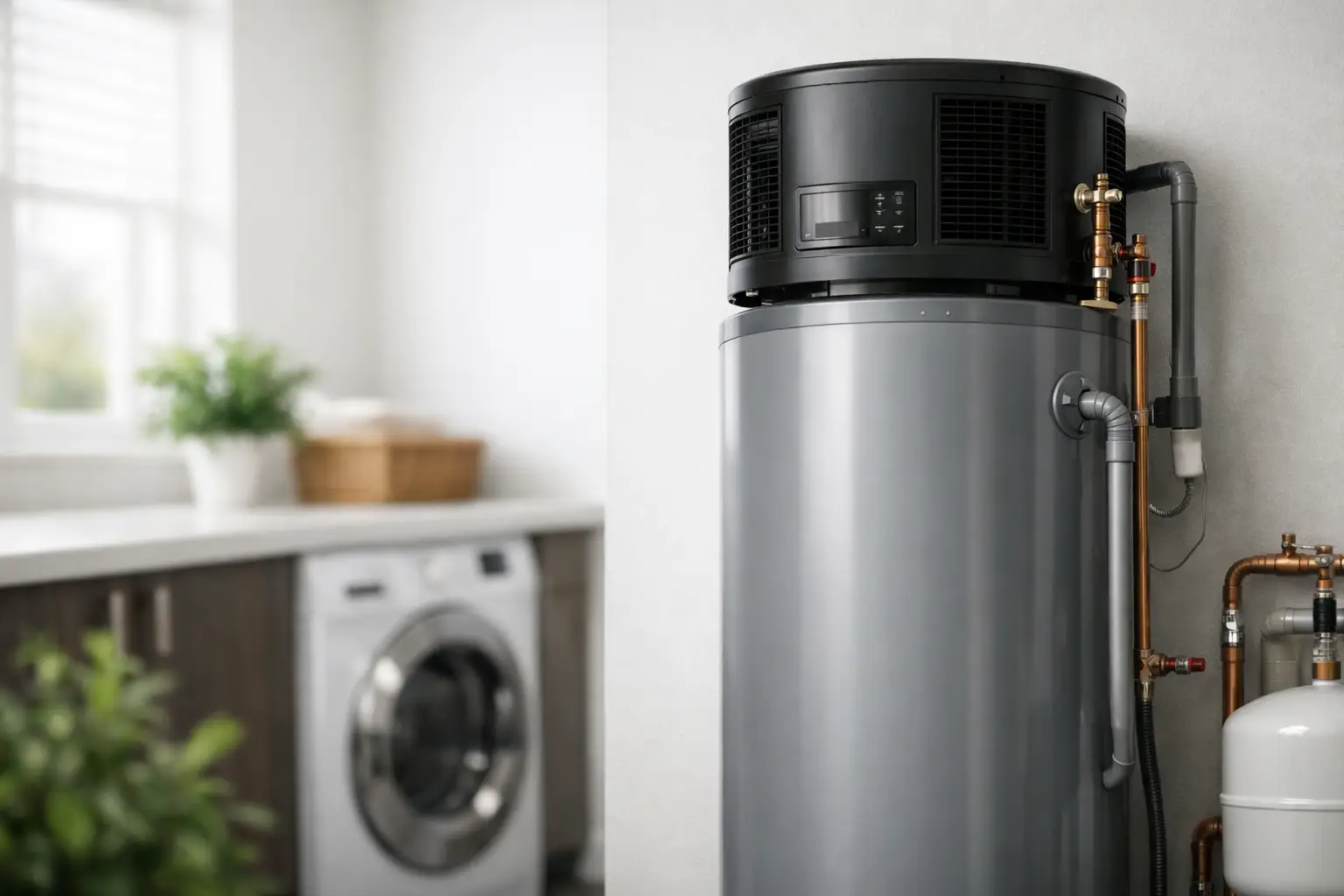
A water heater usually gets attention only when the shower turns cold or water starts pooling around the tank. If your current unit is nearing the end of its life, knowing how to choose a heat pump water heater before an emergency gives you time to compare the right details, protect your budget, and avoid a rushed replacement.
Heat pump water heaters can use far less electricity than standard electric tank models. Instead of generating heat directly with electric elements, they pull heat from surrounding air and move it into the water tank. That efficiency can make a meaningful difference in operating costs, particularly for households with steady hot water use. The right model, however, depends on more than the label on the box.
How to Choose a Heat Pump Water Heater for Your Home
Start with your household's hot water demand, then look at where the unit will be installed. A high-efficiency water heater that is too small, placed in a cold closet, or installed without proper drainage can leave you disappointed even if the equipment itself is well made.
For Cape Cod homeowners, installation conditions deserve particular attention. Many homes have basement mechanical rooms that work well for a heat pump water heater, while others have tight utility closets, unconditioned areas, or seasonal-use properties that require a more tailored plan. A licensed installer can assess the full setup, not just replace the existing tank with a similar-size model.
Size the tank for real daily demand
Tank capacity is one of the first decisions. Heat pump water heaters commonly come in 50-, 65-, and 80-gallon sizes. A larger tank costs more upfront and takes more room, but it provides a greater reserve of hot water when several people need showers, laundry, or dishwashing during the same part of the day.
A 50-gallon model may be a practical fit for a one- or two-person household with moderate use. Many families of three or four are better served by a 65-gallon model. An 80-gallon unit is often worth considering for larger households, homes with soaking tubs, or properties where multiple showers regularly run back-to-back.
Do not size strictly by the tank you already have. A heat pump unit recovers hot water differently than a conventional electric tank, especially when it runs in its most efficient heat-pump-only mode. Look at the first-hour rating, which estimates how much hot water the unit can provide during a busy hour. This number is often more useful than tank gallons alone.
Choose an efficiency level that matches your goals
The Uniform Energy Factor, or UEF, helps compare water heater efficiency. In general, a higher UEF means the unit uses less energy to deliver hot water. Heat pump water heaters typically have much higher UEF ratings than conventional electric storage water heaters.
Still, the highest-rated model is not automatically the best purchase. Consider warranty length, controls, available operating modes, local service support, and the total installed cost. A dependable unit with a solid warranty and proper installation can be a better long-term choice than a feature-heavy model that does not suit your home's conditions.
Many models offer several settings, such as heat pump only, hybrid, electric, high-demand, and vacation mode. Heat pump only is typically the least expensive mode to operate, but recovery can be slower. Hybrid mode uses heat pump operation first and activates electric resistance elements when the household needs more hot water quickly. For a busy family, hybrid operation can be a sensible balance between comfort and savings.
Make Sure the Installation Space Works
A heat pump water heater is not simply an electric tank with upgraded controls. It needs adequate surrounding air because it draws heat from the room. Manufacturers specify required room volume and clearance, so a small enclosed closet may not be suitable without ducting or another approved solution.
The unit also cools and dehumidifies the surrounding air as it operates. In a damp basement, that can be a welcome side benefit. In a heated space, it can add a small cooling effect that may be noticeable during colder months. This is why location matters: a basement, garage, utility room, or mechanical area often makes more sense than a confined interior closet.
Noise is another practical consideration. Most units produce a fan sound similar to a refrigerator, air conditioner, or dehumidifier. It is rarely disruptive in a basement or garage, but it may matter near bedrooms, offices, or living areas. Ask about the model's sound rating and consider your household's layout before choosing the final location.
Plan for condensate drainage and electrical needs
Like an air conditioner, a heat pump water heater creates condensate. That water needs a reliable path to a floor drain, condensate pump, or other approved drainage point. Skipping this step can lead to water damage or recurring service issues.
Electrical requirements should also be verified. Many heat pump water heaters use a 240-volt circuit, similar to a standard electric water heater, but the existing circuit, disconnect, wiring condition, and panel capacity should be checked. Homes replacing gas or oil-fired water heaters may need more substantial electrical work.
A professional installation also includes properly sized water connections, temperature and pressure relief protection, an expansion tank when required, seismic or local-code considerations where applicable, and removal of the old unit. These details are less visible than the new tank, but they directly affect safety and reliability.
Consider Your Existing Fuel Type and Backup Needs
Replacing an old electric water heater is often the most straightforward heat pump water heater project. Replacing a gas, propane, or oil-fired unit can still be a smart efficiency upgrade, but it requires a closer look at electrical service, venting changes, and your home's overall heating strategy.
Heat pump water heaters need electricity, so they will not provide hot water during a power outage unless the home has backup power. If outage resilience is a priority, discuss generator capacity and water-heating priorities before installation. A heat pump water heater can be highly efficient, but it is not the same solution for every property.
For second homes and seasonal properties, vacation mode can reduce energy use while the house is unoccupied. However, it does not replace proper plumbing winterization when a home will be left without heat during freezing weather. On Cape Cod, that distinction can prevent expensive freeze damage.
Factor in Rebates, Installation Cost, and Long-Term Value
The purchase price is only one part of the decision. Heat pump water heaters generally cost more than basic electric tanks, and installation may involve drainage, electrical, or space modifications. Those upfront costs can often be offset by lower energy use over the life of the unit.
Mass Save rebates and other available incentives may improve the numbers considerably for qualifying Massachusetts homeowners. Eligibility rules, equipment requirements, and rebate amounts can change, so confirm current program details before selecting a model. Financing can also make it easier to move forward with an efficient replacement rather than settling for the least expensive emergency option.
When comparing estimates, make sure each proposal addresses the same scope of work. A lower number may not include electrical upgrades, a condensate pump, hauling away the old tank, permits, or changes needed to meet code. Clear, itemized recommendations help you compare the real cost instead of being surprised after installation begins.
Questions Worth Asking Before You Buy
Before choosing a unit, ask the installer whether the proposed tank has enough first-hour capacity for your household, whether the room meets manufacturer airflow requirements, and how condensate will be drained. Also ask which operating mode they recommend for your normal use, what maintenance is needed, and what parts and labor warranty applies.
Routine maintenance is usually straightforward, but it should not be ignored. Depending on water conditions and manufacturer guidance, the air filter may need periodic cleaning, and the condensate system should be inspected. Annual service can also help catch concerns such as sediment, valve issues, or drainage problems before they turn into a no-hot-water call.
A heat pump water heater is a long-term home upgrade, not just a replacement appliance. Take the time to match tank capacity, installation location, electrical readiness, and available incentives to your property. If you are unsure whether your home is a good fit, Durfee Plumbing & Heating can evaluate the space and recommend a dependable option that keeps hot water available without wasting energy.



