
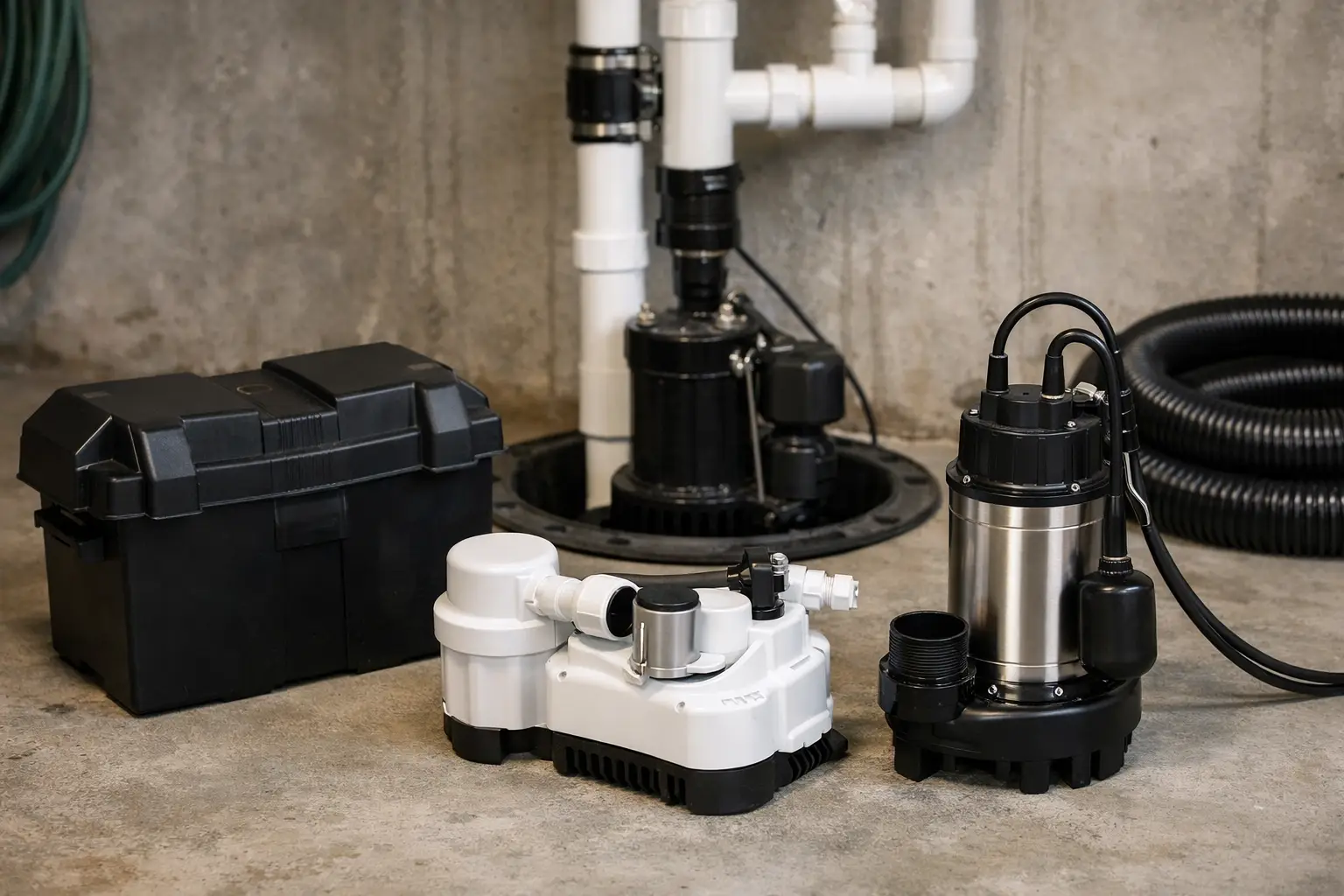
A sump pump can do its job for years without much attention, until a coastal storm knocks out power at the same time groundwater rises. That is when the best backup sump pump options stop being an upgrade and become protection against a flooded basement, damaged belongings, mold cleanup, and costly repairs. For many Cape Cod homes, especially those with finished lower levels or high water tables, a dependable backup system is a practical part of water management.
The right choice depends on your primary pump, water source, outage history, and how long your home may need protection without power. A backup pump is not one-size-fits-all. The goal is to choose a system that activates when the primary pump cannot keep up or cannot run at all.
Why a Primary Sump Pump Is Not Enough
Your main sump pump can fail for more reasons than a power outage. A float switch can stick, a circuit can trip, a discharge line can freeze or clog, or an older pump can wear out during a heavy storm. If the primary pump is undersized, it may also run continuously and still lose ground as water enters the pit.
A backup sump pump adds a second layer of defense. It should turn on automatically when water reaches a higher level in the basin or when the main pump loses power. That automatic response matters when you are away from home, asleep, or unable to reach the property during severe weather.
Before adding a backup, make sure the existing system is in good condition. A backup pump will not solve a damaged discharge pipe, poor exterior drainage, or a sump pit that is too small for the amount of incoming water. It works best as part of a properly designed system, not as a substitute for needed repairs.
Best Backup Sump Pump Options Compared
The three most common choices are battery-powered backup pumps, water-powered backup pumps, and combination systems that pair a primary and battery backup pump in one package. Each has a place, but the best fit comes down to the conditions at your property.
Battery-Powered Backup Pumps
A battery-powered backup pump is the most common option for homes with municipal water or private wells. The system includes a secondary DC pump, battery, charger, controller, and usually a high-water alarm. When utility power fails or the primary pump cannot keep up, the backup pump takes over using stored battery power.
This option works in most homes because it does not rely on water pressure. It can also provide protection if the primary pump mechanically fails while the power remains on. Many units offer alarms or app-connected monitoring that lets the homeowner know the backup has activated, the battery is weak, or the water level is rising.
The trade-off is runtime. Battery capacity determines how long the pump can operate, and runtime changes dramatically based on pump size, lift height, and how often water enters the basin. A backup that runs only occasionally may last through a long outage. A pump fighting heavy groundwater every few minutes can drain a battery much faster.
For homes that experience frequent or extended outages, a higher-capacity maintenance-free battery or a system designed to accept more than one battery can offer more reserve power. Battery condition still needs regular attention. Even quality batteries have a service life, and a backup system with a dead battery is not a backup system.
Water-Powered Backup Pumps
A water-powered backup sump pump uses incoming municipal water pressure to create suction and remove water from the pit. Because it does not use electricity or batteries, it can keep operating as long as the public water supply maintains adequate pressure.
This can be a strong option for homes connected to a reliable municipal water system. It is especially useful where outages may last longer than a battery backup can reasonably cover. There is no battery to replace, and the system can provide extended run time during an emergency.
The limitations are significant. A water-powered backup uses a large amount of clean water to move sump water, which can increase a water bill during a prolonged event. It also requires sufficient water pressure and must be installed with proper backflow protection. It is generally not a dependable standalone choice for homes on private wells, because a power outage usually stops the well pump that provides household water pressure.
Local plumbing rules and the home’s water supply layout should be reviewed before installation. A licensed plumber can determine whether this type of system is allowed and practical for your property.
Combination Primary and Backup Systems
A combination system places a primary AC sump pump and a battery-powered backup pump in the same basin. For homeowners replacing an aging primary pump, this can be the cleanest way to update the entire setup at once.
The advantage is coordination. The primary and backup components are designed to work together, often with a shared controller, alarm, and monitoring features. You gain a new main pump and a secondary pump without trying to match separate components after the fact.
Combination systems are not always necessary if your existing primary pump is newer, correctly sized, and in good condition. In that case, installing a compatible backup pump may be more cost-effective. But when the main pump is nearing the end of its life, replacing both components together can prevent a weak primary pump from becoming the next point of failure.
How to Choose the Right System for Your Home
Start with how much water your sump pit handles during a heavy rain. A home with occasional minor seepage has different needs than a property where the main pump cycles constantly during storms. Pump capacity is measured by how many gallons it can move per hour at a specific vertical lift. The higher the water must be pumped, the lower the actual output can be.
Also consider the likely length of a power outage. If your neighborhood tends to regain power quickly, a properly sized battery backup may provide the right level of protection. If outages can last a day or longer, a larger battery bank, water-powered system where suitable, or generator planning may be worth discussing.
Your water source is another deciding factor. Homes on municipal water may be candidates for either battery or water-powered backups. Homes served by private wells typically benefit more from battery backup, because a water-powered pump depends on water pressure that may disappear during an outage.
Do not overlook the sump basin and discharge piping. A backup pump needs room to operate without interfering with the primary pump’s float. Each pump should have a properly installed check valve, and the discharge route must carry water safely away from the foundation. A frozen, crushed, or blocked discharge line can defeat both pumps.
Features That Are Worth Having
The pump itself matters, but the warning system can be just as valuable. A high-water alarm gives you notice before the basin overflows. Battery condition alerts help prevent surprises during the first storm of the season. For second homes, rental properties, and commercial buildings, remote notifications can be particularly useful because a problem may develop when no one is on site.
Look for a controller that clearly shows system status, battery charge, and pump activity. A system that is easy to test is more likely to be maintained. For added protection, consider a dedicated electrical circuit for the primary sump pump and make sure the outlet is not accidentally controlled by a wall switch.
Installation and Maintenance Make the Difference
Backup pumps need professional installation to perform when conditions are at their worst. The pump must be properly sized, floats need clear movement, valves must be correctly placed, and discharge piping has to be secured. Water-powered units also require careful plumbing connections and backflow protection.
Once installed, test the system regularly. Pour water into the pit to confirm the primary pump activates and moves water freely. Use the backup system’s test function according to the manufacturer’s instructions, inspect the battery status, and listen for alarm operation. A seasonal check before periods of heavy rain is a sensible habit.
If your sump pump has been running more often than usual, the alarm has sounded, or the system is more than several years old, have it inspected before the next major storm. Durfee Plumbing & Heating can evaluate the full sump setup, identify drainage or pump issues, and install a backup solution suited to the demands of your Cape Cod property.
A dry basement is easier to protect before the forecast turns serious. The most useful backup sump pump is the one that has been sized, installed, and tested well before you need it.



