
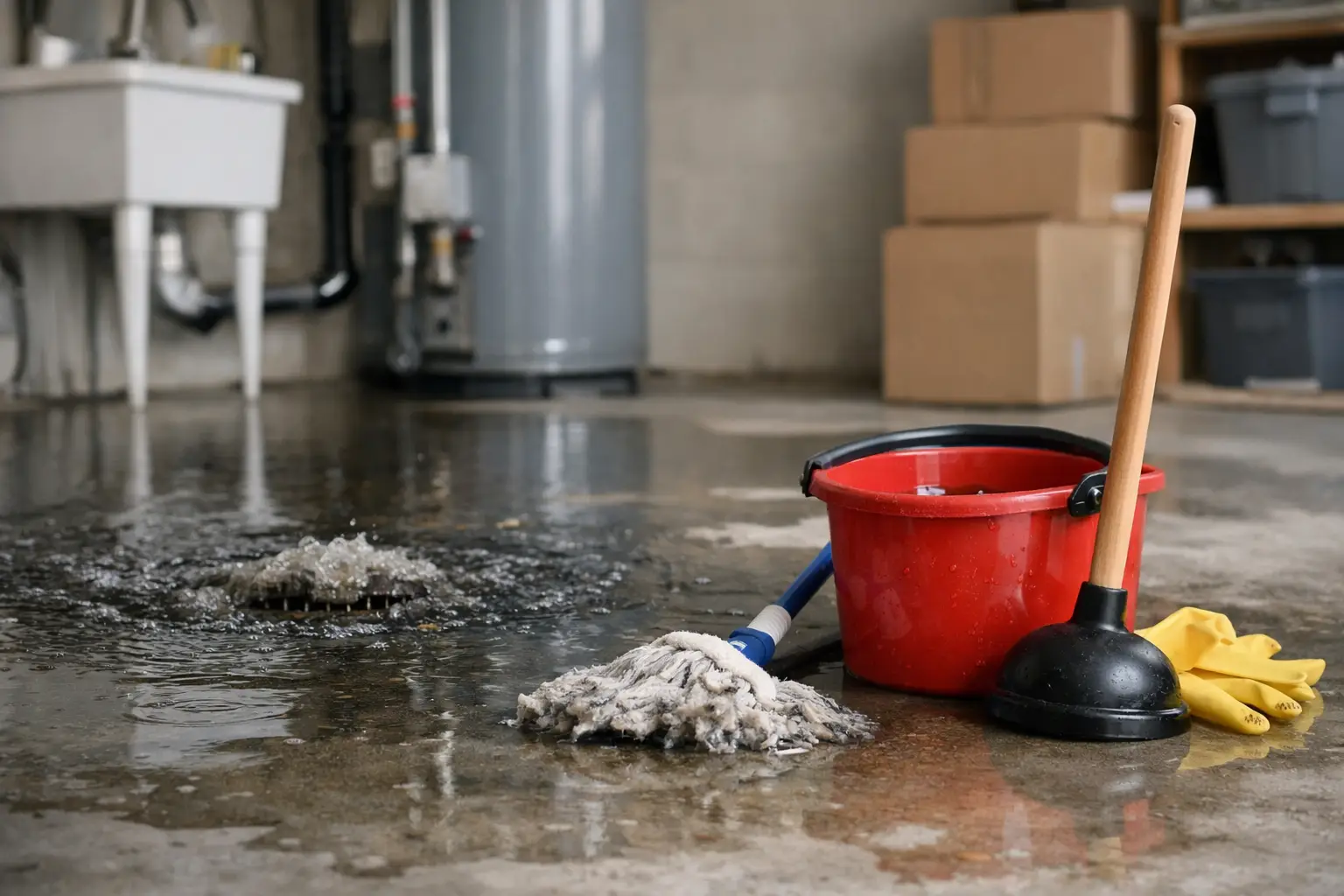
Water coming up through a basement floor drain is not a problem to watch for a few hours. A drain backup in basement areas can spread contaminated water, damage finished walls and flooring, and put furnaces, water heaters, stored belongings, and electrical equipment at risk. The right response in the first few minutes can limit the cleanup and help a plumber identify the source faster.
What to Do When a Basement Drain Backs Up
Start by keeping people and pets away from the water. If the backup contains wastewater, it may carry bacteria and other contaminants. Avoid walking through it, and do not use nearby plumbing fixtures until you know why the drain is backing up.
If it is safe to reach your electrical panel without stepping into water, turn off power to the affected basement area. Never handle electrical cords, appliances, or switches while standing in water. If water is near the panel, furnace, boiler, or other electrical equipment, leave the area and call for professional help.
Next, stop adding water to the drainage system. Do not flush toilets, run the dishwasher, take showers, or start laundry. A blocked main sewer line often reveals itself at the lowest drain in the building, which is usually the basement floor drain. Continued water use can make the overflow worse.
Take photos or video from a safe distance before moving items or beginning cleanup. Documentation can help if you need to contact an insurance provider, property manager, or restoration company. Then move dry belongings away from the affected area if you can do so without entering contaminated water.
A plunger may help with a simple, localized floor-drain obstruction, but it will not clear a blockage farther down the main line. Do not pour chemical drain cleaners into a backing-up floor drain. These products can be ineffective against a main-line clog, create hazardous conditions for anyone working on the drain, and potentially damage older piping.
Why a Drain Backup in Basement Spaces Happens
The location and timing of the backup offer useful clues. A single slow sink may point to a fixture drain issue. Water rising from a basement floor drain when someone flushes a toilet or runs the washing machine is more likely a main drain or sewer problem.
Main sewer line blockage
Grease, wipes, paper products, hair, scale, and accumulated debris can restrict a sewer line over time. Even products labeled "flushable" can catch on rough pipe interiors or existing buildup. Once the line narrows enough, water cannot move through at the required rate and finds its way back through the lowest available opening.
Older homes may also have cast-iron, clay, or aging pipe materials that are more prone to corrosion, separation, or interior scaling. A professional drain camera inspection can show whether the problem is a removable clog or a damaged line that needs repair.
Tree roots in the sewer pipe
Tree roots naturally seek moisture. Small cracks or loose joints in underground sewer piping can allow roots to enter, and those roots can grow into a dense blockage. Root intrusion often causes repeat backups rather than one isolated event. Clearing the line may restore flow, but the pipe condition should be evaluated so the issue does not return at the next heavy use period.
Heavy rain and municipal sewer overload
After major rainfall, some properties experience backups because stormwater enters a municipal sewer system or because groundwater affects drainage around the home. This is especially worth considering in low-lying areas and coastal communities across Cape Cod, where water conditions can change quickly.
If the backup occurs only during or shortly after heavy storms, the cause may involve exterior drainage, a sewer system surcharge, or a failed backwater protection device rather than an ordinary household clog. A plumber can help determine what is happening on the property side of the system and whether additional drainage or protective measures are appropriate.
A dry floor drain trap
Sometimes the issue is not a backup at all, but a sewer odor coming from a basement drain. Floor drains include a trap that holds water to block sewer gases. When a basement drain is rarely used, the water in that trap can evaporate. Pouring a small amount of water into the drain may restore the seal.
However, standing water, gurgling, slow drainage, or water that rises after plumbing use is different. Those signs should not be treated as a simple dry-trap issue.
Signs the Problem Is in the Main Drain
A main drain blockage does not always begin with an obvious flood. Paying attention to early warnings can prevent a full basement backup. Watch for toilets that gurgle when other fixtures drain, multiple sinks or tubs draining slowly at the same time, sewage odors, or water appearing in the basement drain after a washing machine or shower is used.
If only one fixture is slow, the blockage may be close to that fixture. If several drains are affected, especially on the lowest level, the issue is more likely farther down the system. Commercial properties may notice similar warning signs in restrooms, utility sinks, or floor drains before a larger disruption occurs.
Do not wait for the drain to overflow if these symptoms are building. Prompt drain cleaning and camera inspection are generally less disruptive than emergency cleanup after wastewater has reached finished space or inventory.
How Professionals Clear and Diagnose the Line
Effective drain service starts with identifying the affected line and the type of obstruction. Depending on the situation, a licensed plumber may use professional drain-cabling equipment to cut through a blockage, hydro jetting to remove buildup from suitable piping, or a sewer camera to inspect the interior condition of the line.
There is a trade-off between simply restoring flow and finding the reason the line failed. For a first-time blockage caused by an obvious buildup, clearing the drain may be enough. For recurring backups, older piping, or suspected roots, a camera inspection provides information that helps avoid repeated emergency calls.
A camera can reveal root intrusion, offsets, cracks, collapsed sections, grease accumulation, or low areas where waste repeatedly collects. That information matters when deciding whether ongoing maintenance, targeted repair, or pipe replacement is the more sensible long-term solution.
At Durfee Plumbing & Heating, licensed technicians arrive with stocked trucks and can assess urgent drain problems, clear many blockages during the first visit, and explain the next step in plain terms. For emergencies, 24/7 availability matters because sewer and drain backups rarely happen at a convenient time.
Cleaning Up Safely After a Backup
A small overflow of clean water may be manageable with proper drying. Wastewater or water of unknown origin requires more caution. Porous materials such as carpet, padding, cardboard, insulation, and unfinished drywall can hold contamination and may need professional restoration evaluation.
Wear gloves, boots, and eye protection if you must handle affected items. Keep children and pets out of the area. Hard, nonporous surfaces can be cleaned and disinfected after the source of the backup is corrected, but do not begin extensive cleanup while the line is still at risk of overflowing again.
If the basement has a finished living area, valuable contents, or extensive water damage, contact your insurance provider promptly. Ask what documentation they need before discarding damaged materials. A plumber addresses the drainage failure; a water-damage restoration specialist may be needed to dry and sanitize the space properly.
Reducing the Chance of Another Basement Backup
No home is completely immune to drain problems, but a few practical habits can lower the risk. Keep grease, wipes, hygiene products, paper towels, and food scraps out of toilets and drains. Use strainers where appropriate, especially in kitchen and laundry drains, and address recurring slow drains before they become a complete blockage.
For homes with older sewer lines, large trees near the pipe route, or a history of backups, scheduled drain maintenance can be worthwhile. The right schedule depends on the pipe material, property use, and previous findings. A restaurant, rental property, or busy commercial building may need more frequent service than a lightly used home.
If rain-related sewer backups have occurred, ask a plumbing professional whether a backwater valve, sump system evaluation, or exterior drainage improvement could help. These upgrades are not one-size-fits-all, and proper diagnosis comes before spending money on a solution.
A basement drain is easy to ignore until it becomes the lowest point where a larger plumbing problem shows itself. If water is rising, stop using plumbing fixtures and get qualified help quickly. Fast action protects your property, while a clear diagnosis helps protect it from the next backup.



