A sink that drains slowly can seem like a small inconvenience until it becomes standing water, a foul odor, or a backup during the busiest part of the day. The right drain cleaning methods can restore flow without damaging your pipes, but the best approach depends on where the clog is, what caused it, and the condition of your plumbing.
For Cape Cod homes, seasonal properties, restaurants, and commercial buildings, drainage problems often involve more than hair in a bathroom sink. Grease buildup, sand, mineral deposits, aging drain lines, tree roots, and infrequent use can all play a role. Starting with the least aggressive method is usually smart. When the blockage persists, a licensed plumber can identify the cause and clear it without guesswork.
Start With the Cause, Not Just the Water
A clog near the drain opening is different from a blockage deeper in the branch line or main sewer line. A single slow fixture usually points to a local clog. If multiple drains are slow, toilets gurgle, or water comes up in a tub or shower when another fixture runs, the problem may be farther down the system.
That distinction matters because forcing a tool or chemical into the wrong type of clog can make the situation worse. A plunger may clear soap and hair from a tub drain. It will not solve tree roots in a sewer lateral. Likewise, a drain cleaner may burn through part of a grease clog but leave the pipe coated and vulnerable to another backup days later.
Before trying any method, remove standing water if possible and look for an obvious obstruction at the stopper, strainer, or trap. If there is sewage, wastewater backing up from more than one fixture, or a leak below the sink, skip the DIY step and call for service.
Drain Cleaning Methods for Common Household Clogs
Plunging for Surface-Level Blockages
A plunger is often the fastest first step for a toilet, sink, or tub that has stopped draining. Use a cup plunger for sinks and tubs and a flange plunger for toilets. The key is creating a complete seal and using controlled, repeated strokes rather than hard, random pumping.
For a sink with an overflow opening, cover the overflow with a damp cloth before plunging. In a double-bowl kitchen sink, seal the second drain opening. These small steps help direct pressure toward the clog instead of letting air escape.
Plunging works best on soft, nearby blockages. It is less effective against hardened grease, compacted scale, or debris caught deeper in the line. If the fixture drains briefly and then slows again, the clog may still be present farther down.
Cleaning the Stopper and P-Trap
Bathroom sink clogs commonly form around the pop-up stopper. Hair, toothpaste residue, soap, and personal-care products collect on the stopper mechanism long before the main drain is fully blocked. Removing and cleaning it can make an immediate difference.
For a clog that remains, the P-trap under the sink may hold the debris. Place a bucket underneath, loosen the slip nuts carefully, and empty the trap. This is a reasonable task for a handy homeowner when the fittings are accessible and in good condition. If the pipes are corroded, glued, difficult to reach, or already leaking, leave the repair to a plumber.
Do not remove a trap after pouring chemical drain cleaner into the sink. The liquid can splash onto skin, flooring, or nearby surfaces.
Hand Snaking for Hair and Small Debris
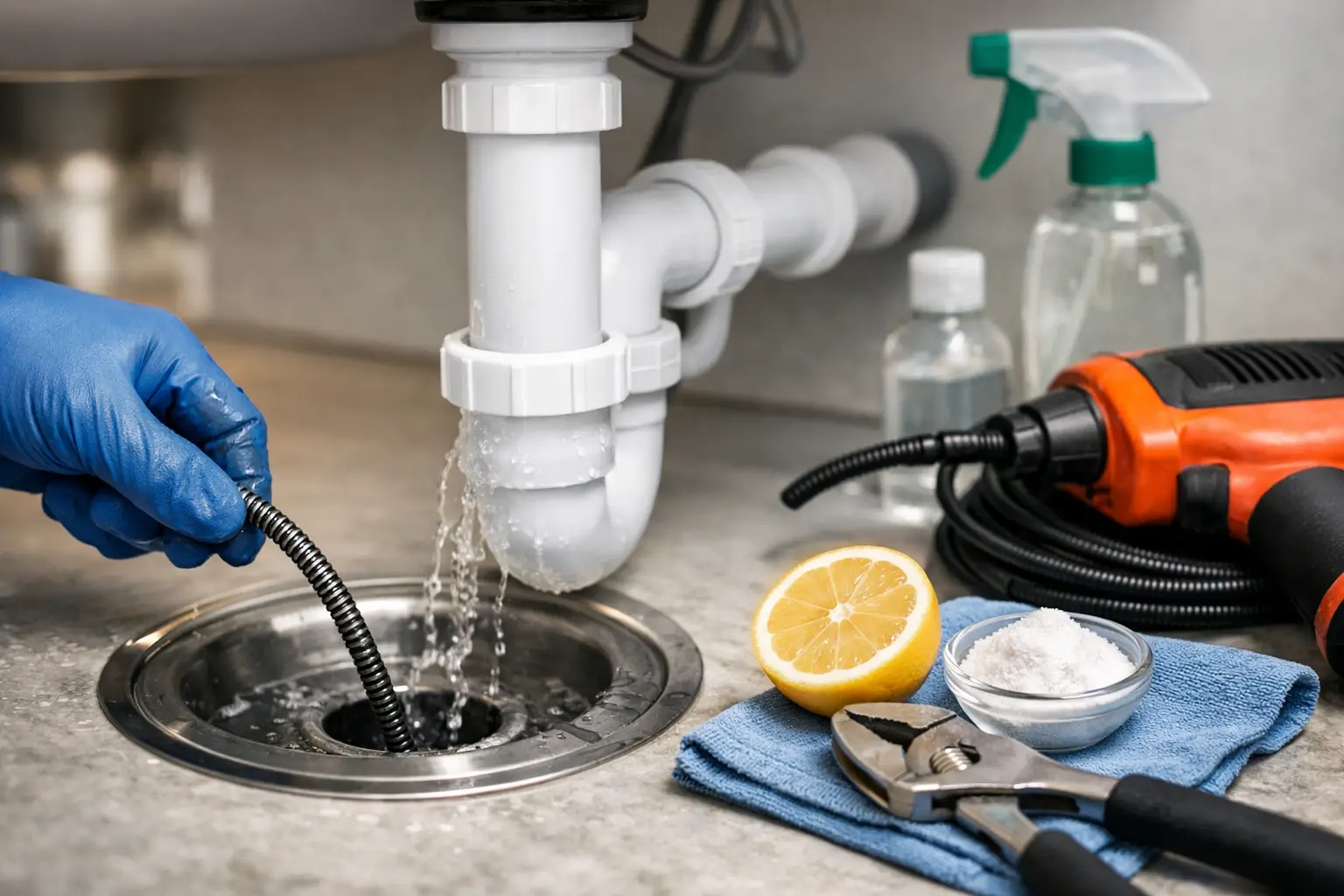
A hand-crank drain snake, sometimes called an auger, can reach clogs beyond the trap in sinks, tubs, and showers. Feed the cable gently, rotate it when you feel resistance, and pull it back slowly to remove debris. Avoid forcing the cable. Excess pressure can scratch porcelain fixtures, damage older pipe interiors, or cause the cable to bind.
A small hand snake is useful for a localized clog, especially hair in a shower drain. It is not designed to clear a long main drain line. If the cable hits a hard obstruction repeatedly or returns with muddy soil, roots, or heavy black buildup, professional equipment is the safer next step.
Enzyme and Bacteria Treatments for Maintenance
Enzyme-based drain treatments use bacteria or enzymes to break down organic material over time. They are not a quick fix for a fully blocked drain, but they can help maintain kitchen, bathroom, and commercial drains when used as directed.
These products are generally a better fit for regular preventive care than harsh chemical cleaners. They are particularly useful where grease and food residue build up gradually. Results take time, so they should not be relied on during an active backup.
Professional Cable Machines and Hydro Jetting
For stubborn or recurring clogs, professional drain cleaning equipment provides more reach and control than a retail hand snake. A plumber may use a powered cable machine with the appropriate cutting head to remove dense buildup, roots, or debris from a drain line.
Hydro jetting uses high-pressure water to scour the inside of the pipe. It can be highly effective for grease, scale, sludge, and recurring buildup, especially in commercial kitchens and heavily used drain systems. Unlike a cable that may punch a path through a clog, hydro jetting can clean much more of the pipe wall.
Hydro jetting is not automatically the right answer for every property. Older, cracked, or weakened pipes may need a camera inspection first. A qualified technician can assess the line, choose the proper pressure, and determine whether cleaning, repair, or replacement is the sensible solution.
Why Chemical Drain Cleaners Often Create Bigger Problems
Store-bought chemical drain cleaners promise a simple solution, but they can create costly complications. Acidic or caustic formulas generate heat and can damage older metal pipes, rubber seals, and certain plastic components. They may also leave behind corrosive liquid if the clog does not clear.
Chemical cleaners are especially risky in a toilet, where they can crack porcelain or remain trapped in standing water. They should not be mixed with another cleaner, bleach, or vinegar. Combining products can create dangerous fumes or violent reactions.
Homes on septic systems should be especially cautious. Repeated chemical use can interfere with the natural bacteria that a septic system needs to operate properly. For a slow drain, mechanical cleaning or professional service is usually a more dependable path than repeatedly pouring chemicals down the line.
When a Drain Problem Needs Professional Service
A recurring clog is not just frustrating. It is a sign that the underlying blockage was never fully removed or that the pipe itself has a problem. Call a plumber when you notice multiple slow drains, sewage odors, frequent backups, gurgling toilets, water around a floor drain, or a clog that returns after plunging or snaking.
Professional diagnosis can include a drain camera inspection to locate roots, broken pipe sections, belly areas where waste collects, or heavy buildup inside the line. This prevents paying for the same temporary fix again and again.
For businesses, fast drain service protects more than convenience. A backed-up restroom, kitchen drain, or floor drain can interrupt operations, create sanitation concerns, and affect customers. Durfee Plumbing & Heating provides responsive drain cleaning for residential and commercial properties, with licensed technicians and stocked trucks prepared to address the problem efficiently.
Keep Drains Clear Between Service Visits
Good drain habits reduce the chance of an emergency call. Keep food scraps, coffee grounds, fats, oils, and grease out of kitchen drains. Use strainers in showers and bathroom sinks to catch hair before it enters the line. Only flush toilet paper, and avoid treating the toilet as a disposal for wipes, cotton products, or hygiene items, even when a package says flushable.
For seasonal homes, regular checks matter. A property that sits unused can develop odors from dry traps, while a system that gets heavy use during summer can reveal slow drains quickly. Addressing a sluggish drain early is usually less disruptive than waiting for a full backup.
When water is not moving the way it should, act before the problem reaches the floor. A careful first step can handle a simple clog, and prompt professional help can protect your pipes, your property, and your day.