A toilet that starts bubbling when the shower runs is not a small quirk. It is often one of the top signs sewer line trouble is building somewhere beyond the fixture itself, and waiting usually makes the cleanup more expensive.
For homeowners and property managers, sewer line problems rarely stay minor for long. A partial blockage can turn into a backup. A small crack can let roots in and wastewater out. The earlier you spot the warning signs, the better your chance of avoiding interior damage, health concerns, and emergency repair costs.
Top signs sewer line trouble is starting
Sewer line issues tend to show up in patterns, not one isolated symptom. One slow sink by itself may just need drain cleaning. But when several plumbing fixtures begin acting up at the same time, that points to a bigger problem in the main sewer line.
If you notice repeated drain issues across the home or building, pay attention to what is happening where and when. That timing can tell you a lot about whether the trouble is local or deeper in the system.
Multiple drains are slow at once
A single slow tub drain often means hair or soap buildup near that fixture. When the tub, toilet, and sink all start draining slowly, the problem is less likely to be coincidence. A main sewer line clog restricts wastewater as it leaves the property, so several fixtures can become sluggish together.
This is one of the clearest signs that the issue is beyond a simple plunger fix. You may get temporary improvement with basic drain clearing, but if the main line is narrowed by grease, wipes, roots, or a damaged pipe, the slowdown usually returns.
Toilets bubble or gurgle
Gurgling sounds from a toilet or drain happen when air is trapped and pushed through the plumbing system. That can be caused by a blockage or venting issue, but bubbling toilets are especially concerning when they happen while another fixture is in use.
For example, if flushing one toilet causes another to gurgle, or running the washing machine makes the toilet bubble, the system may be struggling to move wastewater through the main sewer line. It is a warning sign worth taking seriously before a backup occurs.
Water backs up in the lowest drain
Sewer backups usually show up first at the lowest point in the system. That might be a basement floor drain, a first-floor shower, or a lower-level toilet. If wastewater appears there after you run a sink, flush a toilet, or do laundry, the sewer line may be partially blocked.
This is the point where fast action matters. Once wastewater has nowhere to go, it can come back into finished areas, mechanical rooms, or commercial spaces. Cleanup costs can rise quickly, and sanitation becomes a real concern.
Smells and outdoor changes you should not ignore
Not every sewer line issue starts indoors. Some of the most useful clues show up outside, especially in yards with older lines or root-heavy landscaping.
Sewer odors inside or outside
A strong sewage smell around drains, in a basement, or out in the yard can mean wastewater is not moving properly through the system. In some cases, it is a dry trap or local issue. But if the odor is persistent and shows up in more than one area, a cracked sewer pipe or obstruction may be involved.
Outdoor sewer odor near the line path is especially worth checking. A damaged underground pipe can allow waste and gas to escape before the water ever reaches the municipal connection or septic component.
Bright green patches or soggy lawn areas
When a sewer line leaks underground, it can feed the soil above it. That sometimes creates patches of grass that look greener or grow faster than the surrounding area. In other cases, you may notice damp ground, soft spots, or pooling water even when it has not rained.
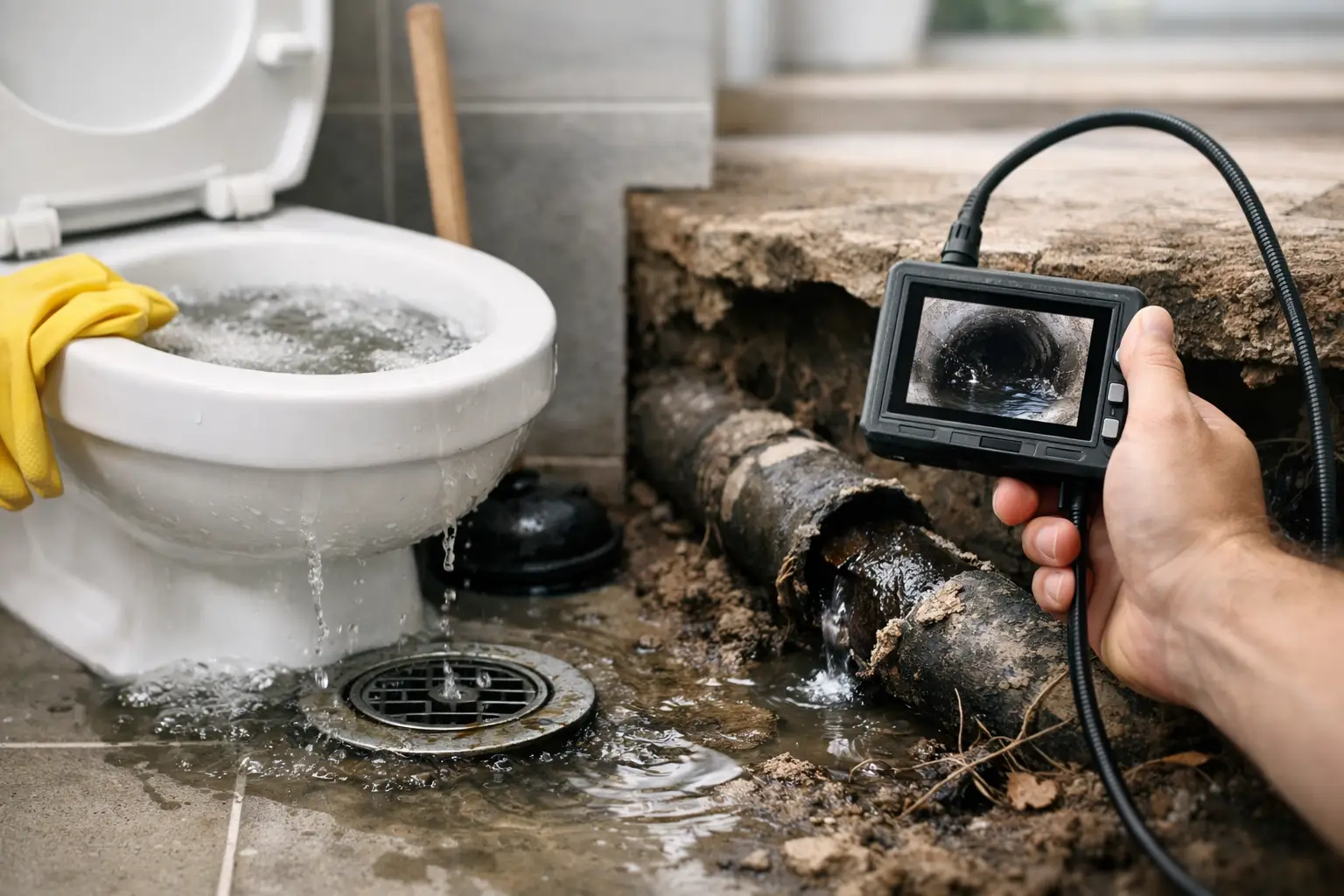
On Cape Cod properties, where seasonal use, older infrastructure, and shifting ground conditions can all play a role, these yard changes should not be brushed off. A camera inspection can confirm whether the line is leaking, sagging, or broken.
Pest activity increases near the line
Rodents and insects are drawn to moisture and waste. If you suddenly notice more pest activity around drains, crawl spaces, basements, or wet yard sections, it may connect to a sewer issue. This sign is less obvious than a backup, but it can still point to a damaged line underground.
What causes sewer line trouble
Knowing the likely cause helps set expectations for repair. Not every sewer problem means full replacement, but not every clog can be solved with basic snaking either.
Tree root intrusion is one of the most common causes. Roots seek moisture and can enter small cracks or joints, then expand enough to catch debris and restrict flow. Older pipes are also vulnerable to corrosion, collapsed sections, offset joints, and bellies, which are low spots where water and solids collect.
Household habits matter too. Grease, paper towels, wipes labeled flushable, and hygiene products often contribute to buildup. In commercial settings, heavier use and grease loads can push a stressed line over the edge faster.
When it is probably not just a simple drain clog
The difference between a branch drain clog and a sewer line problem usually comes down to scale. If one fixture is affected, the issue is often local. If several fixtures are involved, especially on different levels of the property, the main line becomes more likely.
Recurring drain cleaning needs are another clue. If the same property keeps having slow drains or backups every few months, there is usually an underlying issue that has not been fully diagnosed. A sewer camera inspection gives a clearer answer than repeated guesswork.
That matters because the right repair depends on the actual condition of the pipe. A soft blockage may clear with professional drain cleaning. Root intrusion may require mechanical root removal and a plan for long-term repair. A collapsed line will not improve with cleaning at all.
What to do if you notice the top signs sewer line trouble is getting worse
If you are seeing more than one warning sign, limit water use right away. Avoid doing laundry, running the dishwasher, or taking long showers until the system is checked. The more wastewater you send into a restricted line, the greater the chance of an indoor backup.
Skip chemical drain cleaners. They rarely solve a main sewer line problem, and they can damage pipes or create hazards for technicians. A plunger may help a local fixture clog, but repeated plunging on a main line issue usually does not fix the cause.
The safest next step is a professional evaluation. In many cases, that means clearing the line if possible and using a camera to identify what is inside the pipe. That approach prevents unnecessary work and helps you understand whether you are dealing with buildup, roots, pipe damage, or a combination of problems.
Why early diagnosis saves money
Sewer line repairs are never something property owners want to schedule, but delay is often what makes them worse. A minor obstruction can become a full blockage. A crack can widen. Wastewater can damage flooring, drywall, stored belongings, and mechanical equipment.
Early diagnosis also gives you more options. If the line is still structurally sound, cleaning and maintenance may buy time. If repairs are needed, catching the issue before a full collapse can reduce restoration work and disruption. For busy households and commercial properties, that difference matters.
Licensed professionals can also help separate urgent problems from problems that can be planned. That is important for budgeting, especially when a repair needs to be coordinated with occupancy, business hours, or seasonal property use.
When a plumbing system starts sending mixed signals, trust the pattern. Slow drains, bubbling toilets, sewer odors, and wet yard spots are not the kind of problems that improve by waiting them out. A fast inspection today is often what prevents a much bigger mess tomorrow.