A drain that keeps backing up is rarely just a one-time annoyance. It slows down your morning, creates odors, and leaves you wondering whether a quick fix will hold or if a bigger cleaning is overdue. When homeowners and property managers compare hydro jetting vs snaking drains, the real question is not which tool sounds stronger. It is which method fits the type of blockage, the condition of the pipe, and how often the problem comes back.
Both options are common professional drain-cleaning methods, but they do very different jobs. Snaking is often the faster answer for a localized clog. Hydro jetting is a more thorough cleaning process that can strip years of grease, sludge, and debris from pipe walls. Knowing the difference can help you make a better service call the first time.
Hydro jetting vs snaking drains: the core difference
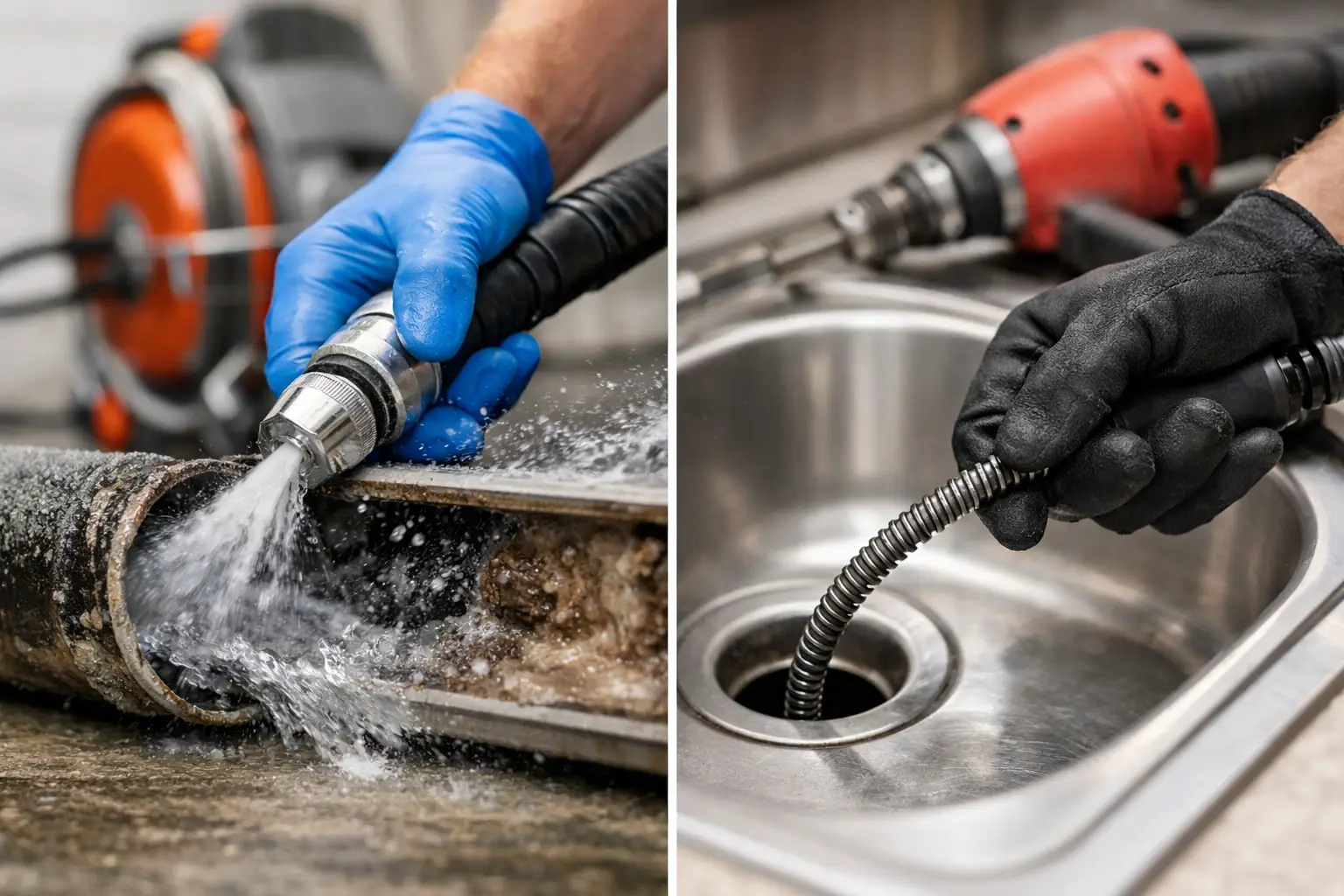
Drain snaking works by sending a cable into the pipe to break through or pull apart an obstruction. A technician feeds the auger through the line until it reaches the clog, then uses the cable head to punch through it, hook it, or bore a path that allows water to flow again.
Hydro jetting uses highly pressurized water to clean the inside of the pipe. Instead of just making a hole through the blockage, it washes buildup off the pipe walls and pushes debris down the line. Think of snaking as opening a path and hydro jetting as cleaning the full pipe interior.
That difference matters because many drain problems are not caused by one solid object. Kitchen lines often collect grease and soap residue. Bathroom drains build up hair, toothpaste, and sludge. Main sewer lines can catch scale, soft blockages, and even roots. If the problem coats the pipe over time, a snake may restore flow without fully removing what caused the backup in the first place.
When snaking is the better choice
Snaking is usually the practical first step when a drain has a simple clog and the line itself is in decent condition. If one sink, tub, or toilet is draining slowly and the issue seems recent, a snake can often solve it efficiently.
It is also a good option when the goal is immediate relief. A paper blockage in a toilet line, a wad of hair near a tub trap, or a small obstruction in a branch line may not need the full force of hydro jetting. In those cases, snaking can clear the problem with less setup and, in some situations, lower cost.
For older plumbing systems, snaking may also be the safer starting point until the pipe condition is confirmed. Some homes in older parts of Cape Cod have aging cast iron or fragile drain lines. If a pipe is cracked, heavily corroded, or already compromised, blasting it with high-pressure water before inspection may not be the right move.
Snaking does have limits. It often creates a channel through the clog rather than removing all the residue around it. That means a line may drain better today but clog again sooner if grease, sludge, or roots remain in place.
When hydro jetting makes more sense
Hydro jetting is typically the stronger choice when clogs keep returning, multiple fixtures are affected, or there is clear evidence of buildup inside the pipe. If a kitchen drain has been snaked more than once and still slows down every few months, that points to residue coating the line, not just a single blockage.
This method is especially effective for grease-heavy drains, commercial kitchen lines, soap buildup, mineral scale, and organic sludge. It can also help with certain root intrusions, though that depends on how severe the root growth is and whether the pipe has structural damage.
Hydro jetting is often the better long-term value when the line needs a true cleaning, not just a reopening. Because it scrubs the full pipe diameter, it can restore much better flow and reduce the chance of another service call in the near future.
For restaurants, multifamily properties, and homes with a history of recurring backups, that deeper cleaning can make a noticeable difference. It is not just about getting water moving again. It is about reducing downtime and repeated disruption.
The trade-offs homeowners should know
If this were simply a contest of which method is more powerful, hydro jetting would win. But drain cleaning is not that simple. The right method depends on what is in the pipe and what shape the pipe is in.
Snaking is less comprehensive, but it can be the smartest choice for isolated clogs or delicate systems. Hydro jetting is more thorough, but it requires judgment. A licensed technician should assess the line first, especially in older homes or buildings where the drain piping may be weakened.
Cost is another factor. Hydro jetting usually costs more than basic snaking because it involves specialized equipment, greater cleaning power, and often additional inspection. But if snaking becomes a repeated short-term fix, the lower upfront price may not save money over time.
There is also the question of urgency. If you need a blocked toilet or sink opened as quickly as possible, snaking may be the fastest path to relief. If the problem has been building for months and causing repeat backups, hydro jetting is often the more complete answer.
Why a camera inspection often matters first
The best drain-cleaning decisions are not made by guesswork. A video camera inspection helps identify whether the problem is grease, roots, a collapsed section, a foreign object, or heavy scale buildup. It can also show whether the pipe is solid enough for hydro jetting.
This is where professional service makes a big difference. A recurring backup can look like a simple clog from the surface, but the real issue may be deeper in the main line. If a pipe has bellies, cracks, offset joints, or heavy corrosion, clearing the immediate blockage is only part of the fix.
In many cases, inspection changes the recommendation. A line that seemed like a hydro jetting candidate may actually need repair. On the other hand, a line that has been snaked several times may finally be identified as a perfect case for jetting because the pipe is structurally sound but badly coated inside.
Which option is better for your type of drain?
For bathroom sinks, tubs, and showers, snaking is often enough when hair and soap are the main issue. For kitchen drains, especially those with grease buildup, hydro jetting tends to deliver more lasting results. For main sewer lines, either method may be appropriate depending on whether the blockage is isolated or the pipe walls are lined with debris.
Commercial properties usually benefit more often from hydro jetting because their drains handle heavier daily use. Residential properties can go either way. A newer home with a single clog may only need snaking. An older home with repeated slow drains in several areas may need a more thorough cleaning approach.
If your drains gurgle, smell bad, back up repeatedly, or slow down after prior drain cleaning, those are signs the issue may not be fully resolved. That is usually when the hydro jetting vs snaking drains decision becomes more important.
What not to do before calling for service
If a drain is backing up, avoid pouring repeated chemical cleaners into the line. These products often do little against heavy buildup and can make professional service harder and less safe. They may also damage certain pipes over time.
It is also wise not to keep running fixtures to test whether the drain has improved. A partial clog can turn into a full overflow quickly, especially in sinks, floor drains, and lower-level plumbing.
A better move is to pay attention to the pattern. Is it one drain or several? Did the problem start suddenly or gradually? Has it happened before? Those details help a technician choose the right method faster.
Choosing the right fix the first time
There is no one-size-fits-all answer to hydro jetting vs snaking drains. Snaking is often the right call for a straightforward clog that needs fast relief. Hydro jetting is often the better solution for recurring blockages, heavy buildup, and lines that need a more complete cleaning.
What matters most is not choosing the strongest option on paper. It is choosing the service that matches the actual condition of the drain line. A dependable plumber will tell you when a basic snake is enough, when hydro jetting is worth it, and when the real issue may be pipe damage rather than a clog.
If your drains keep reminding you there is a problem, that is usually a sign to stop treating it like a minor inconvenience. The right cleaning method can buy back more than flow - it can buy back time, prevent mess, and keep a small plumbing issue from turning into a larger one.