A cold shower in a rental is more than an inconvenience, especially when the water heater is leaking, making unusual noises, or has stopped producing hot water entirely. So, do landlords handle water heater replacement? In most Massachusetts rental situations, yes: the property owner is responsible for maintaining a safe, working hot water system and arranging replacement when the existing unit fails from normal use or age.
That said, the answer can change when tenant damage, lease terms, utility responsibilities, or a commercial lease is involved. Knowing what to report, who to call, and how quickly the issue needs attention can prevent a water heater problem from becoming water damage, a loss of heat, or a dispute between tenant and owner.
When Landlords Handle Water Heater Replacement
For a typical residential rental, the landlord generally provides and maintains the equipment required to deliver hot water. Massachusetts sanitary requirements place responsibility on owners to maintain essential systems in safe operating condition. That includes the water heater, its connections, venting where applicable, and the plumbing needed to deliver hot water.
If a tank has reached the end of its service life, a heating element fails, a burner stops operating, or the unit begins leaking without tenant involvement, replacement is normally the landlord's responsibility. A lease may say that the tenant pays for electricity, natural gas, or oil used to heat water, but paying the utility bill is different from paying to replace the appliance or repair the plumbing system.
Landlords should also take the condition seriously before a total failure. Rust-colored water, puddling at the base of the tank, a popping sound caused by sediment, inconsistent temperatures, and repeated pilot or ignition issues can all indicate a unit nearing failure. Waiting for the tank to rupture can damage floors, stored belongings, and nearby finished space.
Massachusetts hot water standards matter
Massachusetts rentals must generally provide hot water at fixtures at a safe temperature range. A system that cannot produce adequate hot water, produces dangerously hot water, or leaks gas or water needs prompt professional attention.
For owners, this is not simply a question of tenant comfort. A failed water heater can create habitability concerns, cause significant property damage, and leave an occupied unit without a basic service. In a multi-family property, one failed centralized unit may affect several households at once.
When a Tenant May Be Responsible
A tenant is not typically responsible for a water heater that fails because it is old or poorly maintained. However, responsibility may shift if the tenant directly caused the damage.
Examples can include intentional damage, unauthorized modifications to plumbing or gas equipment, failure to report an obvious leak that later causes more extensive damage, or using the utility closet in a way that damages the unit or its connections. These situations are fact-specific. The landlord should document the condition, have a licensed technician identify the cause, and review the lease before charging a tenant for repairs or replacement.
Tenants should not attempt to repair a water heater themselves. Gas-fired equipment, electrical connections, pressure-relief valves, venting, and water lines all create safety concerns. A seemingly small repair can lead to scalding water, a gas issue, electrical shock, carbon monoxide exposure, or a major leak.
What Tenants Should Do When the Water Heater Fails
The fastest path to a solution is clear communication. Tenants should notify the landlord or property manager as soon as they notice no hot water, a leak, a burning smell, discolored water, unusual sounds, or an error code on the unit.
A written message or maintenance request is helpful because it creates a record of when the problem was reported. Include the apartment address, when the issue began, whether there is any water on the floor, and whether the unit is gas, electric, tankless, or connected to a boiler. Photos of a visible leak or error display can also help the owner send the right technician and parts.
If water is actively leaking, tenants should move belongings away from the area and use the building's emergency maintenance contact. If there is a gas smell, leave the area immediately, avoid switches or flames, and contact the gas utility or emergency services as appropriate before calling for plumbing service.
Do not shut off gas, disconnect electrical wiring, or tamper with a relief valve unless you have been instructed by a qualified professional or the property owner. If it is safe and accessible, turning off the water supply to a leaking tank may limit damage, but tenants should follow the building's emergency instructions.
What Landlords Should Do First
A landlord or property manager should treat a no-hot-water report as a priority, particularly in an occupied home, during cold Cape Cod weather, or where a leak is spreading. The first step is to determine whether the issue is a full failure, a limited plumbing issue, or a utility interruption.
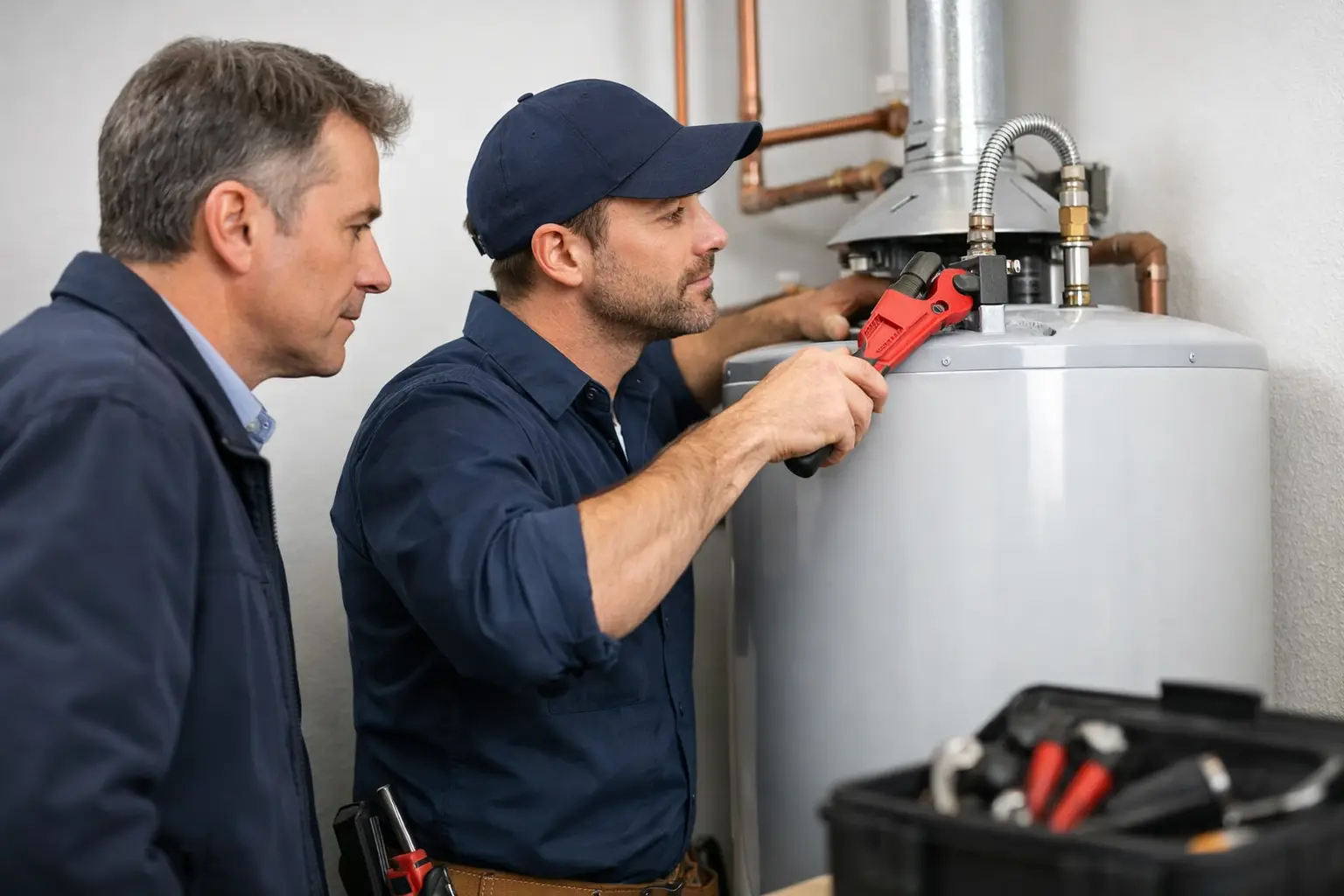
A licensed plumber can inspect the tank, thermostat, heating elements, ignition system, burner assembly, venting, expansion tank, shutoff valves, and pressure-relief valve. That diagnosis matters. Replacing a water heater when a failed mixing valve or electrical supply problem is the true cause wastes time and money. On the other hand, repairing a heavily corroded tank can be a short-lived fix that postpones an inevitable replacement.
For a replacement, the owner should consider the unit's fuel source, available space, household demand, venting requirements, local code requirements, and long-term operating cost. A like-for-like tank replacement is often the fastest option. A tankless water heater or heat pump water heater may lower energy use in the right property, but installation requirements, upfront cost, and recovery capacity need to be evaluated carefully.
A properly sized unit is particularly important in rentals. An undersized water heater can leave tenants without enough hot water during morning demand. An oversized unit can cost more to purchase and operate than necessary.
Repair or Replace? The Decision Usually Comes Down to Condition
Water heaters do not last forever. Traditional tank-style units commonly last around eight to 12 years, though water quality, maintenance, installation quality, and usage can shorten or extend that timeline. Cape Cod properties can also have seasonal occupancy patterns that make maintenance and winterization especially important.
Replacement often makes more sense when the tank itself is leaking or corroded, when repair costs are high relative to the unit's age, or when the system has had repeated breakdowns. A leaking tank generally cannot be repaired safely. Owners should act quickly rather than hoping the leak stays small.
Repair may be reasonable for a newer unit with a replaceable component problem, such as a thermostat, element, ignition part, or valve. A professional assessment gives owners the information needed to make a cost-conscious decision without compromising tenant safety or property protection.
Lease Terms and Commercial Properties Can Change the Answer
Residential rules are not always identical to commercial lease arrangements. In a commercial property, the lease may assign maintenance and replacement responsibilities to the tenant, landlord, or both. Triple-net leases and long-term commercial agreements often contain detailed language about mechanical systems, capital improvements, and repair limits.
Even then, a written lease does not make unsafe equipment acceptable. Property owners and commercial tenants should review the agreement, document the problem, and arrange qualified service quickly when hot water is necessary for operations, employee use, sanitation, or customer-facing services.
For residential rentals, landlords should be cautious about relying on broad lease language that attempts to transfer all repair responsibilities to a tenant. Local and state requirements can still apply, and unclear terms can create avoidable conflict.
Avoiding the Next Emergency
The best replacement decision is often made before the tank fails. Owners can track installation dates, schedule periodic inspections, check for corrosion and moisture, test safety components as recommended by a professional, and flush sediment where appropriate for the equipment. They should also confirm that shutoff valves are accessible and that the area around the heater is clear.
For property managers, keeping a record of model numbers, capacity, fuel type, warranty information, and prior repairs speeds up emergency service. It also makes it easier to plan replacement during a convenient window instead of responding after a flood.
When a water heater fails, a fast diagnosis from a licensed technician protects both the property and the people living or working in it. Durfee Plumbing & Heating can help Cape Cod owners and property managers assess urgent water heater problems, complete qualified replacements, and choose an option that fits the building's needs. A prompt call at the first sign of leaking or lost hot water is usually far less disruptive than waiting for a small problem to become an emergency.