A cold shower is inconvenient. A leaking water heater in a basement, utility closet, or seasonal Cape Cod home can become a costly water-damage problem fast. If you are searching for water heater replacement Wellfleet ma, the right time to act is usually before a complete failure leaves your household or tenants without hot water.
Water heaters often give warning signs, but those signs can be easy to ignore when the system still produces some hot water. Knowing what to watch for helps you plan a replacement around your schedule, choose an efficient system for your property, and avoid a rushed decision during an emergency.
7 Signs You Need Water Heater Replacement in Wellfleet MA
1. Your water heater is nearing the end of its expected life
A conventional tank water heater commonly lasts around eight to 12 years, though water quality, maintenance, installation quality, and household demand all affect its actual lifespan. Once a unit reaches that range, it may continue operating for a while, but the risk of a leak or component failure increases.
Check the manufacturer label for the serial number and installation date if it is available. If you are unsure how old the system is, a licensed technician can inspect it and help you decide whether a repair still makes financial sense.
2. There is water around the base of the tank
Moisture at the base of a water heater is never something to put off. It may come from a fitting, pressure relief valve, drain valve, or nearby plumbing connection. Those issues may be repairable. However, water seeping from the tank itself often means the inner tank has corroded, and replacement is the dependable solution.
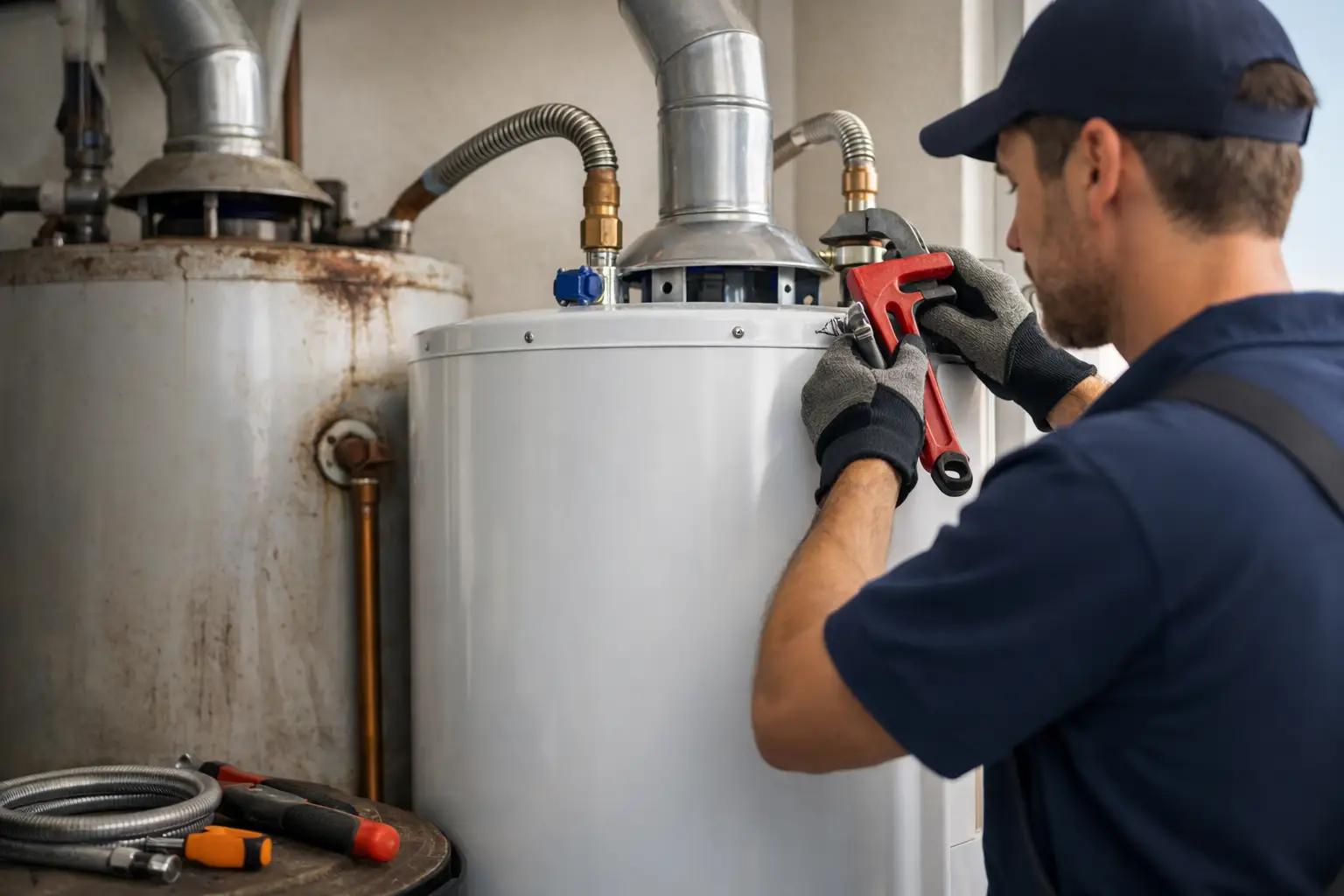
If active leaking is present, turn off the water supply to the heater if you can do so safely and contact a plumbing professional. A fully stocked service truck can make a major difference when the goal is to limit damage and restore hot water quickly.
3. Hot water runs out sooner than it used to
A tank that once handled morning showers, dishes, and laundry but now goes cold early may have sediment buildup, a failing heating element, or a worn burner component. In some cases, service can restore performance. In others, especially with an older heater, replacing the unit is a better long-term investment.
This is also a good moment to reconsider tank size. A growing family, frequent guests, a home office, or a rental property with changing occupancy can all change your hot-water needs.
4. Your hot water is rusty, cloudy, or has an odor
Discolored water can come from aging pipes, but it can also indicate corrosion inside the water heater tank. A metallic taste or rust-colored water from the hot side only is a strong reason to have the heater inspected. Persistent odor can be related to the anode rod or water chemistry and may sometimes be addressed with service.
A professional diagnosis matters here. Replacing a water heater will not solve every water-quality concern, so it is worth identifying the source before choosing a solution.
5. The heater makes popping, rumbling, or banging noises
Mineral sediment collects at the bottom of tank-style water heaters over time. As the burner or heating elements work beneath that buildup, the unit may rumble, pop, or sound like it is boiling. The heater has to work harder, which can reduce efficiency and put added stress on the tank.
Flushing can help in certain situations, particularly on a unit that has been maintained consistently. On an aging heater with heavy buildup, flushing may not be enough to restore reliable performance.
6. Utility costs have climbed without a clear reason
An older water heater can lose efficiency gradually, so the change is not always obvious from one month to the next. Sediment, worn components, heat loss, and an oversized or undersized unit can all contribute to higher operating costs.
A replacement gives you a chance to select a system that matches your fuel source, usage habits, available space, and budget. The lowest upfront price is not always the lowest cost over the life of the equipment.
7. Repairs are becoming routine
One isolated repair does not automatically mean replacement is necessary. A failed thermostat, valve, or heating element may be a reasonable repair on a newer unit. But if the heater is older and needs repeated service, spending more money on repairs can delay a replacement that is already approaching.
A straightforward estimate should explain the condition of the current system, the available repair option, and the replacement choices. That allows you to make a practical decision rather than guessing.
Choosing the Right Replacement Water Heater
The best water heater depends on the property. Cape Cod homes range from compact year-round houses to larger seasonal properties, and those differences matter. Your technician should consider the number of bathrooms, household size, peak demand, fuel availability, venting, electrical capacity, installation space, and whether the home is occupied year-round.
Standard tank water heaters
A storage-tank water heater remains a dependable choice for many homes and small commercial spaces. It stores a set amount of hot water and is generally familiar, cost-effective, and straightforward to service. The key is selecting the correct capacity. A tank that is too small leads to cold-water complaints, while an oversized tank can waste energy.
Tankless water heaters
Tankless systems heat water as it is needed instead of storing it in a tank. They can provide a continuous supply when properly sized and may save space, making them appealing for certain renovations or smaller utility areas. They also require careful sizing, appropriate gas supply or electrical capacity, correct venting, and regular maintenance.
Tankless is not automatically the right answer for every property. Larger households with simultaneous hot-water use need a system designed for that demand, especially during colder incoming-water conditions.
Heat pump water heaters
Heat pump water heaters use electricity differently from standard electric units by drawing heat from surrounding air. They can be an efficient option and may qualify for available incentives or Mass Save rebates. Their installation location matters, however. They need adequate surrounding space and can cool and dehumidify the area where they operate.
For the right home, a heat pump water heater can be a smart efficiency upgrade. For a tight, cold utility room or a property with unusual installation constraints, another option may fit better.
Why Professional Installation Matters
Water heater replacement involves more than sliding out an old tank and connecting a new one. Proper installation includes safe water connections, shutoff valves, pressure relief piping, gas or electrical work, venting when applicable, drainage considerations, code compliance, and correct startup settings.
For gas water heaters, improper venting or gas connections create serious safety risks. For electric and heat pump systems, electrical capacity and wiring must be evaluated correctly. Licensed technicians help ensure the new system is installed for safe, reliable operation, not just immediate hot water.
A professional installation also gives you a chance to address related issues, such as corroded supply lines, missing expansion tanks, inadequate drainage, or a poorly located shutoff. Solving those items during the project can prevent another service call later.
Planning Ahead for a Cape Cod Property
For a seasonal home, do not wait until the first busy weekend of summer to evaluate an aging water heater. A planned replacement offers more scheduling flexibility and time to compare system types. It also allows the contractor to coordinate installation details without the pressure of a full tank failure.
Property managers and commercial clients benefit from the same approach. A failed water heater can disrupt guests, tenants, staff, and customers. Keeping basic equipment records and scheduling an inspection when a unit reaches its expected age can reduce avoidable emergencies.
When replacement cannot wait, responsive service matters. Durfee Plumbing & Heating provides licensed plumbing and water-heater solutions backed by a one-year parts and labor warranty, with financing options available for qualifying larger projects.
If your water heater is leaking, making new noises, or struggling to meet demand, do not wait for the tank to fail completely. A prompt inspection can give you clear answers, protect your property, and help you get dependable hot water back on your terms.