
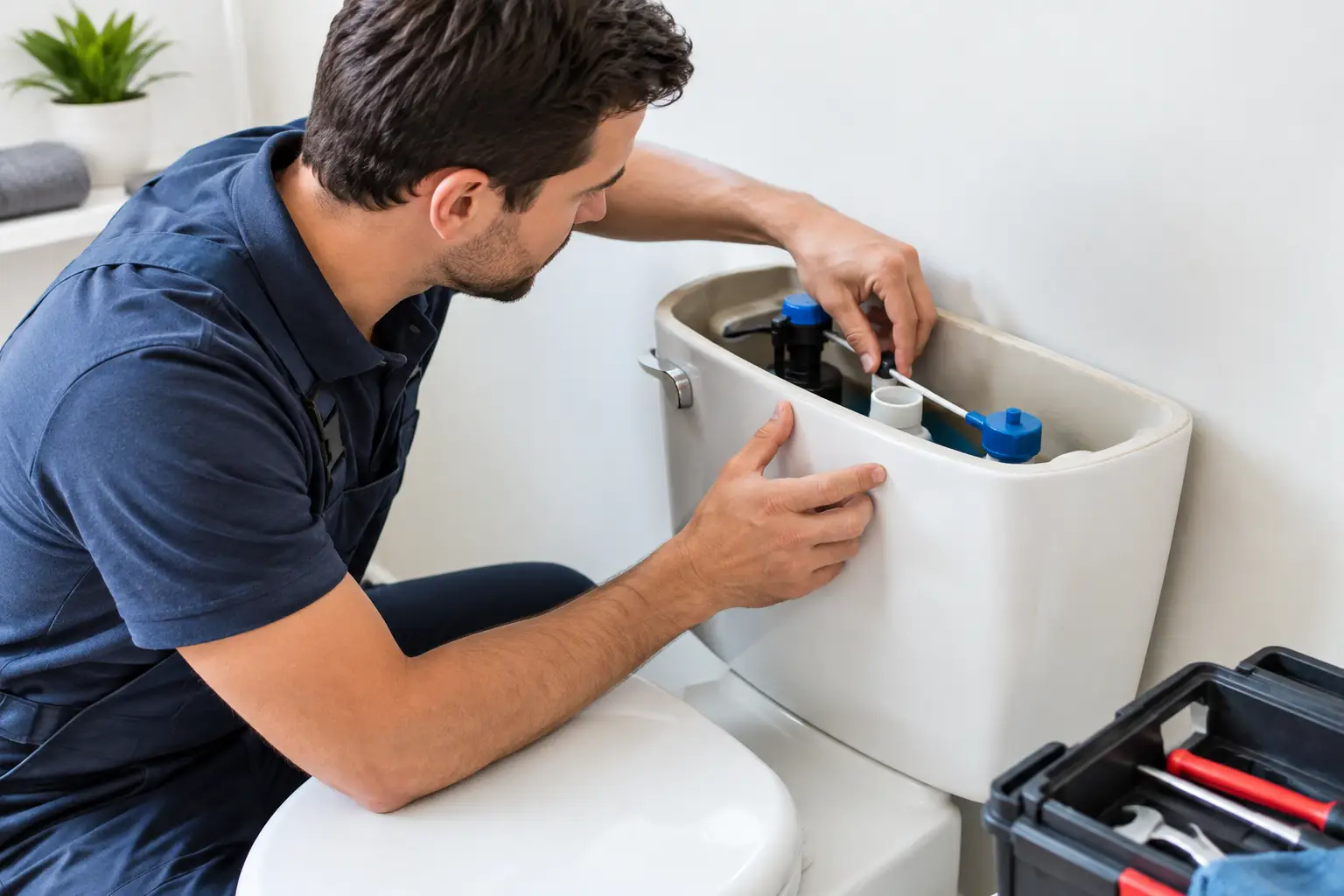
A toilet that refills every few minutes can waste a surprising amount of water, even when there is no puddle on the floor. The good news is that learning how to repair a running toilet usually starts with a few simple checks inside the tank. The less-good news is that a small part left unattended can raise your water bill and, in some cases, signal a problem that needs professional repair.
Most running toilets come down to one of two issues: water is leaking from the tank into the bowl, or the tank is filling too high and sending water through the overflow tube. Knowing which one you have will save time, prevent unnecessary parts purchases, and help you decide whether this is a reasonable DIY fix.
Why a Toilet Keeps Running
A toilet tank holds water until you flush. The flapper lifts, water moves into the bowl, and the tank refills. Once the water reaches the proper level, the fill valve shuts off. If any part of that sequence fails, the toilet may run continuously or cycle on and off throughout the day.
The most common cause is a worn flapper. This rubber seal sits at the bottom of the tank and closes after each flush. Over time, rubber can become stiff, warped, coated with mineral buildup, or simply unable to make a watertight seal. Water slowly slips into the bowl, the tank level drops, and the fill valve turns back on.
A faulty fill valve is another frequent culprit. If it does not shut off at the correct water level, water continues to enter the tank and flows down the overflow tube. A float set too high, a tangled lift chain, or an incorrectly seated replacement part can also create the same symptoms.
How to Repair a Running Toilet: Find the Cause First
Remove the tank lid carefully and place it on a towel or stable surface. Porcelain lids chip and crack easily. Then flush the toilet and watch what happens as the tank refills.
If water rises above the overflow tube or pours into it, the problem is generally the fill valve or float adjustment. If the tank fills to a normal level, shuts off, and later starts refilling without anyone flushing, suspect the flapper or flush valve seal.
Perform a simple dye test
A dye test confirms whether water is leaking past the flapper. With the tank full and the toilet quiet, add a few drops of food coloring to the tank water. Do not flush. Wait 15 to 20 minutes, then check the bowl.
If colored water appears in the bowl, water is leaking through the flapper or flush valve opening. If the bowl remains clear but water is entering the overflow tube, focus on the fill valve and water-level adjustment instead.
This test is especially useful for toilets that seem to run only occasionally. Those quiet, intermittent refills are easy to ignore, but they can waste water for weeks before a homeowner notices the bill.
Fix a Leaking Flapper or Flush Valve Seal
Start by checking the flapper chain. It should have a little slack when the flapper is closed. A chain that is too tight can hold the flapper slightly open. A chain that is too loose may get caught beneath the flapper or prevent a complete flush.
If the chain is adjusted properly, inspect the flapper itself. Look for cracking, rough edges, discoloration, or a rubber surface that feels hard rather than flexible. You may also find sediment or mineral deposits on the flapper seat, which is the smooth surface around the tank opening.
Turn off the shutoff valve behind the toilet, flush to empty the tank, and sponge out the remaining water. Clean the flapper seat gently with a soft cloth. If the flapper is visibly worn, replace it with a compatible model. Universal flappers can work well, but a replacement designed for your toilet model is often the better choice, particularly on newer high-efficiency toilets.
Before turning the water back on, make sure the new flapper lies flat and the chain is not twisted. Restore the water supply, let the tank refill, and repeat the dye test if you want confirmation that the seal is holding.
There is one important trade-off here: replacing a flapper is inexpensive and often effective, but it will not solve a damaged or warped flush valve seat. If a new flapper still leaks, the flush valve assembly may need to be replaced. That repair requires removing the tank from the bowl and is often best handled by a licensed plumber.
Adjust or Replace the Fill Valve
If water is flowing down the overflow tube, look at the water level inside the tank. It should normally stop about 1 inch below the top of the overflow tube. The exact fill line may also be marked on the inside of the tank.
Many newer fill valves have an adjustment screw, slide clip, or dial that lowers the float. Make small adjustments, then let the tank refill before changing it again. Lowering the water level slightly can stop overflow and reduce the amount of water used per flush.
If the fill valve hisses, runs inconsistently, does not respond to adjustment, or continues flowing after the water level is correct, replacement is usually the practical fix. Shut off the supply valve, flush the tank, disconnect the supply line beneath the toilet, and follow the replacement valve instructions carefully.
Pay close attention to the refill tube, the small flexible tube that sends water into the overflow pipe. It should be clipped above the opening, not pushed down inside it. If the tube is inserted too far, it can create a siphon effect that keeps the toilet running.
When a Running Toilet Is Not a Simple DIY Repair
A running toilet is often a small repair, but not always. Call a plumber if you see cracks in the tank or bowl, corrosion around hardware, water leaking onto the floor, or a shutoff valve that will not close fully. Water at the base of the toilet may point to a failed wax ring, a loose connection, or a crack that should not be ignored.
You should also bring in professional help when a toilet continues to run after you have replaced the flapper and fill valve. Older toilets can have worn flush valve seats, internal tank damage, or compatibility issues with aftermarket parts. For rental homes, multi-unit properties, and commercial restrooms, a recurring toilet problem can also affect operating costs and create avoidable tenant or customer complaints.
If a toilet is overflowing, turn the shutoff valve clockwise immediately. If that valve is stuck or leaking, remove the tank lid and lift the float to stop the incoming water while you arrange service. An active overflow can damage flooring, subflooring, and nearby rooms quickly.
For homeowners and property managers across Cape Cod, prompt service matters most when a toilet will not stop running, is leaking at the base, or is creating an after-hours problem. Durfee Plumbing & Heating provides licensed plumbing service with stocked trucks and 24/7 availability for urgent issues, helping reduce disruption before a minor fixture failure becomes water damage.
A Few Habits That Help Toilets Last Longer
Avoid drop-in chemical tablets in the tank unless the toilet manufacturer specifically approves them. Some products can degrade rubber seals and plastic components over time. If you notice a weak flush, handle that separately rather than increasing the tank water level beyond the recommended mark.
It also helps to check inside the tank once or twice a year. Test the flush, listen for refilling after the tank should be full, and look for moisture around the supply connection. These quick checks are particularly worthwhile before leaving a seasonal Cape Cod property vacant for an extended period.
A running toilet rarely fixes itself. Catching it early usually means a simple adjustment or a modest replacement part. Waiting can mean hundreds of gallons of wasted water, a higher utility bill, and a repair that is more involved than it needed to be.



