
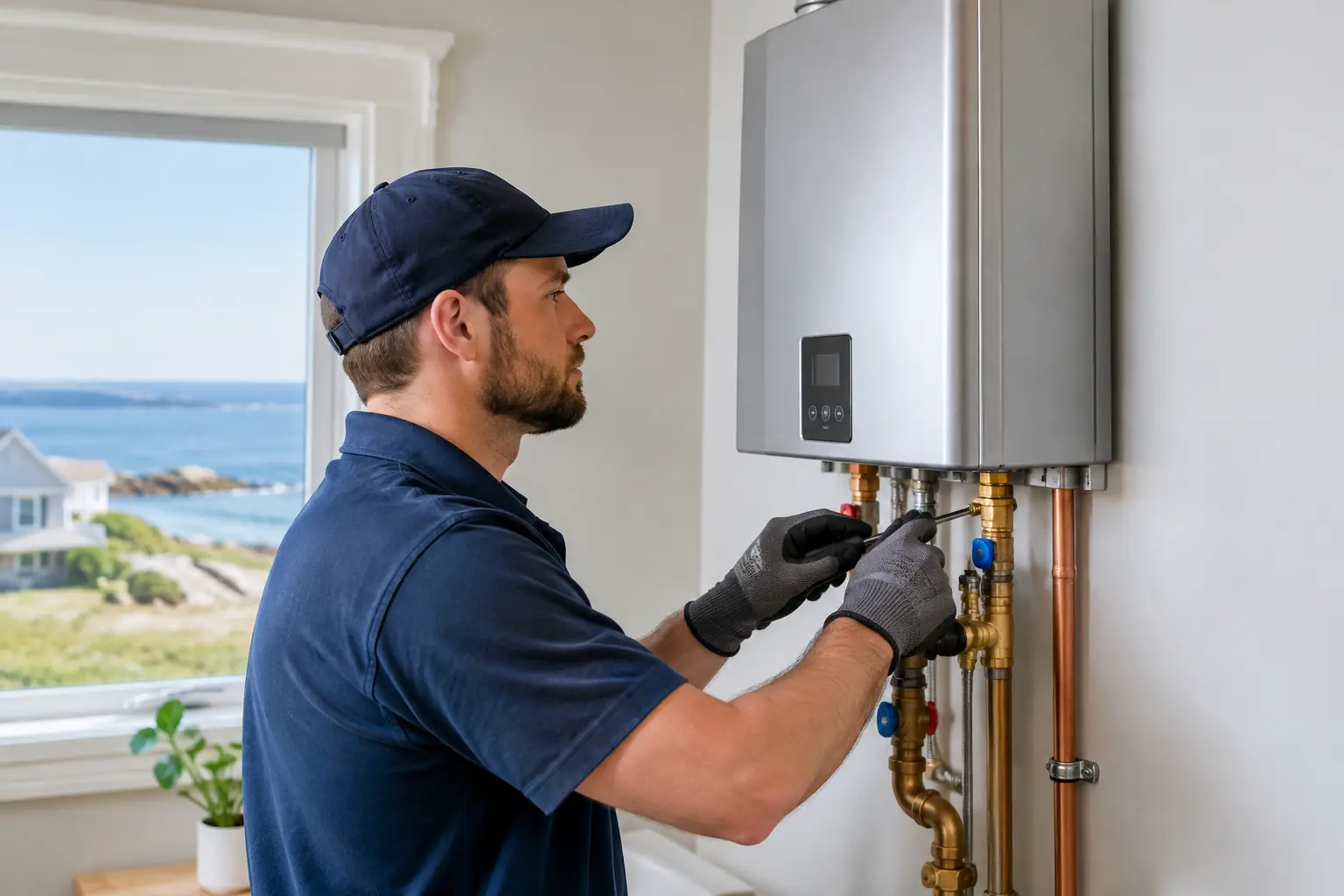
A cold shower in January is not the time to find out your water heater cannot keep up. For many homeowners, tankless water heater installation Cape Cod is a practical upgrade when an aging tank is taking up space, wasting energy, or leaving the household short on hot water. But a tankless unit is not a simple swap. Proper sizing, gas capacity, venting, water quality, and local code requirements all affect how well it performs.
A professionally installed tankless water heater can provide dependable hot water on demand for years. The key is choosing equipment that fits the home, not just the space where the old tank once stood.
Why Cape Cod Homes Need Careful Tankless Sizing
Tankless water heaters heat water as it moves through the unit. Unlike a storage tank, they do not keep 40 or 50 gallons heated around the clock. When a hot-water fixture opens, the unit fires up and heats water as needed.
That efficiency is appealing, especially for year-round homes, rental properties, and households trying to reduce utility costs. Still, “endless hot water” has an important condition: the system must be sized for the incoming water temperature and the number of fixtures that may run at once.
Cape Cod’s winter groundwater is cold. A unit that seems adequate based on a manufacturer’s maximum flow rating may produce less usable hot water when it has to raise very cold incoming water to shower temperature. A home with two showers running, a dishwasher cycling, and a washing machine filling needs more capacity than a smaller home with one bathroom.
A licensed technician should look at your household’s peak demand rather than simply match the old tank size. That assessment includes the number of bathrooms, fixture flow rates, washing habits, appliance use, and whether the home is occupied seasonally or full-time. For larger homes, two tankless units or a correctly designed multi-unit setup may be the better answer.
What a Tankless Water Heater Installation Involves
A tankless installation starts well before the unit is mounted on the wall. In many cases, the existing water heater connections need to be modified to safely support the new equipment.
For gas-fired tankless systems, the gas line is a major consideration. High-output tankless heaters often require more gas than a conventional tank water heater. If the existing line is undersized, the technician may need to install a properly sized gas line from the meter or make other approved changes to support the load. This is especially important in homes where gas furnaces, ranges, fireplaces, or generators share the same supply.
Venting is equally important. Modern condensing tankless models commonly use approved direct-vent materials and bring combustion air in from outdoors while exhausting gases outside. The vent route, termination location, clearances, and condensate drainage all need to meet manufacturer instructions and applicable codes. A shortcut here can create reliability and safety issues that are expensive to correct later.
Water piping, shutoff valves, service valves, pressure relief protection, electrical power, and a condensate drain also need attention. A clean installation makes routine service easier and protects the home from preventable leaks. If the old water heater was in a tight basement, utility closet, or crawlspace, a tankless unit can free up valuable floor space, but access for future maintenance still matters.
Permits and Licensed Work Protect the Investment
Water heating equipment involves plumbing, fuel, venting, and often electrical work. In Massachusetts, permits and properly licensed installation are not paperwork to ignore. They help verify that the system is installed safely and in accordance with local requirements.
This matters when selling a home, filing an insurance claim, managing a rental property, or troubleshooting a future problem. It also helps preserve manufacturer warranty coverage, since many manufacturers require qualified installation and documented maintenance.
A professional installer should explain what work is needed before the job begins, including whether the project requires gas line upgrades, electrical changes, vent modifications, or water treatment. Clear expectations are particularly valuable for older Cape Cod homes, where previous renovations may have left behind limited access, aging piping, or nonstandard utility layouts.
Is a Tankless Water Heater Right for Your Home?
Tankless systems are an excellent fit for many properties, but they are not automatically the best choice for every building. The right decision depends on how the property uses hot water and what infrastructure is already in place.
A tankless water heater may make sense if your current tank is nearing the end of its life, hot water runs out during busy times, or you want more usable utility-room space. It can also be a strong option for homes with consistent occupancy and a need for efficient, on-demand performance.
The trade-off is that installation can cost more upfront than a straightforward tank replacement. Gas piping, venting, electrical work, and condensate management can add to the project. Tankless equipment also needs periodic maintenance. Mineral scale can build up inside the heat exchanger, particularly where water conditions call for regular flushing or treatment.
For some homes, a high-efficiency tank water heater or heat pump water heater may be a better match. Heat pump water heaters can be very efficient, but they need adequate installation space and operate differently in cool locations. A qualified contractor can compare the real-world fit of each option instead of pushing one product for every situation.
Maintenance Keeps Tankless Systems Performing
A tankless water heater does not eliminate maintenance. It changes the kind of maintenance the system needs.
Annual service is often recommended, especially for gas-fired units. During a maintenance visit, a technician can flush the heat exchanger as needed, inspect and clean filters, check venting and combustion-related components, verify safe operation, and look for error codes or early signs of wear. Keeping the unit maintained supports efficiency, protects the equipment, and reduces the chance of losing hot water when demand is highest.
Property managers should also consider maintenance planning for seasonal homes and vacation rentals. A vacant building may need winterization to protect plumbing from freezing, while a heavily used rental may require more frequent checks due to higher demand. The best schedule depends on the system, water conditions, and how the building is used.
Questions to Ask Before You Schedule Installation
Before approving a tankless project, ask how the unit will be sized for winter incoming water temperatures and your household’s peak usage. Confirm whether the existing gas line can support the appliance, what venting method will be used, and whether permits and inspections are included in the scope of work.
It is also smart to ask about warranty coverage, recommended maintenance, and what happens if the unit needs service after installation. A one-year parts and labor warranty provides added reassurance, while a contractor with stocked trucks and 24/7 availability can make a major difference if a plumbing or heating issue cannot wait.
For larger upgrades, ask about financing options and available energy-efficiency incentives. Eligibility and rebate amounts can change, so the value of an upgrade should be based on current program requirements and the equipment selected.
Get the Installation Right From Day One
The best tankless water heater is the one that delivers the hot water your property needs without straining the gas supply, venting system, or budget. It should be installed with the same attention to detail you would expect from any major home system.
Durfee Plumbing & Heating helps Cape Cod homeowners and property managers evaluate water-heating options, complete licensed installations, and keep equipment running with dependable service. If your existing water heater is leaking, underperforming, or nearing the end of its lifespan, scheduling an evaluation before it fails can give you more choices and far less disruption.



