
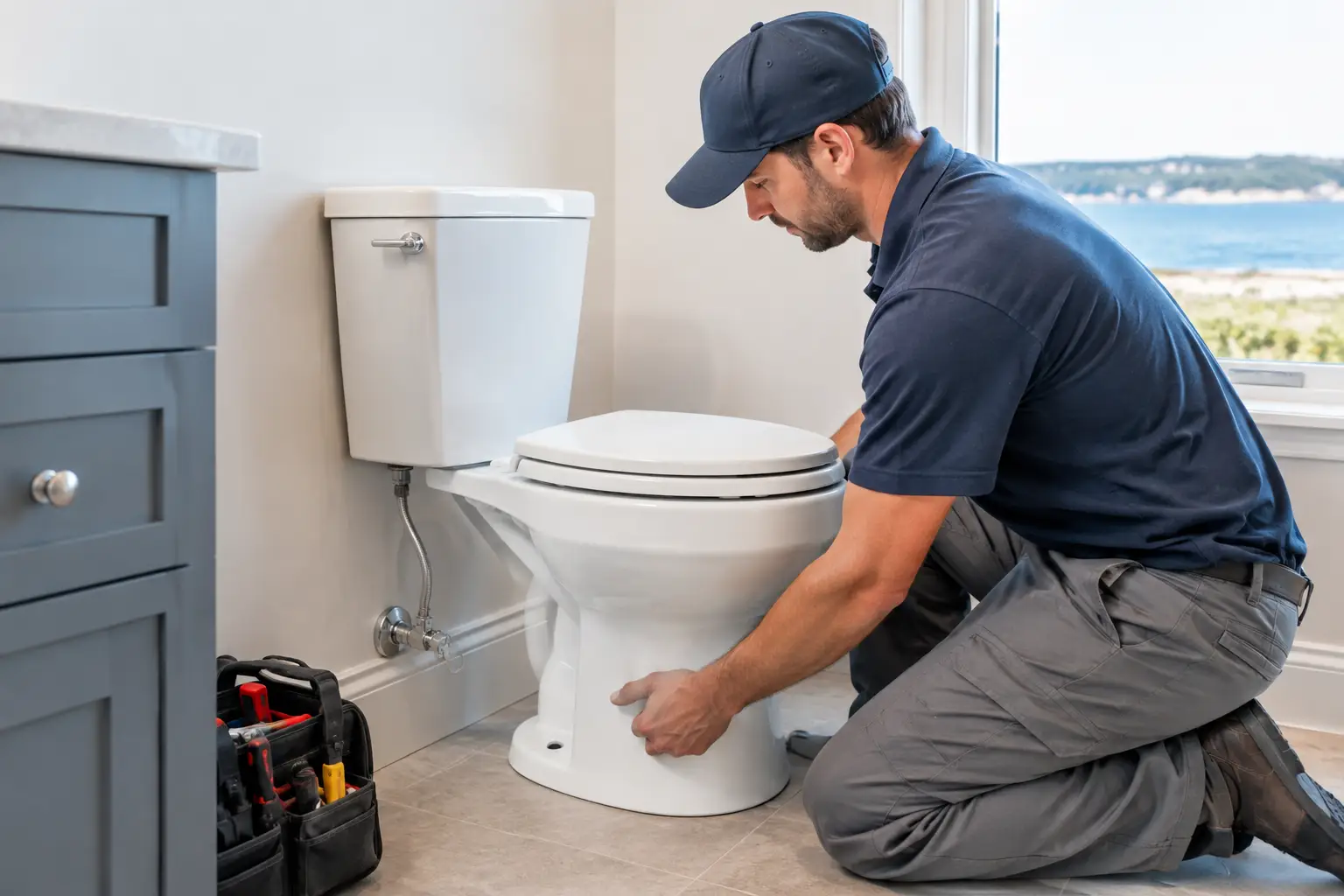
A toilet that rocks at the base, refills without stopping, or leaves moisture around the floor is not a small annoyance to put off. In many cases, it is a sign that the seal, supply connection, internal components, or the fixture itself needs attention. Professional toilet installation Cape Cod homeowners can rely on starts with more than setting a new fixture in place. It means confirming the toilet fits the bathroom, connects correctly, flushes reliably, and protects the floor below it.
For a primary home, seasonal property, rental, or commercial restroom, the right installation can prevent a frustrating leak from becoming a damaged subfloor, a service interruption, or an emergency call.
When a New Toilet Is the Better Repair
Many toilet problems can be repaired. A running toilet may only need a new flapper, fill valve, or flush valve seal. A weak flush can sometimes be traced to mineral buildup, an incorrect water level, or a drain issue. Repair is often the practical choice when the fixture is in good condition and the problem is limited to one replaceable part.
Replacement makes more sense when the toilet is cracked, repeatedly leaks from the base, has an unreliable flush despite repairs, or uses far more water than a modern model. Older toilets can use several gallons per flush. Current high-efficiency fixtures use considerably less water while still providing dependable performance when selected and installed correctly.
A toilet that moves when someone sits down should be addressed promptly. The cause may be loose mounting hardware, but it can also point to a failed wax ring, an uneven finished floor, or damage around the flange that connects the toilet to the drain line. Tightening bolts without identifying the cause can crack the porcelain or hide a leak beneath the fixture.
Toilet Installation in Cape Cod Starts With the Right Fit
Toilets are not one-size-fits-all. Before choosing a model, a plumber should verify the rough-in measurement - the distance from the finished wall behind the toilet to the center of the drain. A 12-inch rough-in is common, but 10-inch and 14-inch configurations exist, particularly in older homes or bathrooms that have been remodeled over time.
Bathroom layout also matters. A toilet may technically fit the rough-in but leave too little clearance for a door, vanity, grab bar, or comfortable use. In a compact powder room, a round-front bowl can preserve needed space. In a larger bathroom, an elongated bowl may offer greater comfort. Chair-height toilets are often easier for adults with mobility concerns, while a standard-height fixture can be preferable in certain family bathrooms.
For property managers and commercial clients, accessibility requirements and high-use durability may guide the decision. Residential and commercial installations have different needs, and the best choice depends on who uses the restroom, how often it is used, and the existing plumbing configuration.
One-Piece, Two-Piece, and Wall-Hung Options
A two-piece toilet is a common, serviceable choice. The tank and bowl are separate, which can make the fixture easier to move into a tight bathroom. One-piece toilets have a cleaner profile and fewer exterior crevices, but they can cost more and may be heavier to handle.
Wall-hung toilets create open floor space and make cleaning easier, but they require an in-wall carrier system and more involved plumbing work. They are usually best considered during a bathroom renovation rather than as a simple replacement. The right option depends on the room, budget, maintenance preferences, and whether the wall can be opened for the required support and connections.
What a Professional Installation Should Include
A proper installation is not just a matter of removing the old toilet and tightening a few bolts. The condition of the connection underneath is just as important as the new fixture above it.
After shutting off the water and removing the existing toilet, the installer should inspect the flange, floor area, shutoff valve, supply line, and drain opening. Evidence of staining, soft flooring, corrosion, or a damaged flange may require additional repair before a new toilet is installed. This is especially valuable in Cape Cod homes where bathrooms may see seasonal use, changing indoor temperatures, or long periods when a property is unoccupied.
The new toilet needs to be set level and supported evenly. Shims may be needed when a finished floor is uneven. The seal must be correctly sized and positioned, and the mounting bolts should be tightened carefully. Over-tightening can damage porcelain. Under-tightening can allow movement that breaks the seal over time.
Once the water connection is made, the toilet should be tested through multiple flushes. The installer should check the tank-to-bowl connection, supply line, shutoff valve, base, and surrounding floor for leaks. A final check confirms the toilet fills to the proper level, shuts off fully, flushes as intended, and remains stable under normal use.
Why the Floor and Flange Matter So Much
The toilet flange is the fitting that joins the toilet to the drain pipe and gives the fixture a secure mounting point. If the flange sits too low beneath a new tile floor, is cracked, or is no longer firmly attached, the toilet may leak or wobble even when the fixture itself is new.
A failing seal can allow water and sewer gas to escape at the base. Sometimes the first sign is a faint odor. Other times, the flooring feels soft near the toilet or staining appears on the ceiling below. These conditions deserve prompt attention, particularly in a second-floor bathroom where hidden leakage can affect rooms underneath.
A qualified plumber can determine whether the issue calls for a flange repair, floor repair, an extension ring, or a different installation approach. That assessment protects against the common mistake of placing a new toilet over an old connection problem.
Choosing Water Efficiency Without Sacrificing Flush Performance
Water savings are a strong reason to replace an outdated toilet, but low water use alone does not guarantee a good experience. Flush performance varies by model, bowl design, trapway size, and the condition of the building drain. A toilet that requires frequent double flushing can erase much of its intended water savings.
For most homes, a quality high-efficiency toilet offers a practical balance of performance and conservation. Dual-flush models give users a lower-volume flush for liquid waste and a full flush when needed. They can be a good fit for households focused on water use, although the additional mechanism means there are more components to service later.
If a toilet frequently clogs, the problem may not be the fixture. A partial drain blockage, poor venting, or buildup in the line can create recurring backup issues. Replacing the toilet without evaluating the drain can leave the underlying problem unresolved.
Situations That Call for a Plumber Right Away
A toilet installation can become urgent when the old fixture has cracked, the base is leaking, the shutoff valve will not close, or the drain line is backing up. If water is spreading across the floor, shut off the toilet’s local water valve if it is accessible. If the valve fails or the leak continues, turn off the home’s main water supply and call for help.
Do not keep using a toilet that rocks, leaks at the base, or causes water to appear downstairs. Repeated use can worsen floor damage and increase the scope of repair. For businesses and rental properties, a fast response also helps limit restroom downtime and protects occupants from an unsanitary condition.
Durfee Plumbing & Heating provides licensed plumbing service across Cape Cod, with 24/7 availability for urgent issues and a 1-year parts and labor warranty on qualifying work. A fully stocked service truck can make a difference when a toilet replacement reveals a worn valve, damaged supply line, or flange issue that needs to be corrected before the job is complete.
Plan for a Toilet That Works for the Long Term
The lowest-priced toilet is not always the lowest-cost choice once comfort, water use, repair history, and installation conditions are considered. A properly selected fixture and a sound connection beneath it can provide years of dependable service. If you are replacing a toilet because of a leak, wobble, poor flushing, or an aging bathroom layout, treating the installation as a full plumbing assessment is the best way to protect the room around it.



