
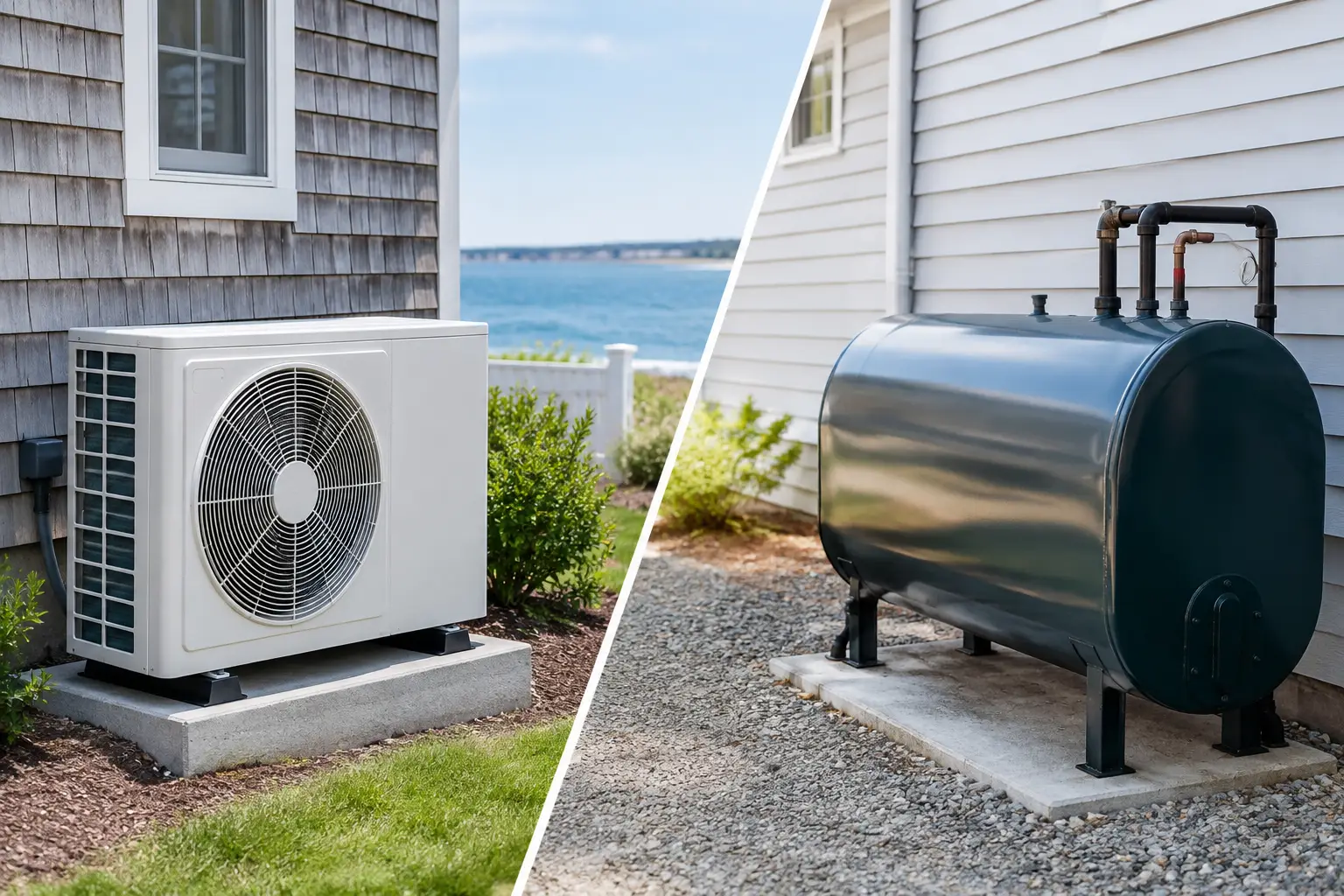
A January cold snap on Cape Cod can make an aging heating system feel like an emergency waiting to happen. When comparing heat pump vs oil heat Cape Cod homeowners need to look beyond the equipment price. Your home’s insulation, existing fuel setup, year-round occupancy, and need for air conditioning all affect which option will serve you best.
Oil heat remains a familiar, capable choice for many local homes. Modern heat pumps have also become a practical solution for Cape properties, especially when cooling, efficiency, and reduced oil use are priorities. The right answer is rarely one-size-fits-all.
Heat Pump vs Oil Heat Cape Cod: The Main Difference
An oil-fired boiler or furnace creates heat by burning heating oil. A boiler sends hot water or steam through radiators, baseboards, or radiant tubing. An oil furnace heats air and moves it through ductwork. Both can deliver strong, dependable heat in cold weather when properly maintained.
A heat pump works differently. Instead of making heat through combustion, it moves existing heat from outside air into your home. Even on a cold Cape Cod day, outdoor air contains heat a cold-climate heat pump can use. In summer, the process reverses, providing central or ductless air conditioning.
That difference has practical consequences. Oil systems are built around one job: heating. Heat pumps can heat and cool, use electricity rather than delivered oil, and are typically much more efficient during moderate weather. However, system design matters. A heat pump that is too small, poorly located, or installed without addressing air leaks may not provide the performance a homeowner expects.
How Each System Handles a Cape Cod Winter
Cape Cod winters are not usually defined by months of extreme subzero temperatures, but wind, damp air, and coastal exposure can make homes feel colder than the thermostat reading suggests. Older cottages, additions, seasonal properties, and homes with uneven insulation create another layer of challenge.
Oil heat has a clear strength during the coldest stretches. A properly sized oil boiler or furnace produces high-temperature heat and can recover quickly when indoor temperatures have dropped. For a home with older baseboard radiators, an oil boiler may fit the existing system with fewer changes.
Today’s cold-climate heat pumps can perform well in Massachusetts winter conditions. They do not stop working when temperatures fall below freezing, but their output and efficiency decline as the outdoor temperature drops. A properly designed system may include electric backup heat or work alongside an existing boiler or furnace for the coldest days.
For some homeowners, the best answer is not a full replacement. A dual-fuel setup keeps an existing oil system available for backup while a heat pump handles much of the fall, spring, and milder winter heating load. This can be especially useful in an older home where a complete conversion would require significant electrical, ductwork, or insulation upgrades.
Upfront Cost and Long-Term Operating Costs
Comparing price tags alone can lead to the wrong decision. Replacing an oil furnace or boiler is often more straightforward if the oil tank, venting, chimney, radiators, or ductwork are in good condition. The project cost can rise when those components are aging or need to meet current requirements.
Heat pump installation costs vary widely based on the home and system type. A ductless mini-split may be a practical choice for a smaller home, addition, finished attic, or rooms that never heat evenly. A ducted heat pump can serve an entire home where usable ductwork already exists. Homes without ducts may need multiple indoor units, new concealed duct runs, or other planning to achieve balanced comfort.
Monthly operating cost is also not fixed. Oil prices change, electric rates change, and each home uses energy differently. Heat pumps generally deliver more heat per unit of energy than electric resistance heat, but their savings compared with oil depend on outdoor temperatures, equipment efficiency, thermostat settings, insulation, and whether backup heat runs frequently.
Available Mass Save rebates and financing can change the math substantially for eligible projects. A professional assessment should look at the installed cost after applicable incentives, not only the price shown on the first estimate.
Comfort Is About More Than Temperature
Oil boilers are often appreciated for the steady feel of hydronic baseboard or radiator heat. If your home already has a well-functioning boiler and distribution system, it can provide even, familiar comfort for decades with proper service.
Heat pumps offer a different kind of comfort. They run longer at lower output rather than cycling on and off with blasts of hot air. That steadier operation can reduce temperature swings. Ductless indoor units also allow room-by-room temperature control, which is helpful in homes with rarely used guest rooms, sunrooms, or separate living areas.
There are trade-offs. Indoor air handlers need thoughtful placement, and some homeowners prefer the appearance of traditional baseboard or hidden ductwork. A heat pump also needs regular filter cleaning and clear outdoor airflow. Near the coast, equipment selection and maintenance matter because salt air can contribute to corrosion over time.
When Oil Heat May Be the Better Choice
Keeping or replacing oil heat can make sense when your existing system is reliable, your home depends on high-temperature radiators, and a full heat pump conversion would involve major renovations. It may also be the practical choice for a property with limited electrical capacity or an unfinished building envelope that needs insulation and air-sealing work first.
Oil heat is not maintenance-free. Annual burner service, filter replacement, tank monitoring, chimney or venting checks, and prompt attention to leaks or unusual noises help prevent a no-heat call when temperatures drop. If a system is reaching the end of its service life, waiting for a breakdown can limit your choices and create pressure to replace equipment quickly.
When a Heat Pump Is a Strong Fit
A heat pump is often a strong option for homeowners who want both heating and air conditioning, are tired of arranging oil deliveries, or want to lower their dependence on fossil fuel. It can be especially attractive for well-insulated homes, renovations, additions, and properties that currently rely on electric baseboard heat, propane space heaters, or window air conditioners.
For seasonal Cape homes, a heat pump can also offer efficient shoulder-season heating and cooling without running a central oil system for occasional use. That said, any unoccupied winter property still needs a reliable freeze-protection plan. Thermostat monitoring, plumbing winterization when appropriate, and a backup heat strategy can protect against expensive water damage.
Do Not Skip the Home Evaluation
The quality of the installation matters as much as the equipment choice. Before recommending a heat pump, a qualified contractor should evaluate the home’s heat loss, electrical service, insulation, window condition, layout, and current distribution system. Equipment should be sized for the building, not selected by a quick rule of thumb or the size of the old unit.
The same is true for oil replacements. A boiler or furnace that is oversized can short-cycle, waste fuel, and wear components faster. A system that is undersized may struggle during severe weather. Proper sizing, safe installation, and a clear explanation of maintenance needs protect both comfort and your investment.
Durfee Plumbing & Heating helps Cape Cod homeowners evaluate repair, replacement, and hybrid heating options with licensed technicians, practical recommendations, and financing for larger projects. Whether your oil system is showing its age or you are considering a heat pump for year-round comfort, the best next step is a site-specific assessment before the next cold spell makes the decision for you.



