
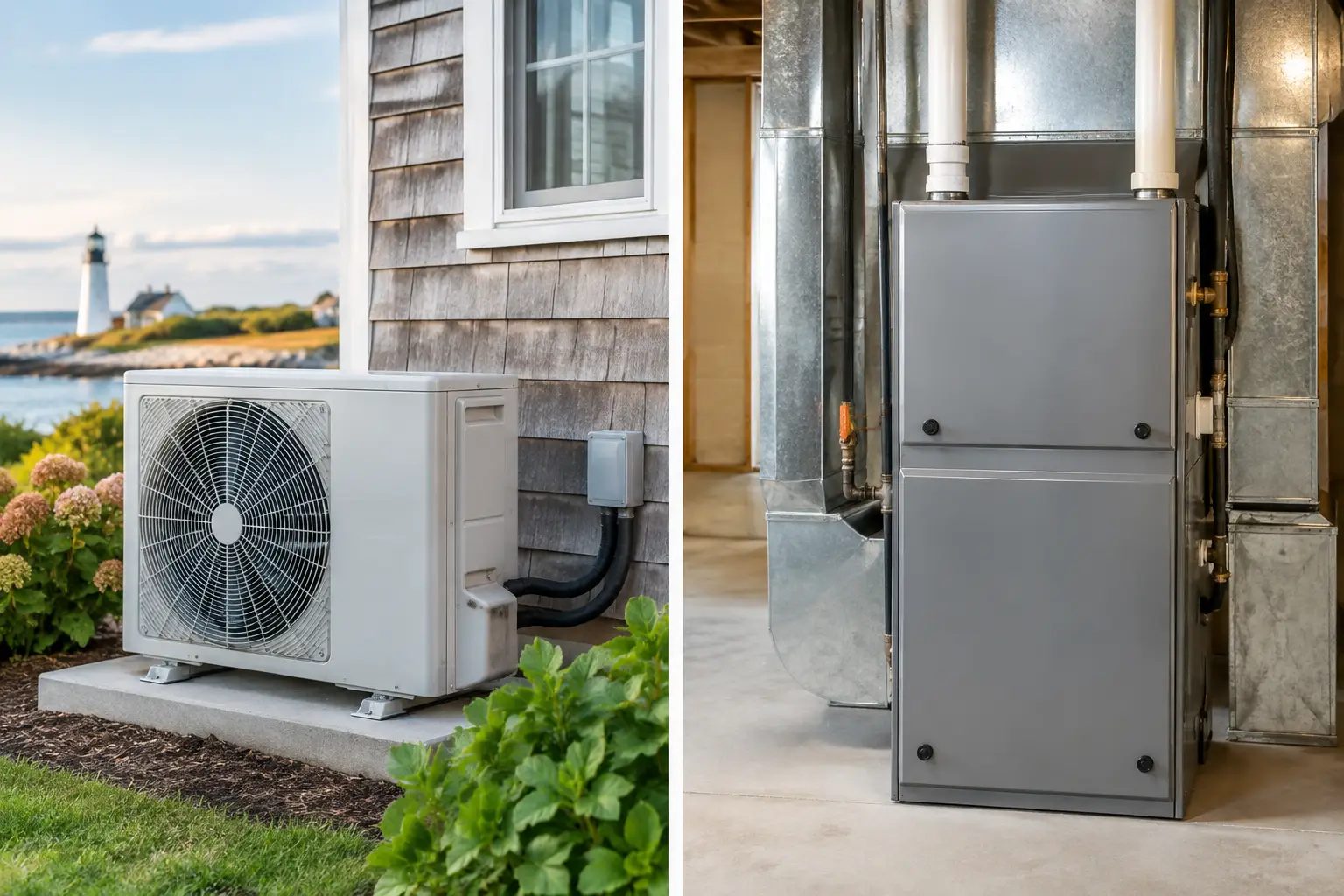
A heating replacement is rarely planned around a convenient calendar date. When an aging system becomes unreliable, the question is usually simple: heat pump or furnace? The right answer depends on more than the equipment price. Your home’s insulation, existing ductwork, fuel access, electrical capacity, comfort preferences, and the way Cape Cod winters affect your property all matter.
A properly sized system should keep your home comfortable without driving up operating costs or leaving you scrambling for service during a cold snap. Here is how to make a practical choice.
Heat Pump or Furnace: The Core Difference
A furnace creates heat by burning fuel, typically natural gas, propane, or oil, then distributes that heat through ductwork. It is a heating-only appliance, although it may share ducts and a thermostat with a separate central air conditioning system.
A heat pump works differently. Rather than generating heat through combustion, it moves heat. During winter, it pulls available heat from outdoor air and transfers it indoors. In summer, it reverses direction and cools your home like an air conditioner. Modern cold-climate heat pumps are designed to operate efficiently in low outdoor temperatures, making them a serious option for Massachusetts homes.
That difference affects how each system feels, costs to operate, and fits into your home. A furnace generally delivers hotter air in shorter cycles. A heat pump typically provides gentler, more consistent heat over longer periods while also providing cooling in the warmer months.
When a Heat Pump Makes Sense
For many Cape Cod homeowners, a heat pump is worth close consideration because it combines heating and air conditioning in one system. It can be installed as a ducted central system or as ductless mini splits for homes without usable ductwork.
You want heating and cooling from one system
If your home currently relies on a boiler, furnace, electric baseboard, or another heating-only system and you would also like air conditioning, a heat pump can solve both needs. This is especially useful in older homes where window units have been doing the cooling work or where adding central ductwork would be disruptive.
Ductless mini splits can serve individual rooms, additions, converted attics, and other areas that are hard to heat and cool evenly. Zoned control means you can condition occupied spaces without treating every room the same way.
Your home is reasonably well sealed and insulated
Heat pumps perform best when the building envelope is in good condition. Air leaks, weak insulation, and poorly sealed crawl spaces force any heating system to work harder, but they can be particularly noticeable with heat pumps because they deliver lower-temperature air than a furnace.
Before selecting equipment, it is smart to address obvious drafts and insulation gaps. Proper sizing should be based on a home heat-load calculation, not square footage alone. An oversized system can short-cycle, waste energy, and reduce comfort. An undersized system may struggle during the coldest weather.
You want to reduce fossil-fuel use
Because a heat pump runs on electricity and moves heat instead of producing it through combustion, it can reduce on-site fossil-fuel use. This can be attractive for homeowners replacing oil heat, propane heat, or electric resistance heat. Available Mass Save rebates and financing options may also improve the economics of a qualifying installation.
However, rebates, electrical upgrades, and installation requirements vary by home and program. They should be reviewed as part of the proposal rather than treated as a guaranteed number from the start.
You value steady, even comfort
A heat pump is often most comfortable when allowed to maintain a consistent thermostat setting. Frequent large temperature setbacks may reduce some of its efficiency advantage and can make recovery take longer. For homeowners who prefer even temperatures instead of bursts of very hot air, that steady operation is often a benefit.
When a Furnace Is the Better Fit
A furnace remains a dependable choice, particularly when a home already has a well-designed forced-air system and reliable fuel service. It is not an outdated answer. In the right application, it is the most straightforward and cost-effective option.
You already have ductwork and gas service
Replacing an existing gas furnace with a new high-efficiency model can be less complicated than converting to a heat pump system. The ducts, gas line, venting path, electrical connection, and thermostat location may already be in place, although each component still needs inspection before replacement.
A new furnace can also be a practical choice for a property where central air conditioning is separate and still in good condition. There is no need to replace working equipment simply to choose a different heating technology.
You prefer fast, high-output heat
Furnaces are known for producing warm supply air quickly. During a sharp cold spell, that can feel reassuring, especially in homes with higher heat loss, frequent door traffic, or occupants who prefer a warmer indoor setting.
Modern high-efficiency furnaces can deliver strong performance, but they still require annual maintenance, clean filters, safe venting, and reliable fuel supply. A furnace with neglected ductwork or a dirty filter will not deliver the comfort or efficiency it was designed to provide.
Your electrical service has limitations
Some heat pump projects require electrical work, particularly when replacing an older heating system or adding multiple ductless zones. A furnace also needs electricity for controls and blower operation, but its overall electrical demands may be easier to accommodate in certain homes.
An on-site evaluation should identify panel capacity and any needed upgrades before a final equipment recommendation is made. This prevents surprise costs after the project is underway.
Cold Weather Performance on Cape Cod
Cape Cod winters are not identical from town to town or even street to street. Coastal winds, damp conditions, open exposure, and older construction can make a home feel colder than the thermostat suggests. That is why equipment selection should account for the building, not just the outdoor temperature.
Today’s cold-climate heat pumps can provide useful heat well below freezing. But they do enter defrost cycles in certain winter conditions, temporarily reversing operation to clear frost from the outdoor coil. A correctly installed system manages this normally, but homeowners should understand that it is part of heat pump operation.
Some homes benefit from a dual-fuel approach: a heat pump handles much of the heating season, while a gas or propane furnace provides backup during the coldest conditions. This setup can offer efficient day-to-day operation with the familiar high-output heating of a furnace when temperatures drop. It is not necessary for every home, but it can be a strong solution where comfort needs, fuel availability, and system design support it.
Compare the Full Cost, Not Just the Installation Price
The lower quote is not always the lower-cost choice over the life of the system. When comparing a heat pump and a furnace, look at installation scope, projected energy use, maintenance needs, expected lifespan, available incentives, and whether you also need cooling.
A heat pump installation may cost more upfront if it requires electrical upgrades, new ductwork, multiple indoor heads, or changes to an older home. On the other hand, it may eliminate the need to purchase both a new furnace and a separate air conditioner.
A furnace replacement may have a lower initial cost when infrastructure is already in place. Still, the long-term operating cost depends on fuel prices, equipment efficiency, thermostat habits, and your home’s condition. No contractor can promise an exact utility bill, but a careful assessment can provide realistic expectations.
Also consider maintenance and service access. Heat pumps need outdoor units placed where airflow, drainage, snow clearance, and service access are protected. Furnaces need proper combustion air, venting, condensate drainage for high-efficiency models, and safe gas connections. Good installation details matter as much as the nameplate efficiency rating.
Questions to Ask Before You Decide
Before approving a proposal, ask whether the system was sized using a heat-load calculation, whether your ductwork can support the airflow, and what electrical or fuel-line work is included. You should also ask how the system will perform during the coldest weather, what maintenance it needs, and which warranties apply to both equipment and labor.
For heat pumps, ask about the cold-weather capacity of the specific model, backup heat, condensate management, and how defrost operation will affect comfort. For furnaces, ask about efficiency ratings, venting requirements, filter access, and whether your existing ducts need sealing or cleaning.
The best recommendation should explain why a particular system fits your property. It should not be a one-size-fits-all answer based only on what happens to be available.
Make the Choice With a Home-Specific Assessment
A heat pump can be an efficient all-season solution. A furnace can be the right dependable answer for fast heat, existing gas infrastructure, and certain home layouts. In many cases, the strongest option is a carefully designed combination of both.
If you are replacing equipment or dealing with uneven heat, have a licensed local technician evaluate the whole system before choosing. Durfee Plumbing & Heating can assess your home’s heating needs, existing equipment, ductwork, and upgrade options so you can move forward with a solution that feels right when winter arrives.



