
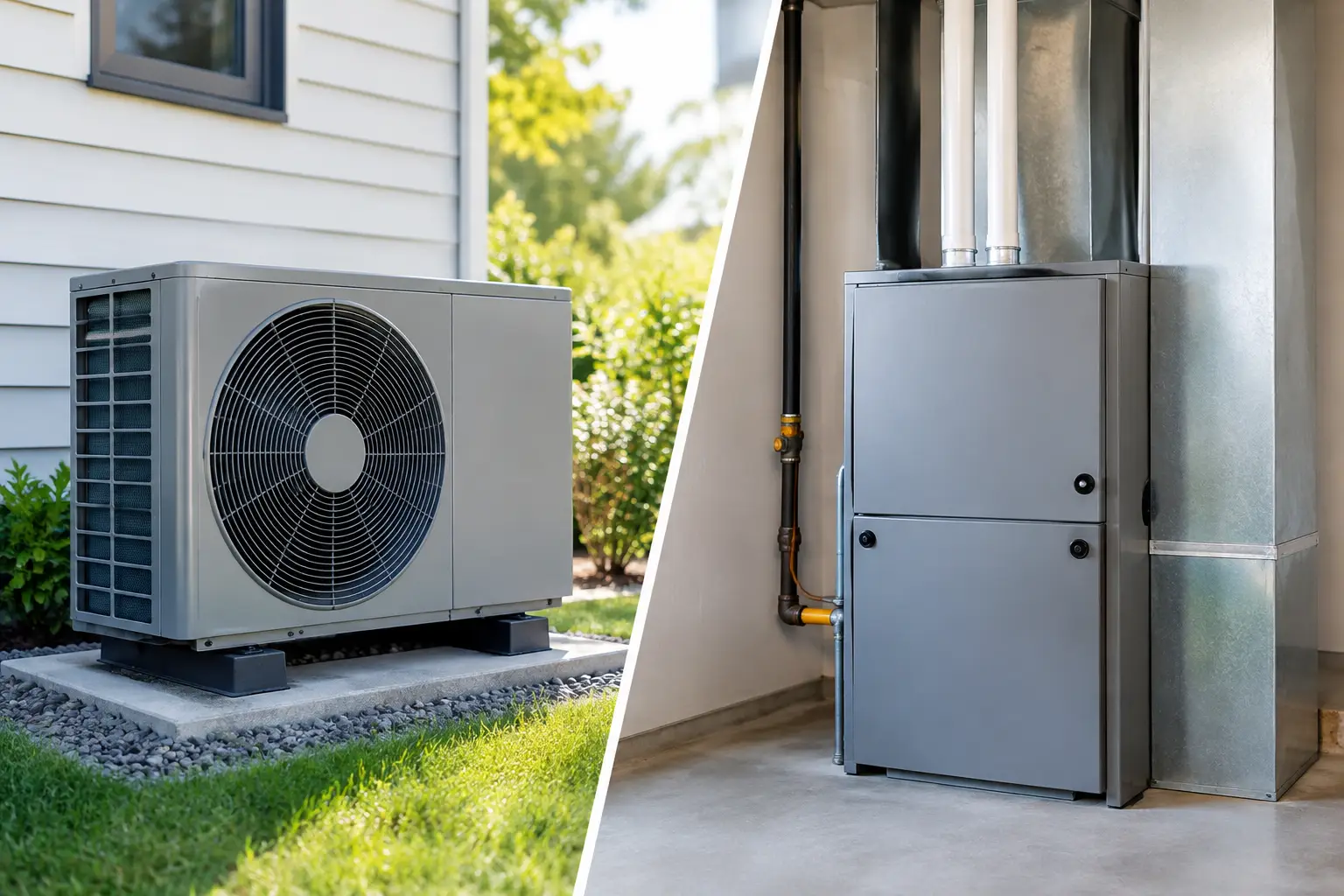
A heating system that looks efficient on a product label can still be expensive to run in the wrong house. For Cape Cod homeowners, heat pump vs furnace efficiency is not just a question of one percentage or rating. It comes down to your fuel source, insulation, existing ductwork, electrical capacity, comfort expectations, and how your system performs during a cold, windy January week.
A heat pump can deliver more heat energy than the electricity it uses under the right conditions. A high-efficiency furnace can provide dependable heat in severe cold with a familiar setup for homes already served by natural gas or propane. The better choice depends on the full property, not a single efficiency number.
Heat Pump vs Furnace Efficiency Explained
A gas furnace is rated by Annual Fuel Utilization Efficiency, or AFUE. This number estimates how much of the fuel it consumes becomes heat for the home over a heating season. For example, a 95% AFUE furnace turns approximately 95 cents of every fuel dollar into usable indoor heat. The remaining energy is lost through exhaust and normal operation.
Heat pumps use a different measurement because they do not create heat by burning fuel. They move heat from outdoor air into your home. Their heating efficiency is commonly described by Heating Seasonal Performance Factor 2, or HSPF2, and their real-time output is often discussed as a coefficient of performance, or COP.
A heat pump operating at a COP of 3 provides roughly three units of heat for every unit of electricity it uses. That can make it far more energy-efficient than electric resistance heat and, in many situations, highly competitive with fossil-fuel heating. But COP changes with outdoor temperature. As the air gets colder, a heat pump works harder to collect available heat and its efficiency declines.
That distinction matters on Cape Cod. Our winters are generally milder than those in inland Massachusetts, but coastal wind, damp air, and occasional deep freezes still place real demands on heating equipment.
Why a Heat Pump Can Be Highly Efficient
Modern cold-climate heat pumps are designed to operate well below freezing. Many variable-speed models can continue providing useful heat at very low outdoor temperatures, while automatically adjusting output instead of cycling fully on and off. This steadier operation can improve comfort and reduce wasted energy.
Heat pumps also provide air conditioning. For a homeowner replacing both an aging furnace and a separate central AC system, a heat pump may consolidate two major comfort needs into one system. Ductless mini-splits can be especially practical for additions, older Cape homes without ductwork, converted attics, and rooms that never seem to match the rest of the house.
Efficiency alone, however, does not guarantee low operating costs. Electricity rates, utility programs, equipment sizing, and your home’s heat loss all affect the monthly bill. A heat pump installed in a drafty home with inadequate insulation may run longer than expected. Air sealing and insulation improvements often make any new heating system perform better.
Defrost Cycles Are Part of Winter Operation
In cold, humid weather, frost can build up on a heat pump’s outdoor coil. The system periodically enters a defrost cycle to remove it. During that time, it may use supplemental heat or temporarily shift operating modes.
This is normal, but it is one reason a qualified installer should evaluate the equipment, controls, drainage, and backup heat strategy. Proper installation helps prevent unnecessary performance issues when winter weather turns wet and cold.
When a Furnace May Be the Better Efficiency Choice
A high-efficiency gas furnace can be a practical choice for properties with reliable natural gas service, existing usable ductwork, and high heating demand. Its output remains consistent even when outdoor temperatures drop sharply. For homeowners accustomed to warm supply air and quick recovery after a thermostat setback, a furnace often feels familiar and dependable.
Furnaces can also make sense when a home’s electrical panel would need major upgrades to support a new heat pump system. Electrical work may still be worth doing as part of a long-term modernization plan, but it should be included honestly in the project budget.
Propane and oil furnaces or boilers present a more nuanced comparison. Replacing older fuel-burning equipment with a heat pump can reduce fuel use and provide cooling, but the financial results depend on local fuel and electricity prices. In some homes, keeping an existing boiler or furnace as backup while adding a heat pump creates a flexible dual-fuel system.
With dual fuel, the heat pump handles mild and moderately cold weather, while the furnace takes over when outdoor temperatures reach a preset point or when heating demand is highest. This approach can balance efficiency, comfort, and cold-weather reliability.
Operating Cost Is Not the Same as Equipment Efficiency
It is easy to see a high heat pump COP and assume it will always cost less to operate. It may, but equipment efficiency and utility cost are separate calculations.
A furnace uses gas, propane, or oil. A heat pump uses electricity. The price of those energy sources changes over time, and each home uses a different amount of heat. A professionally prepared comparison should account for the home’s heat load, local utility rates, expected system efficiency at winter temperatures, and any backup heat use.
The same principle applies to equipment size. Oversizing a furnace can lead to short cycling, uneven temperatures, and unnecessary wear. Oversizing a heat pump can affect humidity control during cooling season and reduce efficiency through excessive cycling. A proper load calculation is more useful than choosing equipment based only on the size of the old system.
Comfort and Home Layout Matter Too
A furnace usually delivers hotter air through the vents than a heat pump. That does not automatically mean it is more comfortable, but it can change how the system feels. Heat pumps tend to run longer at lower output, which often creates more even room-to-room temperatures.
Ductwork condition matters for either option. Leaky, undersized, poorly insulated, or poorly balanced ducts can waste heat before it reaches the rooms that need it. In some homes, duct cleaning, repairs, sealing, or redesign should be part of the heating upgrade conversation.
For homes with no existing ducts, ductless heat pumps avoid the cost and disruption of installing a full duct system. They also allow zoning, so rarely used rooms do not have to be heated or cooled exactly like occupied spaces. The trade-off is that indoor wall-mounted units are visible, and larger or complex layouts may require multiple zones.
Questions to Ask Before Replacing Your System
Before deciding between a heat pump and furnace, ask an HVAC professional to evaluate more than the equipment itself. A useful assessment should include these four areas:
- Your home’s heat loss, insulation levels, window condition, and air leakage.
- Existing ducts, vents, thermostat controls, and whether rooms heat evenly now.
- Fuel availability, electric panel capacity, and the likely cost of required upgrades.
- Available rebates, financing options, warranty coverage, and the expected role of backup heat.
Mass Save incentives may help qualifying Massachusetts homeowners reduce the upfront cost of certain efficiency improvements. Program rules, equipment requirements, and available amounts can change, so it is wise to confirm current eligibility before making a final decision.
Choosing the Right System for a Cape Cod Property
A cold-climate heat pump is often a strong option for homeowners who want efficient heating and central or ductless cooling in one system. It can be especially appealing for homes currently using older oil equipment, electric baseboard heat, or window AC units.
A high-efficiency furnace may be the right fit when natural gas is available, the home has solid ductwork, and dependable high-temperature heat is the priority. A dual-fuel setup can be a smart middle ground for homeowners who want heat pump efficiency without giving up furnace backup for the coldest conditions.
For rental properties, seasonal homes, and commercial spaces, system controls and maintenance needs deserve extra attention. A vacant building needs freeze protection. A business may need reliable temperature recovery during operating hours. The most efficient system is one that is correctly sized, professionally installed, maintained, and suited to how the building is actually used.
Durfee Plumbing & Heating can assess heating performance, ductwork, equipment condition, and upgrade options so you can make a decision based on your property rather than a generic online estimate. If your current system is noisy, uneven, costly to operate, or nearing the end of its life, schedule an evaluation before a no-heat emergency forces a rushed replacement.



