
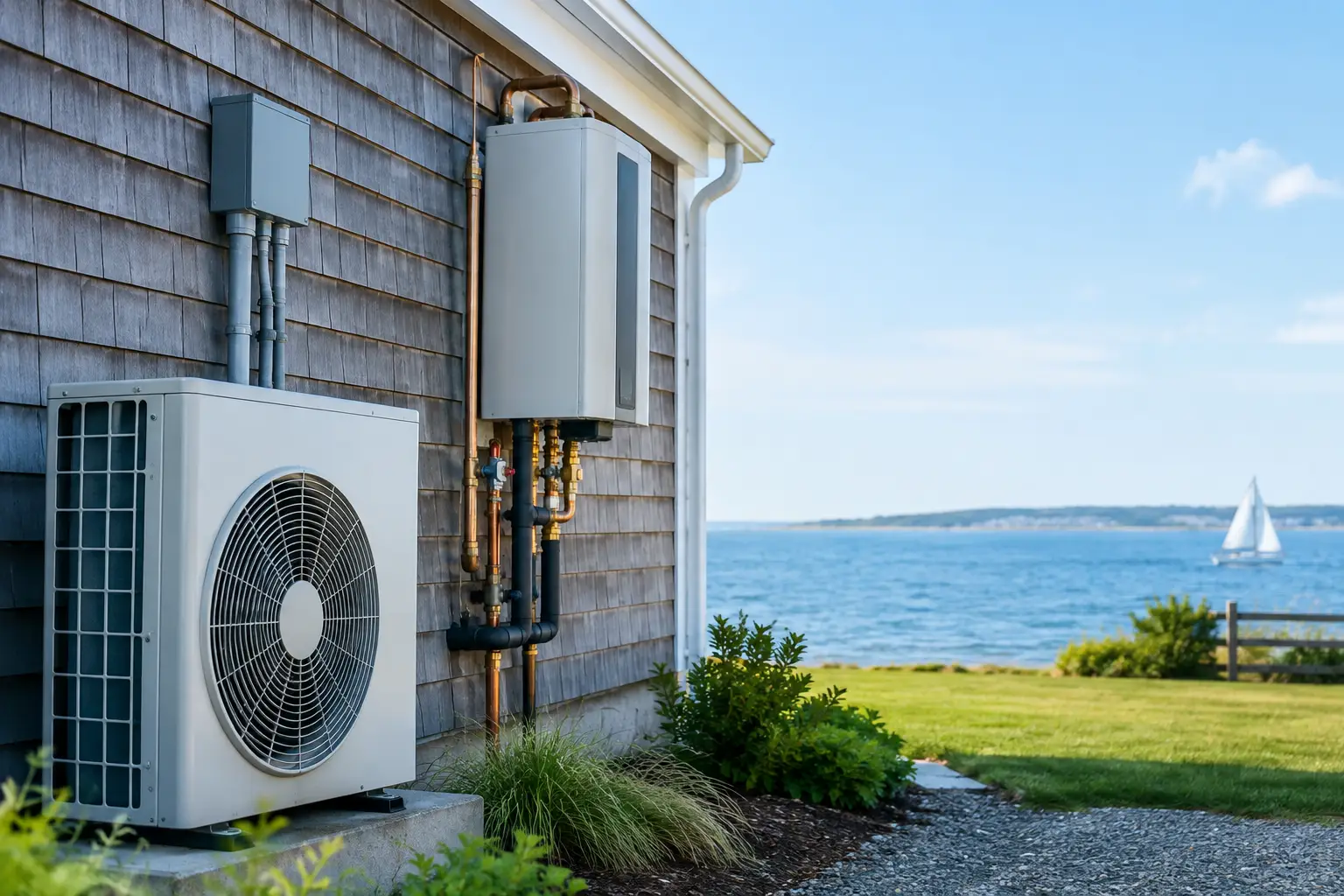
A water heater replacement used to be a straightforward fuel decision: gas, oil, or electric. Now, home electrification plumbing trends are changing that conversation. Homeowners across Cape Cod are asking how a new water heater, heat pump, electrical panel, and insulation plan can work together to lower energy use without sacrificing the hot water and dependable comfort their household needs.
The right answer is not the same for every property. A year-round home in Barnstable has different demands than a seasonal cottage in Chatham, and a busy restaurant or multifamily property has a different hot-water profile than a two-person household. The most successful upgrades start with the plumbing system, the electrical capacity, and the way the building is actually used.
Heat Pump Water Heaters Lead Home Electrification Plumbing Trends
Heat pump water heaters are one of the biggest changes in residential plumbing. Rather than creating heat entirely with electric resistance elements, these units pull heat from the surrounding air and transfer it into the water tank. That approach can use far less electricity than a standard electric tank water heater.
For Cape Cod homeowners replacing an aging electric, oil-fired, or gas water heater, the potential operating-cost savings are a major draw. Heat pump water heaters can also pair well with broader electrification projects, especially when a homeowner is adding a heat pump for heating and cooling or considering solar power.
There are practical trade-offs. Because the unit draws heat from the room around it, it needs adequate air volume and a location that stays reasonably warm. A basement, utility room, or garage may work well, but installation details matter. The equipment also produces cool, dry air and requires a condensate drain or pump. In a small enclosed room, performance can suffer unless the space is properly planned.
Noise is another consideration. Modern models are generally comparable to household appliances, but homeowners should not place one beside a bedroom without discussing sound levels and placement first. A licensed plumber can evaluate drainage, water connections, clearances, and the best location before the old tank fails.
Electrical Capacity Is Part of the Plumbing Plan
Electrification is not simply a matter of swapping one appliance for another. A heat pump water heater, induction range, clothes dryer, electric vehicle charger, and whole-home heat pump may all compete for electrical-panel capacity. That does not mean every home needs an immediate panel upgrade, but it does mean homeowners should have the load evaluated before committing to equipment.
Planning ahead can prevent an expensive surprise in the middle of a replacement project. If the current panel is close to capacity, an electrician may recommend a service upgrade, a subpanel, or load-management equipment. The best solution depends on the home’s existing service, the equipment being added, and which appliances run at the same time.
For plumbing projects, this coordination is especially valuable when a water heater is failing. Emergency replacement decisions are stressful. Evaluating electrical requirements before a failure gives homeowners more time to compare options, pursue available rebates, and choose equipment based on long-term value rather than what can be installed that afternoon.
Hybrid Systems Often Make More Sense Than an All-at-Once Change
Home electrification does not require removing every fuel-burning appliance at once. In many homes, the practical path is phased. A homeowner may install a heat pump water heater when the existing tank reaches the end of its life, then address heating equipment during a later replacement cycle.
This approach can spread project costs over time and lets each upgrade inform the next one. For example, replacing old windows, air sealing, or improving insulation can reduce the size of a future heat pump system. A better-performing building may also reduce the electrical demand of that system.
Some properties will continue using gas for certain appliances for years, particularly where equipment is newer or the building’s electrical service is limited. That is not a failure of electrification. It is sensible property planning. The goal is to make decisions that improve efficiency, reliability, and comfort without forcing a premature replacement of equipment that is still serving the home well.
Hot-Water Demand Still Determines the Right Size
A heat pump water heater should be sized for the household’s real usage, not just the tank size being removed. A family with multiple showers, laundry, dishwashing, and guests during summer weekends may need more storage or a unit with stronger recovery performance than a smaller year-round household.
This is particularly relevant on Cape Cod, where seasonal occupancy can change dramatically. A home that is quiet in February may host several generations in July. Property managers and owners of short-term rental homes should account for peak occupancy, not average winter use, when selecting water-heating equipment.
Larger tanks are not automatically better. They take up more room and cost more upfront. But undersizing a system can lead to cold showers, frequent high-demand operation, and disappointed guests. A proper assessment looks at fixture count, occupancy, incoming water temperature, installation location, and daily hot-water habits.
Cold Weather, Basements, and Drainage Matter Locally
Heat pump water heaters operate efficiently in suitable spaces, but Cape Cod homes present a mix of conditions that need attention. An unconditioned basement, crawlspace, or garage can become very cold during a winter cold snap. Since the equipment extracts heat from surrounding air, lower ambient temperatures can reduce efficiency and increase the amount of backup electric resistance heat used.
That does not rule out a heat pump water heater. It means location matters. A unit installed in a conditioned utility area or a basement with enough stable air volume may perform very differently from one placed in a cold, tight mechanical closet. The installation should also include reliable condensate management. A blocked drain line or failed condensate pump can create a water problem that offsets the benefits of an efficient upgrade.
For seasonal homes, winterization remains essential. Any plumbing system, whether it uses a conventional tank, tankless unit, or heat pump water heater, needs protection from freezing when the property is unoccupied. Electrification changes the equipment, but it does not eliminate the need for sound plumbing maintenance.
Rebates Can Change the Cost Calculation
Upfront cost is often the main hesitation with heat pump water heaters and electric HVAC upgrades. Equipment, electrical work, drainage modifications, and possible panel improvements can make a project feel larger than a standard replacement. Available Mass Save incentives and other qualifying programs can help reduce that gap for eligible customers.
Rebate programs, equipment requirements, and eligibility rules can change, so homeowners should confirm current details before purchasing. It is also worth comparing the full cost of ownership rather than looking only at installation price. Energy use, expected lifespan, maintenance needs, warranty coverage, and potential electrical work all belong in the decision.
Financing can also make sense when a replacement cannot wait. The key is clarity: understand what equipment is being installed, what work is included, how condensate will be handled, and whether any electrical upgrades are necessary. A proposal should make those details easy to see.
Choose a Contractor Who Looks at the Whole System
A water heater is connected to more than hot and cold pipes. It affects drainage, ventilation or combustion requirements for older systems, electrical capacity, utility-room space, and household comfort. That is why electrification projects benefit from a contractor who can identify plumbing issues before installation day.
At Durfee Plumbing & Heating, licensed technicians can assess aging water heaters, review heat pump water heater options, and help homeowners plan around the realities of their property. For urgent failures, fast service matters. For planned upgrades, careful sizing and clear installation details matter just as much.
If your water heater is nearing the end of its life, do not wait for a leak to force the decision. A quick evaluation now can show whether a heat pump water heater, a conventional replacement, or a phased upgrade is the best fit for your home, budget, and hot-water needs.



