
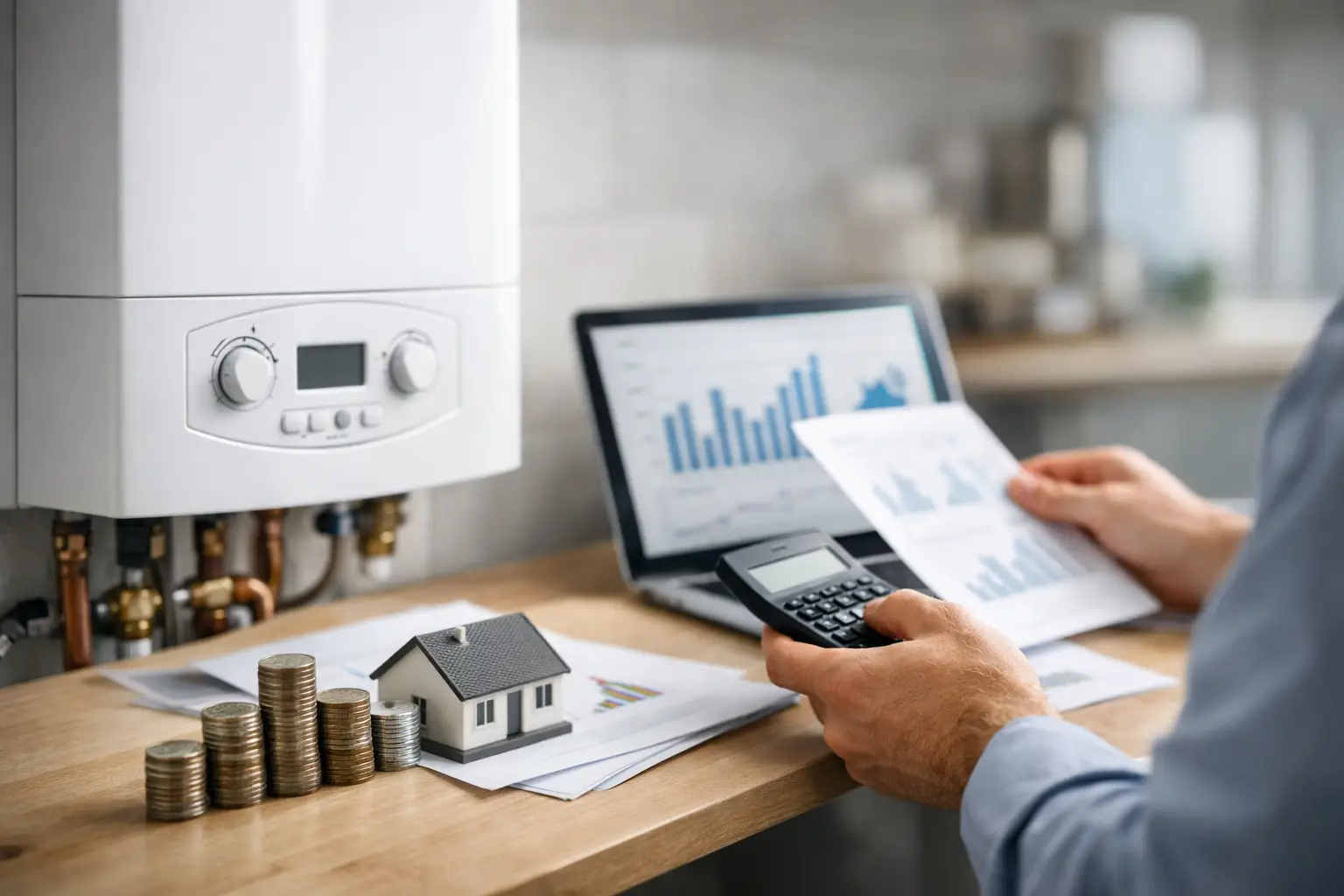
A boiler that still turns on can be expensive to keep. This boiler replacement savings case study follows a representative Cape Cod heating upgrade where the real value was not just lower fuel use. It was fewer repair worries, steadier comfort, and a clear plan before the next winter storm put an aging system to the test.
The numbers below are an illustrative example, not a promise of a specific result. Fuel prices, home insulation, boiler sizing, thermostat habits, and available rebates all affect the final outcome. Still, this is the kind of calculation homeowners should ask for when deciding whether to repair an old boiler or replace it.
The starting point: an old boiler with rising costs
The home in this example is a year-round Cape Cod residence with an older oil-fired boiler serving baseboard heat. The existing equipment was more than 20 years old, operated at roughly 75% seasonal efficiency, and had begun needing regular attention. The homeowner had paid for a circulator repair one year, a control-related service call the next, and was concerned about a no-heat emergency during the coldest part of the season.
The boiler was still providing heat, but it was working harder than it should. Some rooms warmed slowly, the system cycled frequently, and annual oil use was approximately 800 gallons. At an assumed oil cost of $3.75 per gallon, that is about $3,000 per heating season before maintenance or unexpected repairs.
Replacing equipment before total failure is not always necessary. If a boiler is properly sized, safe, reliable, and has a repair with a reasonable cost, a repair can be the right call. The decision changes when repairs become recurring, efficiency is poor, replacement parts are difficult to source, or a breakdown would create a major disruption for the household or property.
Boiler replacement savings case study: the upgrade
After reviewing the home's heat loss, existing piping, chimney venting, and hot water needs, the homeowner chose a properly sized high-efficiency boiler. The new unit was rated at 90% efficiency and included updated controls designed to better match boiler operation to demand.
Sizing was a key part of the project. Bigger is not automatically better with heating equipment. An oversized boiler can short-cycle, wear components faster, and fail to deliver the efficiency a homeowner expects. A licensed technician should evaluate the building, not simply match the capacity of the old boiler. Older boilers were often oversized from the day they were installed.
The replacement scope also included removing the old boiler, making necessary near-boiler piping updates, installing approved venting, connecting controls, testing safety devices, and confirming that the system heated each zone correctly. Depending on the property, additional work may be needed for oil tank connections, electrical upgrades, water quality concerns, or aging circulators and zone valves. Those details affect both price and long-term reliability.
What the fuel savings looked like
To compare the old and new boiler fairly, assume the home needs the same amount of usable heat through the winter. With the old boiler operating around 75% efficiency and using 800 gallons of oil, a 90% efficient replacement could reduce required fuel use to roughly 667 gallons.
That is a reduction of about 133 gallons per year. At the assumed $3.75 per gallon, the estimated fuel savings are about $499 for the season.
That estimate is helpful, but it should not be treated as the whole financial case. The previous boiler also had a pattern of repair costs. If the homeowner had been spending an average of $450 annually on repairs and emergency service, avoiding those expenses brings the potential first-year benefit closer to $949.
The actual savings may be higher or lower. A colder winter, an increase in fuel prices, or a household that keeps the home warmer will change the result. A home with poor insulation or major air leaks may not see the fuel reduction it could achieve after weatherization work. On the other hand, correcting an oversized boiler, adding better controls, and improving the home's envelope can strengthen the result.
Upfront cost, rebates, and financing matter
A boiler replacement is a significant home investment, especially when the project includes venting changes, piping corrections, or indirect water heater work. Homeowners should look beyond a single installed-price number and ask what is included: equipment capacity and efficiency, permit requirements, venting, removal and disposal, controls, start-up testing, warranty coverage, and workmanship.
For this example, assume an installed project cost of $12,800 before incentives. If the equipment qualifies for a $2,000 rebate, the net project cost becomes $10,800. Programs such as Mass Save can make high-efficiency heating improvements more accessible, but eligibility, rebate amounts, fuel type, and required documentation can change. Confirm the current requirements before selecting equipment or signing a contract.
With annual savings of approximately $949, the simple payback based only on fuel and avoided average repair costs would be a little over 11 years. That is not an overnight return, and it should be discussed honestly. A replacement decision is often strongest when the old boiler is near the end of its service life anyway. In that situation, the homeowner is comparing a planned upgrade against the risk and cost of an eventual emergency replacement, not choosing between spending nothing and spending money.
Financing can also change the practical decision. A monthly payment may make sense for some households when it is weighed against lower operating costs, avoided emergency repair bills, and the ability to replace the system on a planned schedule rather than during a winter failure.
The savings that do not fit neatly on a fuel bill
The homeowner in this example also gained benefits that are harder to assign a dollar amount. The new boiler provided more consistent heat across zones, quieter operation, and greater confidence when leaving the home during cold weather. For a second home, rental property, or property managed from a distance, dependable heat is especially valuable because a no-heat event can lead to frozen pipes and expensive water damage.
A new installation also creates an opportunity to address overlooked system issues. Old shutoffs, expansion tanks, air elimination components, zone controls, and piping layouts can all affect how well a boiler performs. Replacing only the appliance while ignoring critical system conditions can limit the results.
There is a trade-off, however. High-efficiency boilers have more advanced controls and need professional annual maintenance. The right system is not simply the one with the highest efficiency rating. It needs to fit the home, fuel source, distribution system, budget, and service needs. A well-installed standard-efficiency option may be more appropriate in some circumstances, particularly when venting limitations or project costs make a high-efficiency model impractical.
Questions to ask before replacing your boiler
Before approving a replacement, ask for a clear explanation of why the current boiler should be repaired or replaced, how the new boiler will be sized, and what efficiency assumptions are being used in the savings estimate. Ask which parts of the heating system will be inspected or updated, what warranties apply, and whether rebate or financing options may be available.
It is also worth asking about timing. Replacing a boiler during a planned appointment gives you more control over equipment selection and budget. Waiting until the system fails can turn the decision into an urgent one, particularly during a Cape Cod cold snap when dependable heat matters most.
A licensed heating contractor can inspect the system, document its condition, and provide a practical comparison between repair and replacement. Durfee Plumbing & Heating can help homeowners evaluate boiler condition, installation requirements, and options that fit their property without guessing at what the next repair may bring.
If your boiler is getting noisier, cycling more often, requiring repeated service, or leaving parts of the home uncomfortable, the best next step is not to wait for a breakdown. Schedule an evaluation while you still have time to make a well-informed decision for the heating season ahead.



