
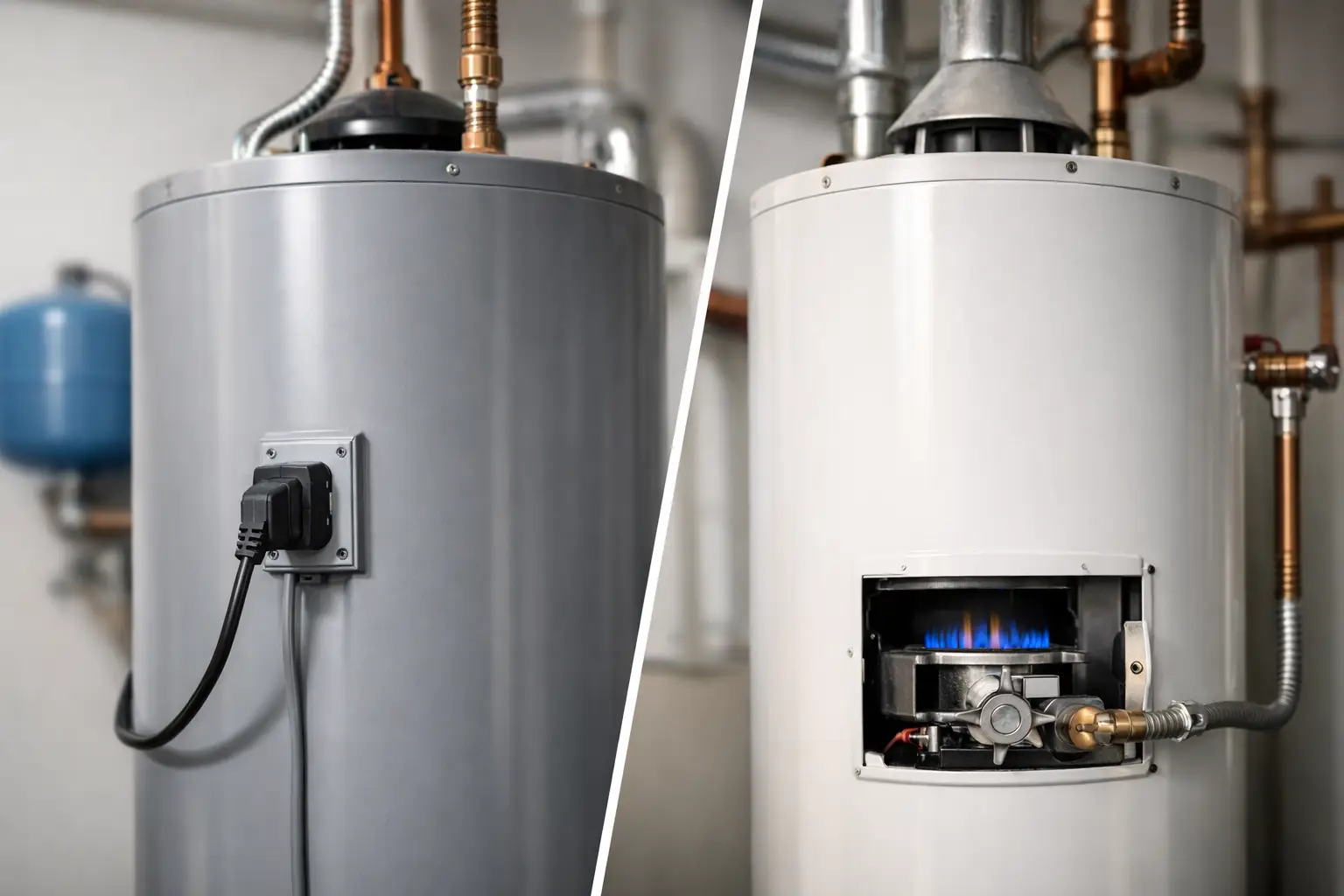
A failing water heater rarely gives much notice. One week it is making a little more noise than usual; the next, there is rusty water, a puddle beneath the tank, or no hot water before the morning rush. When replacement time comes, the electric versus gas water heater decision affects more than the equipment price. It affects your household’s hot-water supply, utility costs, installation scope, and long-term maintenance.
For Cape Cod homeowners and property managers, the right answer depends on the home’s existing fuel setup, the size of the household, available space, venting options, and local energy incentives. A licensed assessment is the fastest way to avoid paying for a system that does not fit the building or daily demand.
Electric Versus Gas Water Heater: The Core Differences
Traditional gas and electric storage water heaters do the same basic job: they heat and store a supply of water in an insulated tank. The major difference is the heat source. A gas unit burns natural gas or propane through a burner below the tank, while a standard electric unit uses heating elements inside the tank.
Gas water heaters usually heat a tank of water faster. That faster recovery rate can be valuable in homes with several bathrooms, large families, or frequent back-to-back showers. Once the stored hot water is used, a gas unit can generally replenish it sooner than a comparable standard electric tank.
Electric water heaters often have a lower equipment cost and simpler installation when the proper electrical capacity is already available. They do not require a gas line, combustion vent, or combustion air considerations. For a home without gas service, an electric replacement may be the most practical choice.
Neither option is automatically better. A gas water heater can be the stronger fit for high hot-water demand, while an electric model can be a sensible choice for a smaller household, a straightforward replacement, or a home moving toward all-electric equipment.
Upfront Installation Costs Depend on What Your Home Already Has
The price on the water heater is only part of the project. Installation requirements can change the total cost significantly.
Replacing an existing gas water heater with another gas model is usually more direct when the gas line, shutoff, venting, drain pan, and chimney or approved vent path are in good condition. If any of those components need modification to meet current code or manufacturer requirements, the scope grows. Older homes may need venting corrections, a gas-line upgrade, or a new drain and discharge arrangement.
An electric-to-electric replacement can also be straightforward, but the electrical circuit must be correctly sized and safely connected. If a home has an older electrical panel or lacks sufficient capacity, an electrician may need to make upgrades before installation.
Switching fuel types is where costs can climb. Changing from electric to gas may require gas piping, venting, permits, and possibly propane storage where natural gas is unavailable. Changing from gas to electric eliminates combustion venting but may require a dedicated high-amperage circuit and panel work. It is worth pricing the full project, not just comparing tank prices online.
Operating Costs Are Local and Usage-Dependent
Gas has traditionally delivered lower operating costs than a standard electric resistance water heater in many markets, particularly for households that use a lot of hot water. But utility rates, fuel availability, equipment efficiency, and usage habits matter more than a general rule.
A gas tank loses some heat through its venting process, and a pilot light on older models uses fuel continuously. Newer gas models are more efficient, but they still need safe combustion and venting. Standard electric tanks convert electricity to heat at the unit efficiently, though electricity can cost more per unit of energy than natural gas.
For homes served by propane, the calculation deserves extra care. Propane pricing can fluctuate, and a high-demand household may see meaningful seasonal fuel costs. A technician can help compare estimated annual operating costs using the unit’s efficiency rating, local fuel prices, and your household’s likely demand.
There is also a third option worth considering: a heat pump water heater. It runs on electricity but pulls heat from surrounding air rather than creating all heat through resistance elements. This can lower water-heating costs substantially, and Mass Save rebates may help reduce installation expense for qualifying Massachusetts customers. However, heat pump water heaters need suitable space, produce some cool air, and may not be ideal for every location or every high-demand situation.
Recovery Rate Matters More Than Tank Size Alone
A bigger tank is not always the answer to running out of hot water. First-hour rating is often a more useful number. It estimates how much hot water the unit can deliver in the first hour of heavy use, combining the stored water with the water it can heat during that hour.
Gas models generally have a higher first-hour rating than same-size electric tanks because of their faster recovery. That means a 40-gallon gas water heater may keep up with demand similarly to a larger standard electric tank in some homes. The proper size depends on the number of occupants, bathrooms, fixture flow rates, laundry habits, dishwasher use, and whether several people shower one after another.
Property managers should also consider peak demand rather than average demand. A rental home that performs well for a couple may struggle when fully occupied during summer weeks. Selecting a correctly sized water heater helps prevent service calls, unhappy guests, and premature wear from constant heavy operation.
Safety, Maintenance, and Reliability
Every storage water heater needs maintenance. Sediment can build up inside the tank, especially in areas with mineral-heavy water. Flushing the tank when appropriate, checking the temperature-and-pressure relief valve, inspecting the anode rod, and watching for leaks can extend service life and reveal problems early.
Gas water heaters need additional attention because they involve combustion. Proper venting, gas connections, burner operation, and carbon monoxide safety are essential. Never ignore a gas smell, soot around the appliance, unusual burner behavior, or repeated pilot-light problems. Leave the area if you smell gas, avoid switches and open flames, and contact the gas utility or emergency service provider as appropriate.
Electric water heaters have no combustion exhaust, but they are not maintenance-free. Failed heating elements, thermostats, wiring connections, and pressure-relief components can still cause loss of hot water or unsafe conditions. Both types should be installed with required safety components and according to local plumbing and building codes.
Power outages are another practical distinction. A standard electric water heater cannot actively reheat water when power is out, although an insulated tank may retain some heat for a while. Many gas tank models can continue operating during an outage if they use a standing pilot, but models with electronic ignition or powered controls may not. Ask about the specific model rather than assuming every gas unit operates without electricity.
When Gas Is Usually the Better Fit
Gas may be the practical choice when your property already has safe, code-compliant gas service and venting, and your household has high or frequent hot-water demand. It can be particularly useful for larger families, homes with multiple showers in use each morning, or commercial spaces that need faster recovery.
It also makes sense when you are replacing a comparable gas unit and the supporting infrastructure is in good shape. Keeping the same fuel source often reduces installation complexity, provided the existing setup meets current requirements.
When Electric Is Usually the Better Fit
Electric may be the better choice when the home does not have gas service, the household has moderate hot-water needs, or a straightforward installation is the priority. It avoids venting and fuel-combustion concerns, which can simplify placement in certain homes.
An electric water heater may also support a broader electrification plan, especially when paired with a heat pump water heater and available energy-efficiency incentives. Still, confirm the electrical panel can handle the load before selecting a model.
Get the Replacement Sized Before the Tank Fails
Water heaters often show warning signs before a complete failure: discolored water, popping sounds, reduced hot-water capacity, corrosion at connections, moisture around the base, or an age approaching the typical service range. Acting before a tank ruptures gives you more choices and avoids the pressure of an emergency replacement.
Durfee Plumbing & Heating can evaluate your existing water heater, fuel connections, venting, electrical capacity, and demand pattern to recommend a dependable replacement for your home or property. The best choice is the one that delivers enough hot water safely, fits the building correctly, and makes sense for your operating costs over the years ahead.



