
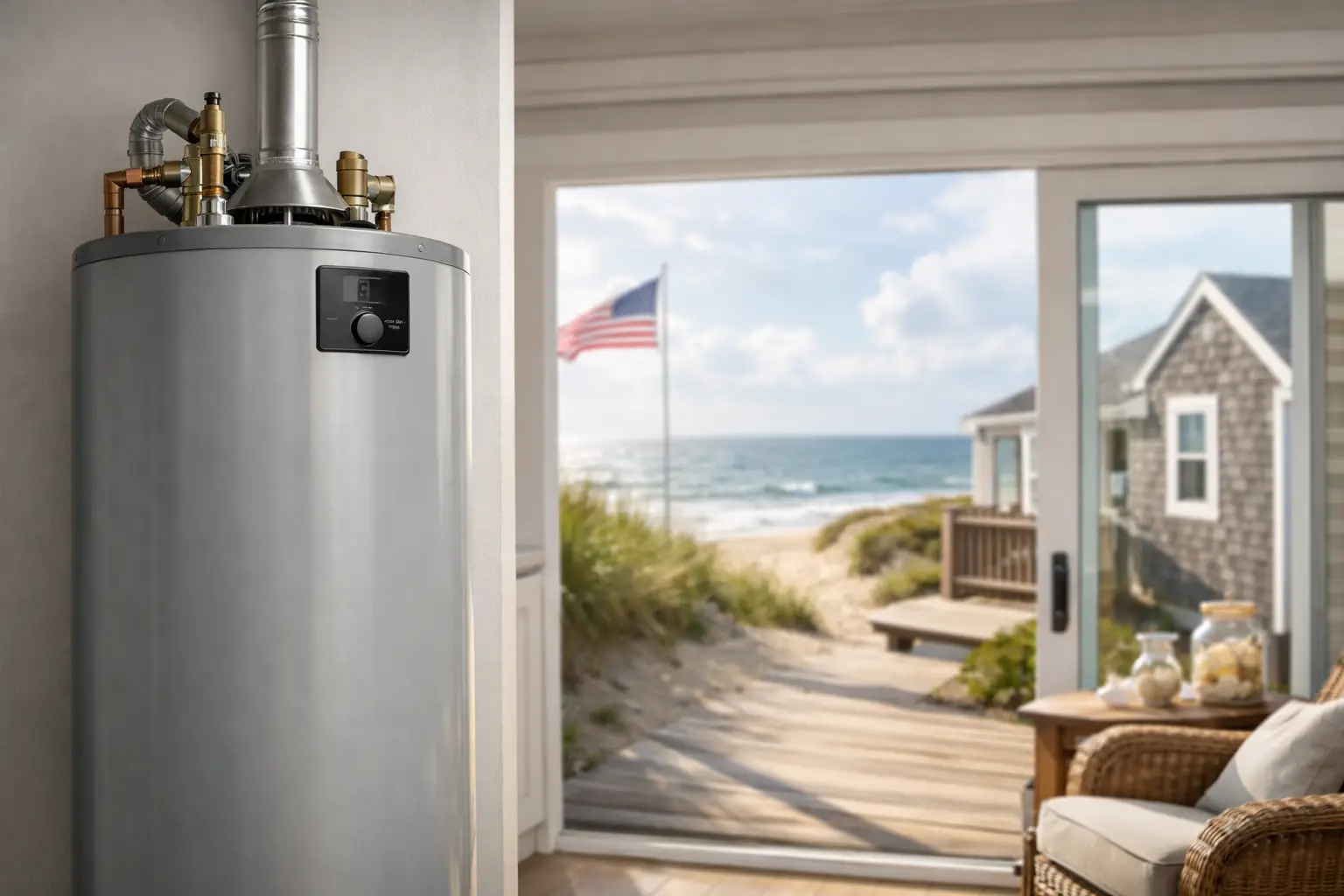
A water heater that works well in a suburban utility room may not be the best water heater for Cape homes. On Cape Cod, homeowners often contend with salty coastal air, compact mechanical spaces, seasonal occupancy, older plumbing, high energy costs, and a household that suddenly grows when family visits. The right choice is less about picking the newest model and more about matching the equipment to your home, fuel source, hot-water habits, and installation conditions.
What Cape Cod Homes Need From a Water Heater
Cape homes come in many forms: year-round houses in Barnstable, historic cottages in Sandwich, seasonal properties near the shore, and larger homes that host family all summer. That variety matters because a water heater needs to deliver enough hot water at the right time without wasting energy the rest of the year.
Coastal conditions also deserve attention. Salt air can accelerate corrosion around exterior venting, connections, and equipment installed in damp basements, garages, or crawlspaces. A quality installation includes proper piping, venting, drainage, electrical work when needed, and clear access for future service. Choosing a lower-cost unit without addressing those conditions can lead to an early replacement or avoidable repair.
For many Cape homeowners, the best water heater is the one that balances dependable recovery, operating cost, available space, and long-term serviceability. There is no single answer for every property.
Best Water Heater for Cape Homes: Start With Your Fuel
Your existing utilities narrow the field quickly. Before replacing a failed unit, look at what fuels are available, whether your electrical panel can support an upgrade, and whether the installation location is suitable.
Gas tank water heaters
A conventional gas storage tank remains a practical choice for many homes with natural gas or propane already in place. It stores a reserve of hot water, so it can handle ordinary family routines well when it is sized correctly. Installation is often straightforward when replacing a similar existing gas tank, which can help control project cost during an urgent replacement.
The trade-off is standby heat loss. The tank maintains hot water around the clock, even when a seasonal home is empty or a household uses very little water. Gas units also require safe venting and combustion air. In a tight utility closet or a home with changing ventilation conditions, those details are not optional.
Electric tank water heaters
Standard electric tanks are familiar, relatively simple, and a good option where gas service is unavailable. They do not need combustion venting, which can simplify placement in some homes. However, electric resistance heating generally costs more to operate than high-efficiency alternatives, especially for a busy household.
An electric tank may make sense for a small household, a limited budget, or a location where gas venting is not practical. Recovery time should be part of the decision. If several people shower back-to-back, a basic electric tank may struggle unless it is properly sized or supported by a larger capacity.
Tankless water heaters
Tankless water heaters heat water as it flows, rather than storing it in a tank. Their biggest benefit is continuous hot water within the unit's capacity. A properly sized gas tankless unit can be an excellent fit for a home with frequent showers, a large soaking tub, or summer guests.
They also save space and avoid the risk of a large tank leaking after years of service. For seasonal homes, not maintaining a full tank of heated water can be appealing.
The important qualifier is sizing. Tankless equipment is rated by flow at a given temperature rise. Cape Cod's cold incoming water in winter means the unit has to work harder than it would in a warmer climate. Running two showers, a dishwasher, and a washing machine at once can exceed an undersized unit's capacity. A professional should calculate expected demand, confirm gas-line capacity, and inspect venting before recommending a model.
Heat pump water heaters
Heat pump water heaters are often the efficiency leader for homes with appropriate space. Instead of creating heat with electric elements alone, they pull heat from surrounding air and transfer it to the water. That can reduce water-heating energy use significantly compared with a standard electric tank.
They work best in an area with enough air volume and temperatures that stay reasonably moderate, such as a larger basement, utility room, or garage. They also produce cool, dry air and make some fan noise. That can be helpful in a humid basement during summer, but it is usually not ideal for a small interior closet or a cold, tightly enclosed area.
For homeowners considering an electric upgrade, heat pump water heaters may qualify for available energy-efficiency incentives. Rebate programs and eligibility change, so it is smart to confirm current Mass Save options before selecting equipment.
Size for Peak Demand, Not Just Household Size
Two homes with four occupants can need very different water heaters. One family may take short showers at staggered times. Another may have teenagers showering simultaneously, a large tub, frequent laundry, and guests every weekend. The second home needs a system built for a much higher peak demand.
For storage-tank units, first-hour rating is often more useful than tank gallons alone. It estimates how much hot water the heater can supply during a high-use hour. A 50-gallon tank with a strong burner or heating element can sometimes outperform a larger tank with a slower recovery rate.
For tankless units, focus on simultaneous fixtures. A practical assessment considers shower flow rates, dishwasher use, washing machine use, incoming water temperature, and desired output temperature. Restrictive showerheads can reduce demand, but no homeowner wants a new water heater that requires everyone to schedule showers.
Seasonal occupancy changes the calculation too. A cottage used by two people most of the year but eight people in July should be sized for the busy season if comfort during those weeks matters. If not, a different approach, such as managing simultaneous use, may keep the installation and operating cost lower.
Installation Conditions Can Change the Recommendation
The equipment itself is only one part of the job. A water heater needs safe connections, correct venting or electrical supply, a discharge path for the temperature and pressure relief valve, and protection from leaks. In many homes, bringing an older installation up to current code is part of a replacement project.
Older Cape properties can present narrow bulkhead access, low basement ceilings, limited gas-pipe capacity, aging chimneys, or finished spaces with little room for drainage. These conditions do not prevent an upgrade, but they affect which unit is realistic and what the complete installation will require.
If the water heater sits in an area where a leak could damage finished flooring or stored belongings, ask about a drain pan, a water alarm, or an automatic shutoff device. These additions are especially worthwhile in vacation homes that may sit empty for days or weeks.
For coastal properties, exterior terminations and exposed components should be selected and installed with local conditions in mind. A licensed technician can also identify whether moisture, poor combustion air, or inadequate venting has contributed to previous water-heater failures.
When Replacement Beats Another Repair
A repair can be the right call when a newer water heater has a replaceable component issue, such as an igniter, thermostat, heating element, or pressure-relief valve. But a tank approaching the end of its expected service life deserves a different conversation.
Rust-colored water, corrosion around the tank, moisture at the base, repeated shutdowns, or a growing puddle are warning signs. Once a storage tank itself leaks, replacement is generally the only dependable solution. Waiting can turn a planned installation into an after-hours emergency and increase the risk of water damage.
It also makes sense to compare operating cost when replacing an older unit. A high-efficiency gas tank, tankless system, or heat pump water heater may cost more upfront, but the right choice can reduce long-term utility use. Financing can help homeowners avoid choosing an undersized or less efficient system solely because a replacement cannot wait.
Get a Recommendation Based on Your Actual Home
A reliable recommendation starts with an on-site evaluation, not a guess based on the old tank's label. The installer should ask how many people use the home, when hot water demand peaks, whether the property is seasonal, what fuel is available, and whether future plumbing or HVAC upgrades are planned.
Durfee Plumbing & Heating helps Cape Cod homeowners evaluate water-heater replacements with licensed installation, clear options, and service support when a failure cannot wait. A properly selected unit, installed with the right safety and code details, gives you one less thing to worry about when the house is full or the weather turns.
If your water heater is showing its age, schedule an assessment before it becomes a leak. The best choice is the one that fits your home's demand today while giving you dependable hot water for the years ahead.



