
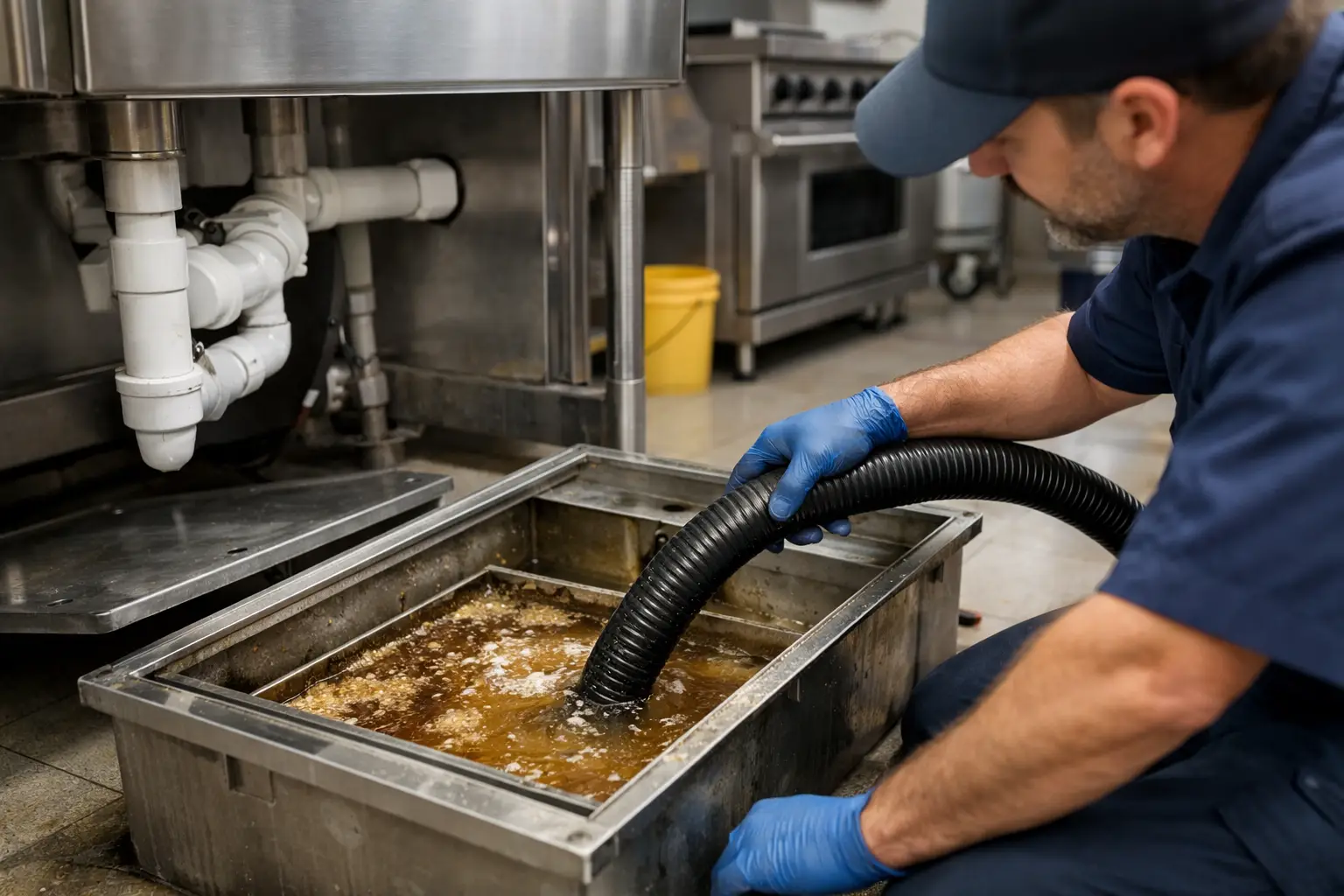
A busy restaurant can send hundreds of gallons of warm, greasy wastewater through its kitchen plumbing every day. Without the right interceptor arrangement, that grease cools inside the pipe, sticks to the walls, and creates the kind of drain backup that can stop service fast. This restaurant grease trap plumbing example shows how a typical commercial kitchen drain system is arranged and why installation details matter.
The goal is not simply to place a metal box under a sink. A grease trap or larger grease interceptor must receive the right fixtures, control the flow entering the unit, remain accessible for cleaning, and discharge correctly to the building sewer. The exact equipment and piping layout depend on kitchen volume, local requirements, and the authority having jurisdiction.
Restaurant Grease Trap Plumbing Example: A Typical Layout
Picture a small-to-medium restaurant kitchen with a three-compartment sink, a pre-rinse sink, a mop sink, and a floor drain near the dishwashing area. These fixtures produce wastewater containing fats, oils, and grease, commonly called FOG. In a basic indoor grease trap setup, the plumbing path may look like this:
Kitchen sink and food-prep fixtures → branch drain → flow control fitting and vent → grease trap → outlet piping → sanitary building drain → municipal sewer or septic connection
The three-compartment sink and pre-rinse sink connect to a properly sized branch drain. Before wastewater enters the trap, a flow control device may be installed. This fitting slows and regulates incoming water so the trap has time to separate grease from wastewater. A vent is commonly required at or near the flow control assembly to prevent air pressure problems that could disrupt drainage or pull water from fixture traps.
Inside the grease trap, wastewater slows down. Grease rises to the surface, heavier solids settle, and comparatively cleaner water exits through the outlet. From there, the discharge pipe ties into the sanitary drain system. The trap must be installed level and in a location where staff or a pumping contractor can open it and remove accumulated grease and solids.
That accessibility point is often missed during renovations. A trap hidden behind fixed cabinetry, equipment, or a finished wall may technically be connected, but it is not practical to service. When maintenance becomes difficult, it tends to be delayed, and delayed maintenance turns into clogs, odors, and emergency calls.
Where a Larger Exterior Interceptor Fits
High-volume kitchens often need a larger grease interceptor outside the building rather than a small indoor trap. Restaurants with dishwashers, fryers, extensive cooking lines, or heavy wash-down activity can exceed what an under-sink unit can handle.
In that configuration, grease-producing fixtures are routed through dedicated drain piping to a large exterior interceptor, often installed underground. The interceptor is usually placed where a vacuum truck can reach it without blocking the kitchen or damaging the property. It needs accessible covers, adequate clearance, and a properly planned connection to the building sewer.
A larger interceptor costs more upfront and requires excavation, but it generally holds more grease and allows for more practical maintenance in a busy operation. The right choice depends on projected flow, fixture load, food-service operations, local regulations, and site conditions. A coffee shop with limited food prep has very different needs than a full-service seafood restaurant.
What Should Connect to the Grease Trap?
Only fixtures that produce greasy wastewater should be routed through the grease control device. In many restaurant layouts, that includes pot sinks, compartment sinks, pre-rinse sinks, wok stations, floor drains in food-preparation areas, and certain dishwashing connections when required by the approved design.
Restrooms should not discharge through a grease trap. Neither should clear-water sources such as roof drainage, condensate piping, or other non-kitchen drains. Routing unnecessary water through the equipment can overwhelm it, shorten grease separation time, and create maintenance problems.
Garbage disposals require special attention. Sending ground food waste through a grease trap adds solids quickly and can reduce the unit's effective capacity. Some jurisdictions restrict or prohibit this arrangement, while others require a separate solids interceptor or specific equipment. This is one of several areas where the local code and sewer authority rules control the final design.
Commercial dishwashers can also be a judgment call. Their high-temperature discharge may keep grease suspended long enough to carry it through a small trap. Depending on the equipment and local requirements, the dishwasher may need a separate arrangement, a larger interceptor, or a connection planned by a licensed commercial plumber.
The Details That Prevent Drain Problems
A grease trap is only one part of the plumbing system. Pipe size, slope, cleanout locations, venting, and fixture connections all affect whether the kitchen drains reliably during a rush.
Drain piping needs enough slope to move wastewater and solids without allowing grease to settle prematurely in long horizontal runs. Too little slope can leave standing waste in the pipe. Too much slope can let water outrun solids. Proper sizing matters as well. A line that is too small may back up during peak dishwashing periods, while an oversized or poorly designed system may not maintain the flow conditions needed for reliable drainage.
Cleanouts are equally important. A commercial kitchen should have accessible points where a technician can inspect and clear the drain line without dismantling equipment or cutting pipe. If a backup occurs upstream of the grease trap, a cleanout can make the difference between a targeted repair and an all-night disruption to the kitchen.
Venting protects the system from pressure changes. When a large sink is drained quickly, air must move through the plumbing system in a controlled way. Inadequate venting can cause slow drains, gurgling, sewer odors, or trap seal loss. Those symptoms are often blamed on the grease trap, even when the underlying issue is a vent or drain layout problem.
Sizing Is Not Guesswork
Grease control equipment must be sized for the kitchen it serves. A unit that is too small fills quickly and sends grease downstream. A unit that is unnecessarily large may add cost and take up valuable space without solving a design issue.
Sizing methods can consider sink compartment dimensions, water volume, drainage period, fixture count, flow rate, food-service type, and local sewer authority standards. A licensed plumber should verify the required method before installation. For a new restaurant, that planning should happen before concrete is poured or kitchen equipment is set in place.
In Cape Cod communities, site limitations can add another layer to the project. Older buildings may have shallow piping, tight utility rooms, limited exterior access, or septic-related considerations. These conditions do not prevent a compliant installation, but they make early evaluation especially valuable.
Maintenance Is Part of the Plumbing Plan
Even a correctly installed grease trap will fail if it is not cleaned on schedule. Grease traps are not disposal units. Staff should scrape plates and pans into the trash, use sink strainers, and avoid pouring fryer oil into any drain. Used cooking oil should be collected separately through an approved recycling or disposal process.
Most grease traps need regular inspection, with pumping or cleaning based on the amount of grease and solids collected. Many operators follow the 25 percent rule: when grease and settled solids occupy about one-quarter of the unit's liquid depth, service is due. Your local regulations, equipment manufacturer, and waste hauler may set a more specific schedule.
Keep service records. Documentation can help a restaurant demonstrate compliance, identify a pattern of excessive buildup, and catch a kitchen practice problem before it creates a sewer backup. If a trap is filling far faster than expected, the cause might be a failed baffle, an undersized unit, too much food waste, or fixtures connected that were not part of the original design.
When to Call a Commercial Plumber
Slow kitchen drains, recurring clogs, sewage odors, overflowing floor drains, or grease appearing at downstream cleanouts are reasons to act quickly. Continuing to run water can spread wastewater across the kitchen and create a sanitation issue during service.
A qualified commercial plumber can inspect the trap, drain lines, venting, cleanouts, and downstream piping to identify whether the issue is maintenance-related or a system defect. For restaurant owners and property managers, the best repair is the one that restores service now and reduces the chance of another interruption next week.
Durfee Plumbing & Heating provides commercial plumbing support for Cape Cod businesses, including drain problems and grease-trap-related piping concerns. A properly planned grease control system protects more than the sewer line - it protects your kitchen schedule, your staff, and the customers waiting for their meals.



