
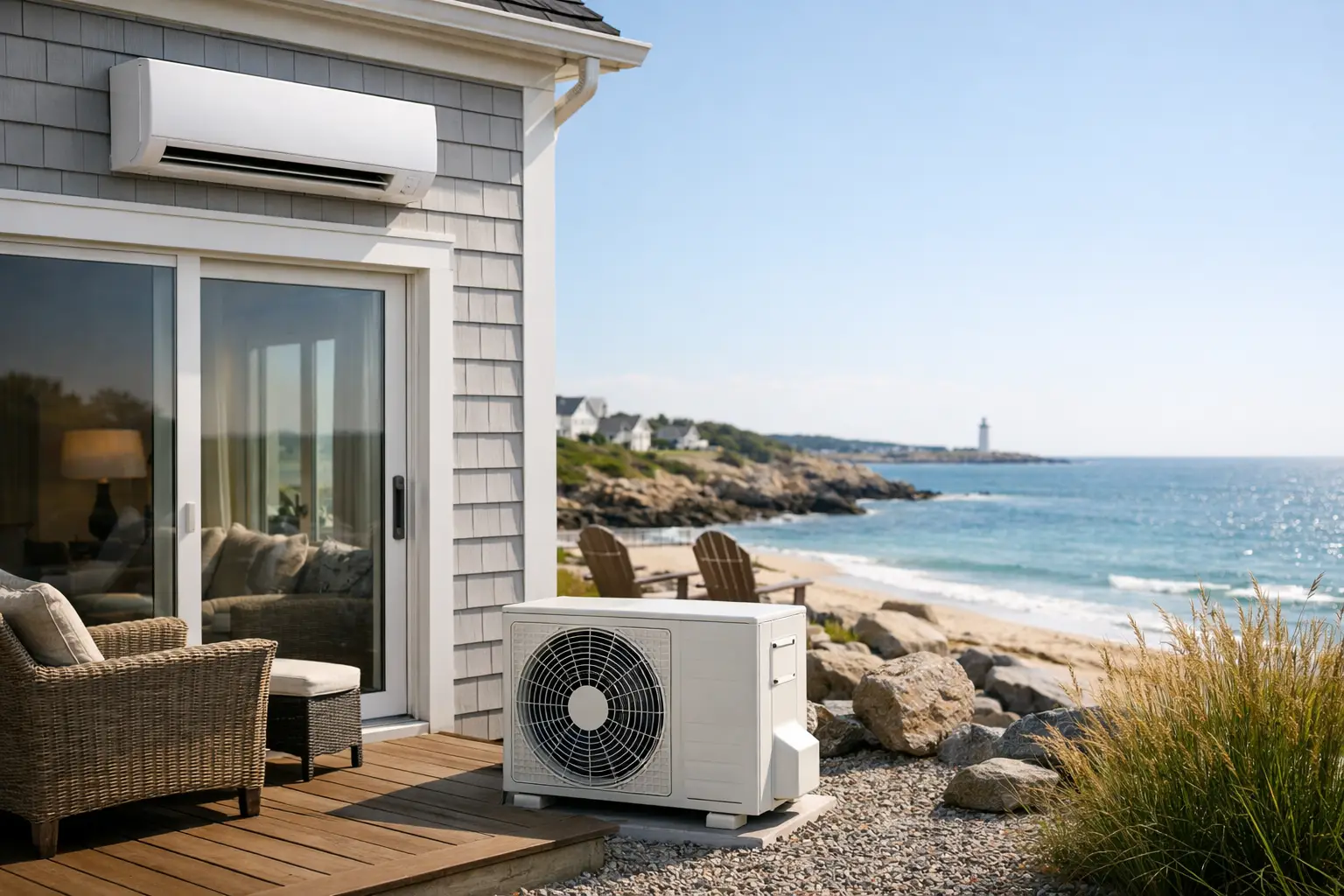
A Cape Cod home can feel comfortable in the morning, humid by lunch, and chilly again after sunset. That fast-changing weather is one reason the best ductless systems coastal homes can use are not simply the biggest units or the least expensive ones. They need to manage humidity, provide dependable heat, and stand up to years of salt air, wind, and seasonal use.
For homeowners who rely on baseboard heat, window AC units, or an older central system, a ductless mini split can be a practical upgrade. It delivers heating and air conditioning without adding bulky ductwork, and it gives you room-by-room control where it matters most. The right system, however, starts with careful equipment selection and a professional installation plan.
What Coastal Homes Need From a Ductless System
A ductless system has an outdoor condenser connected to one or more indoor air handlers. The indoor units quietly distribute conditioned air in the spaces they serve, while the outdoor unit moves heat in or out of the home depending on the season.
That basic setup works well in many properties, but coastal homes present a few added challenges. Salt carried in ocean air can accelerate corrosion on exposed metal components. High summer humidity can make a home feel sticky even when the thermostat is set low. Older cottages and year-round homes may have uneven insulation, open floor plans, additions, or rooms that were never connected to central ductwork.
The best choice balances cold-weather heating performance, moisture removal, corrosion resistance, proper capacity, and the layout of your home. A system that looks great on paper can still underperform if it is oversized, poorly located, or installed without protecting the outdoor equipment from coastal conditions.
Best Ductless Systems for Coastal Homes: Features That Matter
Rather than choosing by brand name alone, compare systems based on the features that affect day-to-day comfort and long-term service needs.
Cold-climate heat pump performance
Cape Cod winters are milder than some inland Massachusetts communities, but temperatures still drop below freezing and coastal winds can make a home lose heat quickly. Look for a ductless heat pump rated for reliable operation at low outdoor temperatures. Ask your contractor how much heating capacity the system retains in cold weather, not just its general heating rating.
A cold-climate model can often carry much of a home's heating load, particularly in a well-insulated space. In some homes, existing boilers or electric baseboard heat remain as backup. Whether you can reduce or replace another heat source depends on the home's heat-loss calculation, insulation, and the rooms you want the system to cover.
Strong humidity control
Cooling is only part of summer comfort near the water. A properly sized mini split removes moisture as it cools, helping bedrooms, living areas, and finished basements feel less damp. This can be especially valuable in homes that sit closed up between weekend visits or rental turnovers.
Oversizing can work against this benefit. An oversized unit may cool the room too quickly and cycle off before removing enough humidity. Proper sizing and variable-speed operation allow the system to run longer at lower output, which generally produces steadier temperatures and better moisture control.
Coastal corrosion protection
No outdoor HVAC unit is completely immune to salt air. The goal is to select equipment with protective coil coatings or corrosion-resistant components when available, then install and maintain it correctly. Outdoor-unit placement matters as much as the label on the equipment.
A condenser should have adequate airflow and clearance for service, but it should not sit where direct salt spray, roof runoff, drifting sand, or snow piles can repeatedly hit it. A stable elevated pad or wall bracket may be appropriate depending on the site. Your installer should also use suitable mounting hardware, line-set protection, and drainage practices for the property.
Efficient variable-speed operation
Ductless systems with inverter-driven compressors adjust their output instead of running only fully on or fully off. That capability helps them respond to changing outdoor temperatures and differing room loads. It also reduces the sharp temperature swings common with window units or oversized conventional equipment.
Efficiency ratings still matter, but they should not be the only deciding factor. A very high-efficiency model that is mismatched to the home or difficult to service locally is not automatically the best value. Equipment quality, installation quality, warranty coverage, and access to qualified repair technicians all deserve equal attention.
Single-Zone or Multi-Zone: Which Setup Fits Your Home?
A single-zone system connects one outdoor condenser to one indoor unit. It can be an excellent solution for a primary bedroom, a new addition, a home office, a finished attic, or a living room that always runs too warm in summer.
A multi-zone system connects several indoor units to one outdoor condenser. This approach works well when you want independent temperature control in bedrooms and main living areas without placing multiple condensers around the property. Each zone can be adjusted based on occupancy, sun exposure, and personal comfort.
Multi-zone is not always the automatic answer. It involves more design decisions, and capacity must be allocated correctly among the rooms. In certain larger or more complicated homes, separate single-zone systems may provide better performance or easier redundancy. A qualified technician should evaluate the layout rather than assuming one configuration fits every property.
Proper Sizing Is More Important Than Square Footage
A common mistake is selecting a mini split based only on the room's square footage. Square footage is a starting point, not a final answer. Ceiling height, window area, insulation levels, sun exposure, room use, air leakage, and the number of occupants all affect heating and cooling demand.
For a whole-home or multi-room installation, a professional load calculation is the dependable way to determine equipment capacity. This is particularly important in older Cape Cod homes, where one side of the building may receive strong afternoon sun while another remains shaded and cooler. It also matters in properties with partial-season use, renovations, or additions that were built to different insulation standards.
Correct sizing protects comfort, efficiency, and equipment life. It helps prevent short cycling, uneven temperatures, excess humidity, and unnecessary strain on the system.
Installation Details That Protect Performance
The indoor head should be placed where air can circulate across the room without blowing directly on beds, sofas, or dining tables. A wall-mounted unit is common, but ceiling cassettes, floor-mounted units, and concealed ducted air handlers may make more sense in certain spaces. The best option depends on the room and the homeowner's preference for appearance and airflow.
Drainage is another critical detail. Cooling creates condensation that must be routed safely outside or to an approved drain location. Improper condensate routing can lead to leaks, staining, moisture problems, or pump failures. On a coastal property, the installer should also plan line-set routes carefully to avoid unnecessary exterior exposure and keep penetrations properly sealed against weather.
Electrical capacity needs a review as well. Many ductless systems require dedicated circuits, and older homes may need electrical upgrades before installation. Addressing this before equipment arrives prevents avoidable delays.
Maintenance Matters More Near the Water
Ductless systems are low-maintenance, not no-maintenance. Homeowners should clean or wash indoor filters as recommended, keep furniture and curtains clear of air handlers, and watch for reduced airflow, unusual noise, water drips, or error codes.
Professional maintenance is the better defense against coastal wear. During service, a technician can inspect coils, electrical connections, drains, refrigerant operation, mounting hardware, and signs of corrosion. Outdoor coils may need careful cleaning more often when a home is close to the shore, especially after a season of salt exposure.
If the system serves a vacation home or rental property, consider scheduling service before the busy summer season. That gives you time to address a developing issue before guests arrive or a heat wave makes the problem urgent.
Costs, Rebates, and Long-Term Value
Ductless installation costs vary based on the number of zones, system capacity, electrical work, wall or ceiling construction, and outdoor-unit placement. It is reasonable to compare proposals, but compare the scope of work as closely as the price. A lower estimate may exclude electrical upgrades, condensate pumps, equipment stands, line-set covers, permit work, or startup testing.
Energy-efficiency incentives may help reduce the upfront cost of qualifying heat pump systems. Massachusetts homeowners should ask about current Mass Save rebates and available financing before making a final decision. Requirements and amounts can change, so verify the details for your property and the equipment being considered.
For Cape Cod homeowners, Durfee Plumbing & Heating can assess the home's layout, comfort concerns, and existing heating equipment before recommending a ductless configuration. Licensed installation and a clear maintenance plan help protect the investment long after the first cooling season.
A ductless system should make the rooms you use most comfortable without creating new maintenance headaches. Choose equipment built for the job, size it for the actual home, and give the outdoor unit the coastal protection it needs. That is how a heat pump becomes a dependable part of year-round living near the water.



