
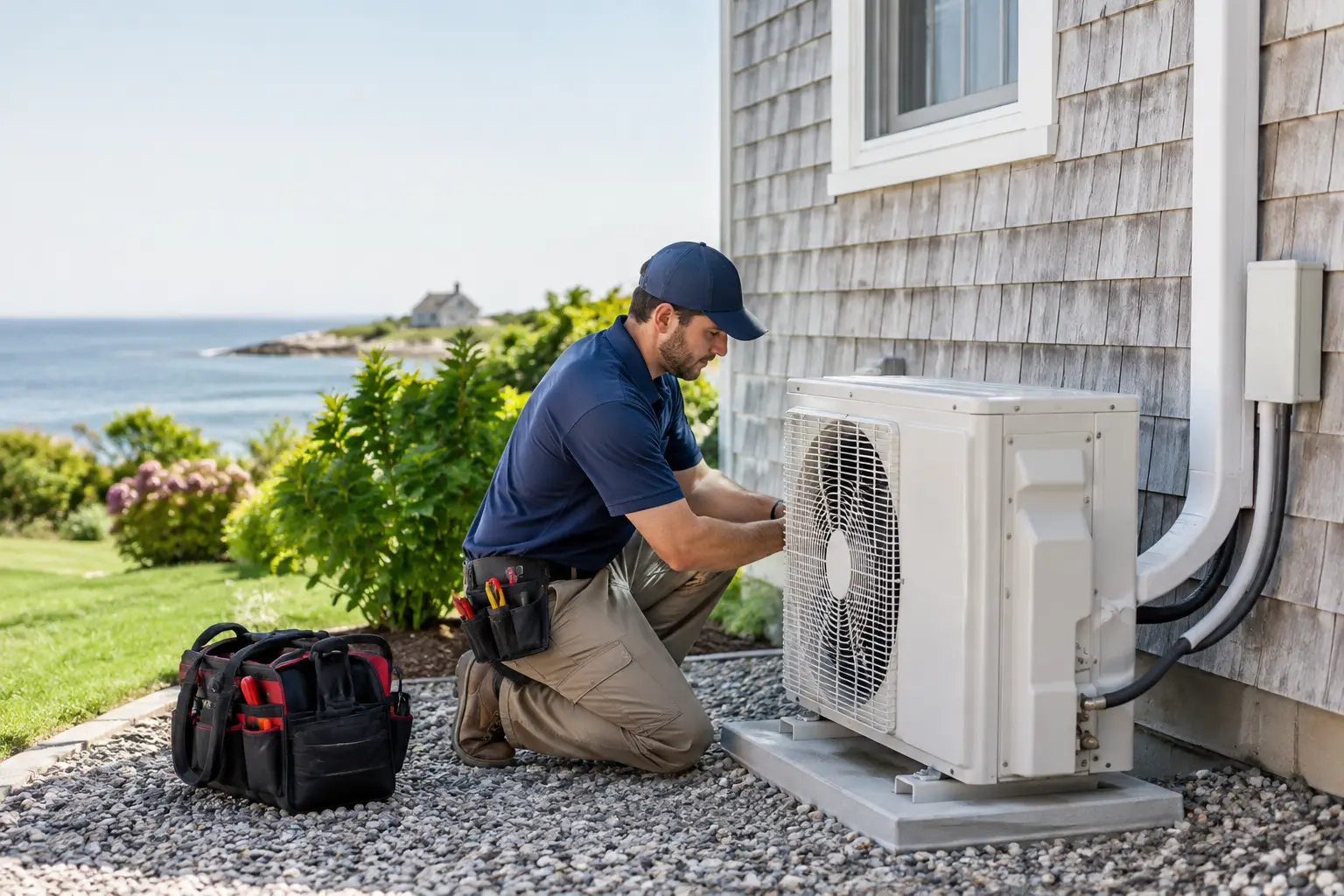
Cape Cod homes ask a lot of their heating and cooling equipment. Salt air, humid summers, cold winter wind, older room additions, and limited ductwork can all make comfort harder to manage. A professionally planned mini split installation Cape Cod homeowners rely on can solve those problems with efficient, room-by-room heating and air conditioning - without the major renovation required to add traditional ducts.
Ductless mini splits are not a one-size-fits-all upgrade. The right system depends on your home’s layout, insulation, electrical capacity, how you use each room, and whether you want to heat one area or reduce reliance on an older central system. Getting those details right at the start is what helps the system perform well for years.
Why Mini Splits Work Well on Cape Cod
A ductless mini split moves heat rather than creating it through combustion. In cooling mode, it pulls heat from indoors and transfers it outside. In heating mode, the process reverses, allowing the system to bring heat indoors even when temperatures drop. Modern cold-climate heat pumps can provide dependable heat through much of a Cape Cod winter.
That makes mini splits especially useful in homes with oil, propane, electric baseboard heat, or aging forced-air equipment. They can provide efficient primary heat in selected areas, supplemental heat for difficult rooms, or cooling where window units have never been a good fit.
They are also practical for spaces that were added after the original house was built. A finished basement, sunroom, home office, garage conversion, or second-floor bedroom often needs comfort control but has no easy path for ductwork. A wall-mounted indoor unit and compact outdoor condenser can usually serve those areas with far less disruption than a full duct installation.
Humidity control is another meaningful benefit. During sticky summer weather, a properly sized mini split can cool the room while removing moisture from the air. The result is often more comfortable than simply lowering the thermostat on an oversized air conditioner that cycles on and off too quickly.
Mini Split Installation on Cape Cod Starts With Proper Sizing
The biggest mistake in ductless HVAC is choosing equipment based only on square footage. Square footage matters, but it is only part of the picture. An open kitchen and living room with large west-facing windows has very different needs from a shaded bedroom of the same size.
A qualified installer evaluates the room, ceiling height, window exposure, insulation levels, air leakage, occupancy, and nearby spaces. In older Cape homes, that assessment is particularly important. A room may have uneven insulation, additions built in different eras, or architectural features that make heat movement unpredictable.
An oversized system can short-cycle, reducing comfort and humidity control. An undersized system may run constantly and struggle during periods of extreme heat or cold. The goal is not the largest unit available. It is a system matched to the actual heating and cooling load.
One Zone or Multiple Zones?
A single-zone system connects one outdoor unit to one indoor unit. It is often a strong choice for a specific problem area, such as a primary bedroom, office, family room, or enclosed porch.
A multi-zone system uses one outdoor condenser to serve several indoor units. This can be a practical option when you want separate temperature control in multiple rooms. However, it is not automatically the best choice for every home. In some layouts, separate single-zone systems provide better performance, easier service access, or more flexibility. Your installer should explain the trade-offs instead of pushing one arrangement for every property.
Placement Matters More Than Many Homeowners Expect
Indoor unit placement affects comfort, appearance, noise, and serviceability. The unit needs clear airflow across the room and should be located where it can distribute conditioned air effectively. Installing it behind a tall cabinet, in a tight corner, or directly over a heat-producing appliance can limit its performance.
Outdoor unit placement matters just as much on the Cape. The condenser needs stable support, adequate clearance, and a location that allows technicians to access it for maintenance. It should also be considered in relation to snow accumulation, roof runoff, prevailing wind, landscaping, and potential salt exposure near the water.
For heating operation, outdoor equipment must manage defrost cycles. During certain winter conditions, frost can build on the outdoor coil and the system temporarily switches modes to remove it. Proper drainage and elevation help prevent defrost water from freezing around the unit. This is a small installation detail that can make a major difference during cold weather.
The refrigerant lines, electrical wiring, and condensate drain also need a thoughtful route between the indoor and outdoor units. A clean installation considers both system performance and the exterior appearance of the home. The shortest route is not always the best route if it creates drainage problems or makes future service difficult.
What a Professional Installation Process Looks Like
A quality mini split project begins with a site visit and a clear conversation about what you want the system to do. Are you looking to cool bedrooms at night? Replace expensive electric resistance heat? Make an addition usable year-round? Support a rental property or commercial office? The intended use guides the system design.
After the equipment and locations are selected, the installer confirms electrical requirements and permit needs. Depending on the system and property, electrical upgrades or a dedicated circuit may be needed. Licensed work and proper permitting protect the equipment, the building, and your investment.
Installation typically includes mounting the indoor unit or units, setting the outdoor condenser, running insulated refrigerant lines, connecting the condensate drain, making electrical connections, pressure-testing the refrigerant circuit, pulling a vacuum, and starting the system according to manufacturer specifications. Skipping these commissioning steps can lead to efficiency loss, refrigerant issues, or early equipment failure.
Before the job is complete, the homeowner should understand how to operate the controls, clean the filters, and recognize when service is needed. Mini splits are low-maintenance, but not maintenance-free. Filters should be cleaned regularly, outdoor units should stay clear of leaves and debris, and periodic professional service helps protect performance.
Rebates, Financing, and the Real Project Cost
The cost of a mini split installation varies based on capacity, number of zones, electrical work, line-set routing, mounting requirements, and the complexity of the home. A simple single-zone installation is very different from a multi-room system designed to supplement or replace an existing heating source.
Available Mass Save rebates may help reduce the cost of qualifying heat pump projects. Eligibility, equipment requirements, and incentive amounts can change, so it is wise to review current program details before making a final decision. A knowledgeable contractor can help you understand whether your planned system may qualify and what documentation could be required.
Financing can also make a larger comfort upgrade more manageable, particularly when an aging heating or cooling system needs replacement sooner than expected. The best decision balances the upfront installation cost with expected energy use, the comfort needs of the building, and the useful life of the equipment being replaced.
Choosing the Right Contractor for the Job
Mini split equipment is only as good as its installation. Look for a contractor with licensed, certified technicians, experience with ductless heat pump design, and the ability to explain sizing and placement in plain language. Ask how the company handles electrical coordination, condensate drainage, commissioning, warranty coverage, and future maintenance.
For homeowners and property managers across Cape Cod, Durfee Plumbing & Heating provides ductless mini split solutions backed by licensed technicians, a 1-year parts and labor warranty, and practical guidance on comfort and energy-efficiency options. Clear communication matters as much as technical skill, especially when the project affects how a home or business stays comfortable all year.
A mini split should feel like a well-planned improvement, not a workaround. Start with the rooms that cause the most frustration, have the space evaluated properly, and choose an installation approach built for your property and Cape Cod weather.



