
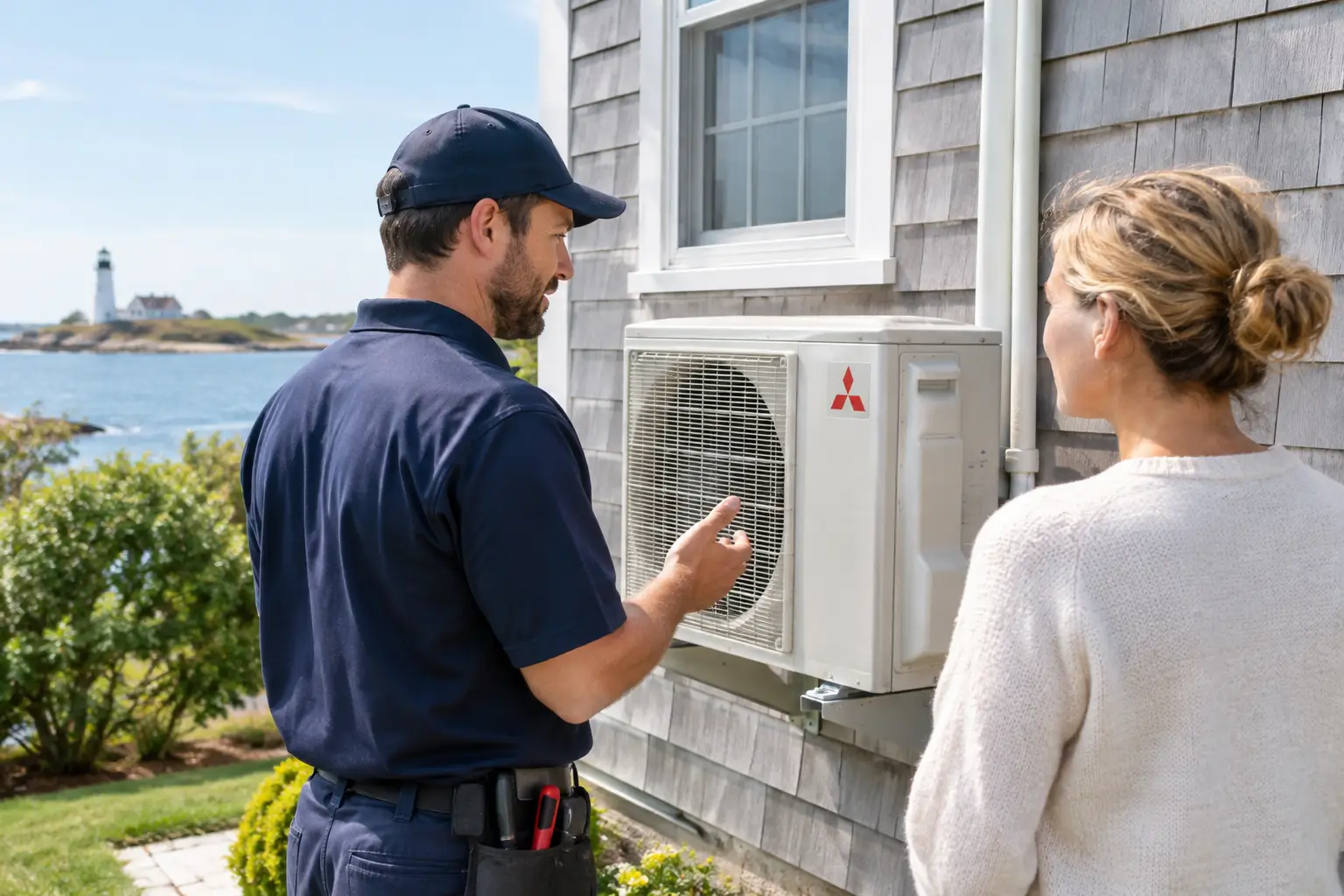
A ductless system can be a major upgrade for a Cape Cod home - but only when it is designed around the house, not simply hung on a wall. If you are looking for a Mitsubishi mini split installer Cape Cod homeowners can depend on, focus on the details behind the equipment: accurate sizing, thoughtful placement, clean installation practices, and service after the job is complete.
Mitsubishi ductless mini splits can provide efficient heating and air conditioning without adding full ductwork. They are especially useful in older homes, additions, finished basements, seasonal properties, and rooms that never seem to stay comfortable. Still, a mini split is not a one-size-fits-all purchase. The right system and installation plan depend on your building, your comfort goals, and how you use the space.
Why Installation Quality Matters as Much as the Equipment
Mitsubishi is widely known for cold-climate heat pump technology, quiet operation, and zoning flexibility. Those benefits depend on proper design and commissioning. An incorrectly sized unit may short cycle, leave rooms unevenly conditioned, or run longer than necessary. Poor indoor-unit placement can create drafts or fail to reach the areas where you actually need comfort.
The installation itself also matters. Refrigerant lines must be correctly routed, pressure-tested, evacuated, and charged according to manufacturer requirements. Electrical connections, condensate drainage, outdoor-unit mounting, and weather protection all need close attention. Skipping these steps can lead to leaks, drainage problems, lost efficiency, and avoidable repairs.
A qualified local installer should explain the work in plain language before installation begins. You should know where the indoor and outdoor equipment will go, how the line set will be run, whether electrical upgrades are needed, and what disruptions to expect during the project.
What a Mitsubishi Mini Split Installer on Cape Cod Should Evaluate
Cape Cod homes come in many forms, from compact year-round cottages to larger waterfront homes and multi-level properties with additions built decades apart. That variety is exactly why an installer should evaluate your home before recommending system capacity or the number of indoor heads.
Heating and cooling load
System size should be based on more than square footage. A professional assessment considers insulation, windows, ceiling height, sun exposure, air leakage, occupancy, and the room's intended use. A sunny second-floor bedroom, for example, may have a very different cooling demand than a shaded first-floor office of the same size.
For whole-home heating, the contractor should also consider your existing system and how the mini split will perform during the coldest weather. Many homeowners choose ductless heat pumps to reduce reliance on oil, propane, or electric resistance heat. Others use them for air conditioning and shoulder-season heating while retaining a boiler or furnace for backup. Both approaches can make sense, depending on the home and household priorities.
Indoor unit placement
Wall-mounted units are common, but they are not the only option. Floor-mounted, ceiling cassette, and concealed ducted options may be better for certain room layouts or design preferences. The goal is not simply to place an indoor unit where installation is easiest. It needs enough clearance to circulate air, reach the living area effectively, and remain accessible for cleaning and service.
A good installer will also consider noise, appearance, furniture placement, and where condensate can drain safely. On a second floor, for instance, the drainage plan deserves special attention. A poorly routed condensate line can cause water damage that is far more expensive than doing the installation correctly from the start.
Outdoor unit location
The outdoor condenser needs a stable, level base or properly engineered wall bracket, adequate airflow, and room for future maintenance. It should be located where it will not interfere with walkways, decks, snow removal, or normal property use.
On the Cape, coastal exposure is another practical consideration. Salt air, wind, and drifting snow can affect equipment placement and long-term maintenance needs. Your installer should recommend a location that protects the unit where possible without restricting airflow. Ask how the installation plan addresses snow clearance, drainage, and access for service technicians.
Electrical capacity and permits
A mini split needs a dedicated electrical circuit and exterior disconnect. Some homes have adequate panel capacity, while others may need electrical work before the system can be installed. This should be identified early, not discovered on installation day.
Permits and code requirements can vary by community and project scope. A professional contractor will help determine what is required and complete the work in a way that supports safe operation, inspections, and future resale documentation.
Single-Zone or Multi-Zone: Which Is Better?
A single-zone system pairs one outdoor unit with one indoor unit. It is often a strong choice for a bedroom, home office, addition, garage conversion, or a part of the home that is consistently too hot or too cold. It can be straightforward to install and gives that space independent temperature control.
A multi-zone system connects several indoor units to one outdoor condenser. This can reduce the number of outdoor units around the home and provide room-by-room comfort control. It can also be more complex, and it is not automatically the best answer for every house. Larger homes, properties with separated living areas, and homes with varied schedules may benefit from multiple smaller systems instead.
The best arrangement depends on capacity needs, line-set routing, budget, outdoor space, and how independently each room needs to operate. An installer should walk you through the trade-offs rather than pushing a standard package.
Questions to Ask Before You Schedule Installation
Before selecting a contractor, ask whether they perform an in-home assessment and how they determine system size. Ask what equipment options fit your home, where the indoor and outdoor units would be located, and whether the quote includes electrical work, line-set covers, pads or brackets, condensate management, permits, and startup testing.
It is also reasonable to ask about licensing, technician training, warranty coverage, maintenance recommendations, and future repair service. A low estimate may exclude important site work or leave you with unclear responsibility if an issue appears after installation. Compare proposals based on the full scope of work, not the equipment price alone.
For larger upgrades, ask about available financing and current Mass Save rebate opportunities. Rebate programs and eligibility requirements can change, so confirm the details before making a final equipment decision. The right contractor can help you understand which efficiency options may qualify and what documentation may be needed.
What Happens During a Professional Installation
Most installations begin with confirming the final equipment locations and protecting the work area. The contractor mounts the indoor unit or units, installs the outdoor condenser, runs insulated refrigerant lines and communication wiring, connects drainage, and completes the electrical connections.
The system then needs to be tested correctly. That includes checking line integrity, evacuating the refrigerant piping, starting the equipment, verifying temperatures and drainage, and confirming that each zone responds to its controls. The technician should show you how to operate the remote or wall control, clean the filters, and recognize signs that service is needed.
At Durfee Plumbing & Heating, licensed and certified technicians approach ductless installation as a comfort-system project, not a quick equipment swap. Clear recommendations, dependable workmanship, and a 1-year parts and labor warranty help homeowners move forward with confidence.
Plan for Maintenance and Long-Term Performance
Mini splits are designed for efficient operation, but they still need routine care. Homeowners should clean or wash filters as recommended, keep the outdoor unit clear of leaves and snow, and avoid blocking indoor airflow with furniture or curtains. If cooling output drops, a unit leaks water, unusual noise develops, or a system displays an error code, schedule service promptly.
Professional maintenance is also worthwhile, particularly for systems used as a primary heat source. A technician can clean coils and blower components, check electrical connections, inspect drainage, verify refrigerant performance, and catch small concerns before they interrupt heating or cooling.
The right ductless system should make a room or home more comfortable without adding another worry to your property checklist. Start with an on-site evaluation, ask direct questions about the full installation scope, and choose a contractor prepared to support the system long after the first day of operation.



