A puddle under the boiler usually shows up at the worst possible time - early morning, a cold night, or right before guests arrive. If you're asking why is my boiler leaking, the short answer is that something inside the system is failing, wearing out, or running under the wrong pressure. The right response depends on where the water is coming from, how much is leaking, and whether the boiler is still heating normally.
Why is my boiler leaking? Start with the source
Not every boiler leak means the same thing. A few drops from one fitting can point to a loose connection. Water running from the bottom of the unit can suggest a failed internal seal, corrosion, or pressure problem. If the leak appears only when the heat kicks on, expansion and pressure changes may be involved.
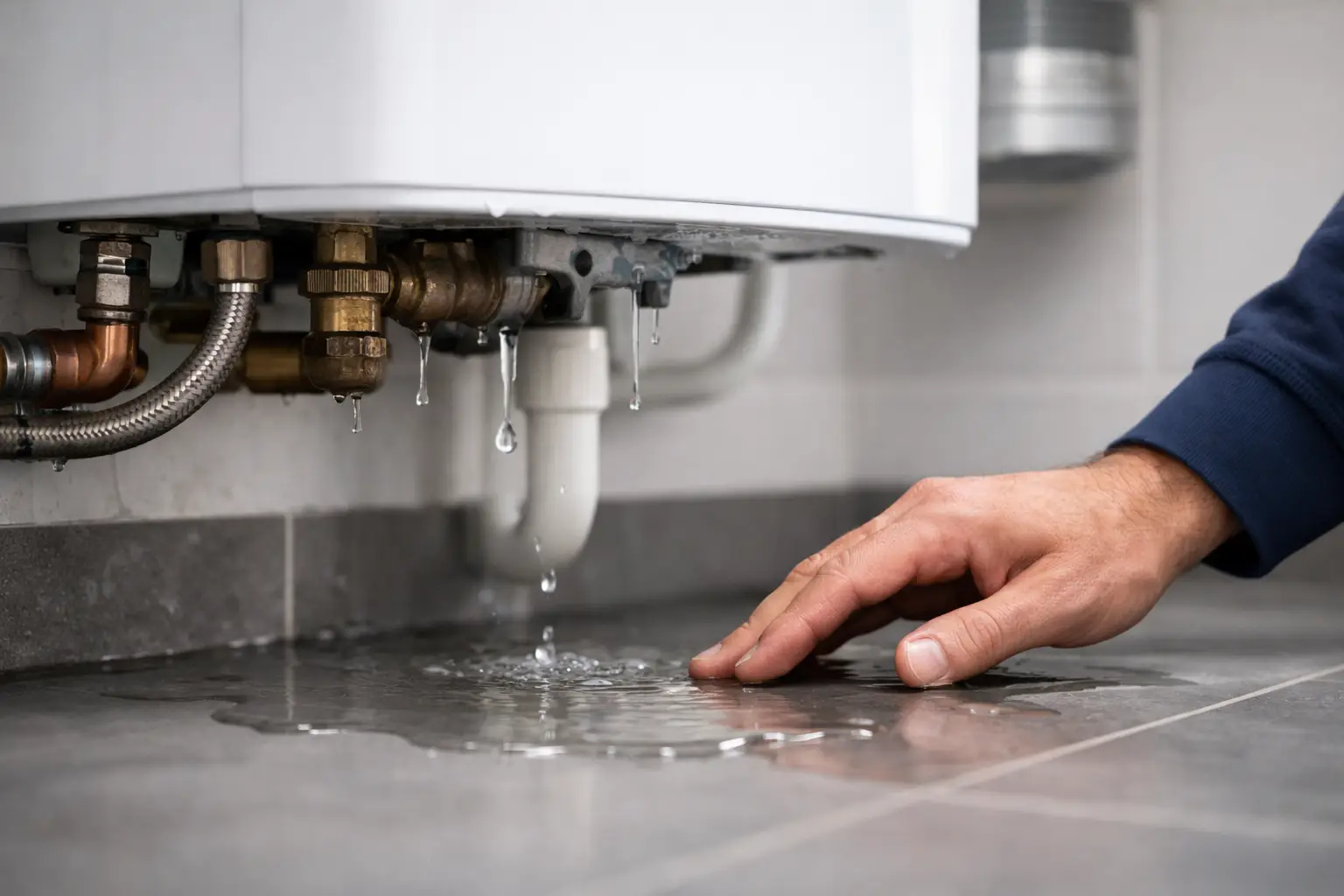
The first step is to look, not guess. Is the water dripping from a pipe above the boiler and landing on it? Is it coming from a valve, a pump, or the relief pipe? Is the floor wet directly under the unit? Those details matter because a boiler itself is not always the true source.
Condensation can also confuse people, especially on high-efficiency equipment. In that case, the moisture may be related to the condensate line or trap rather than a crack in the boiler. That's a very different repair than a leaking heat exchanger or corroded fitting.
The most common reasons a boiler leaks
One of the most common causes is excessive system pressure. Boilers are designed to operate within a specific pressure range. When pressure climbs too high, the relief valve may open to release water and protect the system. That leak is a symptom, not the root problem. The real issue may be a failing expansion tank, a faulty pressure-reducing valve, or an overfilled system.
Worn seals and loose connections are also common, especially on older boilers. Circulator pumps, valve stems, and pipe joints can all develop slow leaks over time. These problems can start small, but once water repeatedly escapes, corrosion tends to spread and damage nearby components.
Corrosion inside the boiler or connected piping is another frequent cause. Metal parts break down with age, poor water quality, or long-term neglect. If the boiler block, heat exchanger, or internal tank has rusted through, repair may be limited or not cost-effective. In that case, replacement becomes the more practical option.
A faulty pressure relief valve can leak even when pressure is normal. Sometimes debris prevents it from sealing completely. Other times, the valve has simply worn out. Relief valves are safety devices, so if one is leaking, it should be evaluated carefully rather than ignored or capped.
There are also cases where the expansion tank is waterlogged or has lost its air charge. That tank is supposed to absorb pressure changes as the water heats up. When it fails, pressure rises and the boiler starts shedding water through the relief valve or weak points in the system.
Where the leak is coming from changes the diagnosis
If the leak is at the bottom of the boiler, homeowners often assume the entire unit has failed. Sometimes that is true, but not always. Water can travel along internal surfaces and drip from the lowest point, making the source harder to spot. A leaking pump flange, nearby valve, or overhead fitting can all mimic a boiler-body leak.
If water is coming from the relief valve discharge pipe, high pressure is near the top of the list. If it is leaking around a circulator pump, the gasket or pump housing may be the issue. If a fitting or shutoff valve is dripping, the repair may be more straightforward.
If the boiler only leaks while running, heat expansion is an important clue. Metals expand, pressure shifts, and a weak seal can open up only during operation. If it leaks constantly, even when off, the issue may be a failed connection, corrosion, or a system that is staying pressurized when it should not.
What you should do right away
Start by turning off power to the boiler if you see active leaking near electrical components or controls. If you know how to shut off the water feed safely, that can help limit additional leaking. Then dry the area enough to see whether the leak continues and where it appears to start.
Do not keep resetting the system or continue running it just to maintain heat. A small leak can become a larger failure, and pressure-related problems can create safety risks. If the boiler has lost pressure, is making unusual noises, or is no longer heating correctly, it needs professional attention.
You should also move anything valuable away from the leak. Water damage to flooring, walls, and stored items can spread fast, particularly in finished basements or utility rooms with limited drainage.
When a boiler leak is an emergency
A minor drip is not ideal, but it is not always a middle-of-the-night emergency. A leak becomes more urgent when water is pouring out, pressure is climbing rapidly, the boiler shuts down repeatedly, or there are signs of electrical exposure. Any gas smell should be treated as an immediate safety issue.
In colder months, waiting too long can lead to a full heating outage and frozen pipes. That is especially important for seasonal homes, rental properties, and older buildings across Cape Cod, where winter weather and coastal conditions can put extra stress on heating systems. Fast diagnosis matters because the leak itself is often only one part of the problem.
Can you fix a leaking boiler yourself?
In most cases, no - at least not beyond basic damage control. Homeowners can sometimes identify whether the leak is coming from a visible pipe joint or relief discharge, but actual repair should be left to a licensed heating professional. Boilers involve hot water, pressure, gas or oil connections, electrical controls, and safety devices. Misdiagnosing the cause can make the situation worse.
There is also a big difference between stopping visible water and fixing the failure. Tightening the wrong fitting or replacing one part without addressing the pressure issue behind it can lead to repeat leaks. If the leak involves the heat exchanger, internal corrosion, or a failed safety component, professional repair is the safer path.
Repair or replace? It depends on age and condition
A leaking boiler does not always mean you need a new one. If the problem is a circulator gasket, relief valve, pressure-reducing valve, or expansion tank, repair can be the right move. These are often fixable issues when caught early.
If the boiler is older and leaking from the heat exchanger or corroded sections of the unit, replacement may make more sense. At that stage, you are not just paying for one repair. You may be dealing with declining efficiency, aging controls, hard-to-find parts, and the risk of another breakdown soon after.
For property owners, the decision usually comes down to reliability, repair cost, and how long you plan to keep the building. A repair may buy time, but if the system is already showing its age, replacement can reduce future disruption and improve energy performance.
How to prevent future leaks
The best prevention is routine boiler maintenance. Annual service helps catch pressure issues, worn seals, corroded fittings, and failing tanks before they turn into active leaks. A technician can check operating pressure, inspect key components, and confirm that safety controls are working properly.
It also helps to pay attention to early warning signs. If you notice pressure fluctuations, banging pipes, air in the system, uneven heat, or small amounts of water near the boiler, don't wait for a larger failure. Boilers rarely go from perfect to leaking overnight without some warning along the way.
For homes and commercial properties that depend on steady winter heat, preventive service is usually far less disruptive than emergency repair. A system that is maintained consistently is easier to trust when temperatures drop.
Why is my boiler leaking if it still works?
This is one of the more confusing situations for homeowners. The boiler may still heat the house even while leaking because the problem has not yet reached a complete failure point. A relief valve can discharge intermittently while the burner still runs. A pump gasket can drip while the system continues circulating heat. That doesn't make the leak harmless.
A boiler that still works but leaks is often in the early stage of a bigger repair. Water and metal do not mix well over time, especially around controls, burners, and structural components. The longer it leaks, the more likely it is to damage insulation, wiring, flooring, or the boiler itself.
If you're seeing water around the unit, the safest move is to get it checked before a manageable repair turns into a no-heat call. Durfee Plumbing & Heating handles boiler and heating issues with licensed technicians, stocked trucks, and 24/7 availability when the problem cannot wait.
A leaking boiler is never something to shrug off, but it also does not always mean the worst-case scenario. The sooner you pinpoint the cause, the better your chances of protecting the system, the property, and your peace of mind.