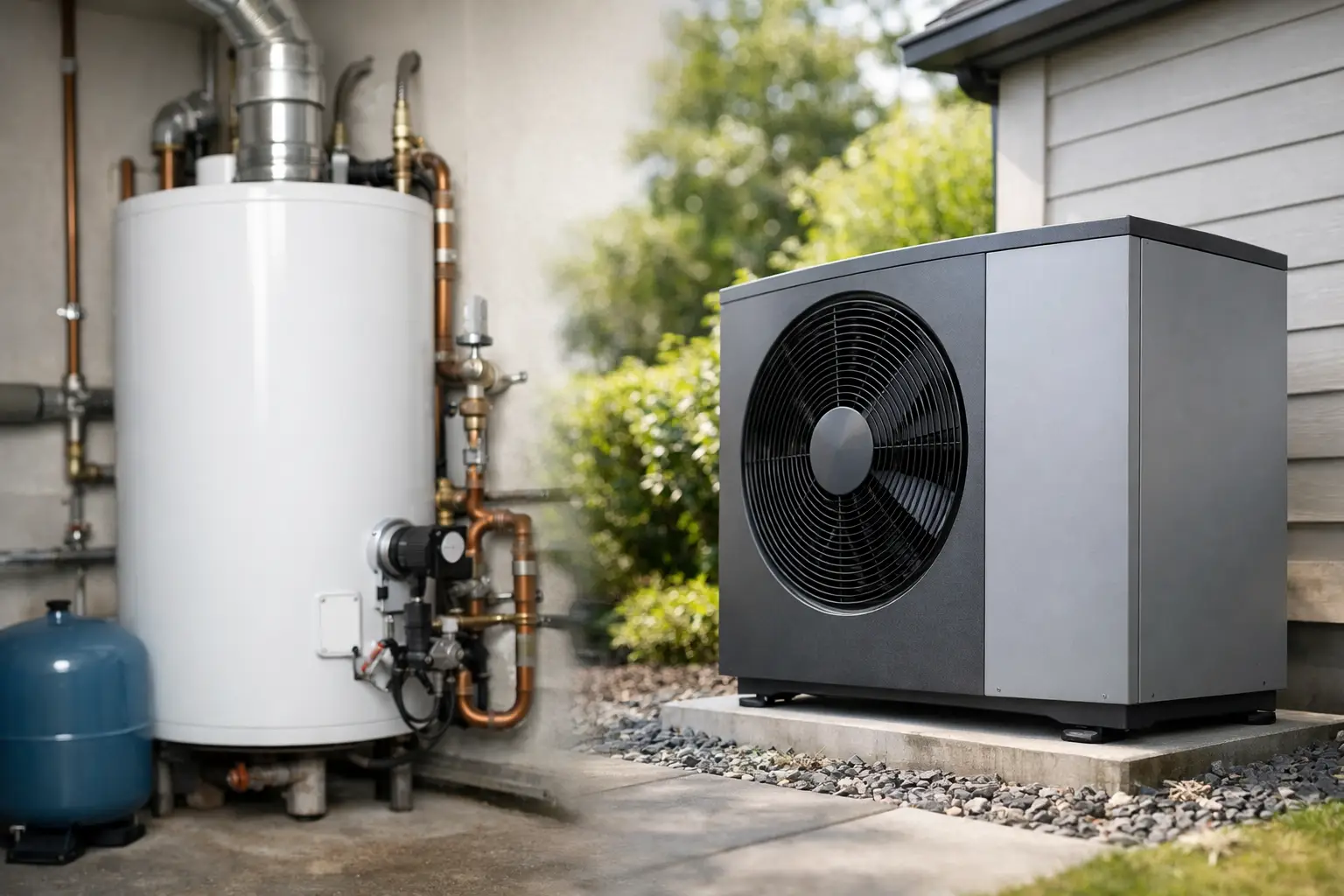
If your boiler is getting louder, your fuel bills keep climbing, or you are staring down another repair on an older heating system, a boiler to heat pump conversion starts to look less like a luxury and more like a practical decision. For many homeowners, the question is not whether heat pumps work. It is whether they make sense in a house that was built around a boiler in the first place.
That is the right question to ask, because this kind of upgrade is not one-size-fits-all. A heat pump can lower energy use, improve summer comfort, and reduce dependence on oil or gas. But the best results come from matching the equipment to the home, the existing distribution system, and the way the property is actually used through a New England winter.
What a boiler to heat pump conversion really means
A lot of people picture a full rip-out where the old boiler disappears and a heat pump takes over every heating job in the building. Sometimes that is exactly what happens. Other times, conversion means adding a heat pump system for most of the heating load and keeping the boiler as backup, at least for a period of time.
The right setup depends on what the boiler currently serves. If it heats baseboard, radiators, or radiant floors through hot water, switching to a standard ductless heat pump usually means changing how heat gets delivered into the rooms. That may involve wall-mounted indoor units, ceiling cassettes, or ducted air handlers in parts of the house. If the home already has ductwork for central air, the path can be more straightforward.
In other homes, a hydronic-compatible heat pump may be an option, but that depends heavily on water temperature requirements. Older baseboard systems often need hotter water than some heat pump systems can efficiently provide. That does not automatically rule out conversion, but it does mean the design work matters.
Why homeowners consider this upgrade
The biggest driver is usually cost pressure from aging equipment. An older oil or gas boiler can still run, but frequent repairs, uneven heat, and rising fuel expenses push many households to look at alternatives. If you also need cooling, the math gets more compelling because a heat pump can handle both heating and air conditioning in one system.
Comfort is another reason. Boilers can provide steady warmth, but they do not help with summer humidity or room-by-room cooling. Heat pumps do both. In homes with additions, finished basements, or second floors that never feel quite right, a zoned heat pump system can solve comfort issues the boiler never really addressed.
There is also the incentive side. Massachusetts homeowners often look at heat pumps because rebates and financing can reduce the upfront hit. When those programs line up with a planned equipment replacement, the project can make financial sense much sooner than expected.
When a boiler to heat pump conversion makes sense
The best candidates usually have one or more of the following conditions: an older boiler nearing the end of its life, high fuel costs, a need for cooling, or rooms that are difficult to heat evenly. Homes that have already had some insulation and air sealing improvements also tend to get better results because the heat pump is not fighting constant heat loss.
A conversion can work well in Cape Cod homes where shoulder seasons are long and summers are humid. In those conditions, a heat pump earns its keep across more of the year, not just during the coldest months.
That said, not every property should go fully all-electric right away. A larger older home with significant heat loss, limited insulation upgrades, and a hydronic system designed around very hot water may be better served by a phased approach. In that case, the heat pump covers much of the annual heating demand while the boiler remains available for extreme cold or specific zones.
What changes inside the house
This is where expectations matter. A boiler heats by circulating hot water. A heat pump moves heat through refrigerant and usually distributes it through air. That means the feel of the system can be different.
Boiler heat is often perceived as more radiant and steady, especially with cast iron radiators or radiant floor systems. Heat pumps deliver warm air at lower temperatures over longer cycles. That does not mean they are less comfortable, but they do behave differently. Homeowners used to very hot baseboard heat sometimes need a short adjustment period.
The installation itself can also vary. Some conversions involve just a few indoor units and one or two outdoor condensers. Others require electrical upgrades, condensate drainage planning, equipment pads, line-set routing, and patching or finish work indoors. A good contractor should walk you through all of that before the job starts, not while the walls are open.
Costs, savings, and the real trade-offs
The upfront cost of a boiler to heat pump conversion is usually higher than simply replacing a boiler with another boiler. That is one reason some homeowners hesitate. But replacement cost is only part of the picture.
A heat pump may reduce operating costs depending on the existing fuel source, the efficiency of the old boiler, electric rates, and how tight the home is. The savings can be strong when replacing oil heat, especially if the current system is old and the home also needs cooling. If you are replacing a newer gas boiler in a well-performing system, the financial case may be less dramatic unless comfort, air conditioning, or electrification goals are also priorities.
There are trade-offs. Heat pumps rely on electricity, so backup planning matters. They also need correct sizing. Oversized equipment can short cycle. Undersized equipment may leave cold spots or force heavy reliance on supplemental heat. The goal is not to install the biggest unit possible. It is to match the load accurately.
Maintenance matters too. Boilers need service, but heat pumps do as well. Filters, coils, refrigerant performance, and outdoor unit condition all affect long-term efficiency.
Questions to ask before you move forward
Before committing to the project, ask how much of your heating load the new system is expected to cover. Ask whether the plan is a full replacement or a hybrid setup. Ask what indoor equipment will be visible, what electrical work is needed, and whether your current insulation levels support the conversion.
You should also ask for a realistic discussion of winter performance. A trustworthy contractor will not promise that every home will perform the same way in January as it does in October. They should explain how cold-climate heat pumps perform, when supplemental heat might be needed, and how thermostat strategy changes with this type of system.
If rebates are part of the decision, get clarity on what equipment qualifies and what documentation is needed. The difference between a good rebate experience and a frustrating one usually comes down to planning.
Why installation quality matters more than the sales pitch
Heat pumps have improved dramatically, but equipment alone does not guarantee results. Poor sizing, sloppy refrigerant line installation, bad indoor unit placement, and weak commissioning can undermine efficiency and comfort from day one.
That is especially true in older homes, mixed-use buildings, and properties with complicated layouts. A licensed, experienced team should look at the building envelope, heating distribution, electrical service, drainage, and seasonal usage patterns before recommending a system. That practical field knowledge matters as much as the equipment specs on paper.
For homeowners and property managers, that usually means choosing a contractor who can speak plainly about what will work, what will not, and where a phased plan may be smarter than a hard switch. Durfee Plumbing & Heating LLC works with customers across Cape Cod who need exactly that kind of straight answer, especially when an aging boiler is becoming both a comfort issue and a budget issue.
The best conversion is the one that fits your house
A boiler to heat pump conversion can be a smart move, but only when the design fits the structure, your comfort expectations, and your budget. Some homes are strong candidates for full replacement. Others do better with a hybrid system that lowers fuel use without forcing the house into a setup it is not ready for.
If you are weighing repairs on an older boiler against a bigger upgrade, this is the moment to look beyond the equipment itself. Think about how you want the house to feel, what your cooling needs are, and whether now is the right time to improve efficiency while rebate programs are available. The right answer is rarely the quickest quote. It is the system that keeps your property comfortable, predictable, and easier to manage for years to come.