A Cape Cod winter does not need to be severe to expose a heating system that is undersized, aging, or costly to run. Homeowners researching heat pumps installed in Orleans, MA are often looking for more than a replacement heater. They want dependable warmth through cold, damp weather, efficient cooling in summer, and a clear answer on whether the investment will make sense for their home.
A properly selected and installed heat pump can provide all three. The key is matching the equipment and installation approach to the house, not simply choosing the largest unit or the lowest quoted price.
Why Heat Pumps Make Sense in Orleans Homes
Modern cold-climate heat pumps move heat rather than creating it through combustion. In heating mode, they pull available heat from outdoor air and bring it indoors. In cooling mode, they work like an air conditioner by moving indoor heat outside.
That operating principle can reduce reliance on oil, propane, or electric resistance heat. It also gives homeowners one system for both heating and air conditioning. For a home that currently uses window AC units, an aging boiler, or expensive electric baseboards, that combination can be especially appealing.
Orleans has its own installation considerations. Coastal air, salt exposure, older home layouts, and seasonal occupancy can all affect equipment placement and system design. A heat pump that performs well in a newer, tightly built home may need a different plan in a drafty Cape cottage with limited ductwork.
What a Proper Heat Pump Installation Includes
Heat pump performance is not determined by the outdoor unit alone. Installation quality directly affects comfort, efficiency, reliability, and equipment life.
A room-by-room load calculation
Before recommending equipment, a qualified technician should evaluate the home’s heating and cooling needs. This includes square footage, insulation levels, window condition, ceiling height, sun exposure, air leakage, and the home’s layout.
Oversizing is not a safe shortcut. An oversized system can cycle on and off too frequently, making temperatures less consistent and placing unnecessary wear on components. An undersized system may struggle during the coldest stretches of winter. Correct sizing gives the system the best chance to operate efficiently while maintaining comfort.
The right system type for the house
Ductless mini splits are a common choice for homes without existing ductwork. Indoor wall-mounted units can heat and cool individual rooms or zones, allowing different areas of the home to be set to different temperatures. They are often a practical option for additions, finished basements, converted garages, and older homes where installing full ductwork would be disruptive.
Ducted heat pumps distribute conditioned air through a duct system and can be a good fit when ducts are already present or when a homeowner prefers a more concealed installation. Some homes benefit from a hybrid approach, such as a ducted unit serving main living areas and a ductless unit handling a hard-to-condition bedroom, addition, or upstairs space.
The best choice depends on the property. A thorough evaluation should address how each room is used, where equipment can be located, and whether existing ducts are properly sized and sealed.
Outdoor unit placement and protection
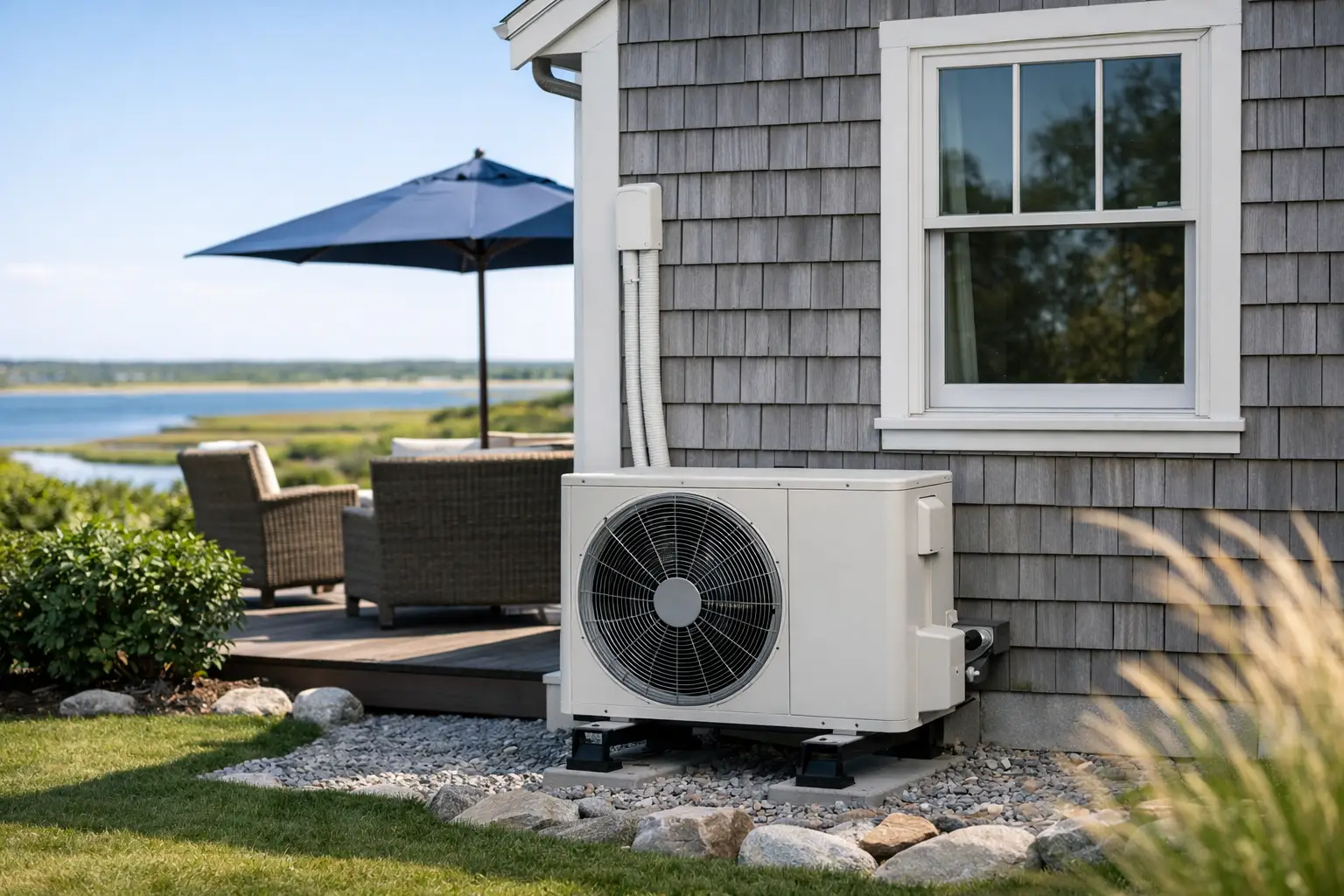
The outdoor condenser needs adequate clearance for airflow, service access, and drainage. On the Cape, placement should also account for prevailing weather, snow buildup, roof runoff, and exposure to salt air. A unit placed beneath a roof edge where melting snow and ice can fall on it may require a different location or protective measures.
A stable mounting pad or properly designed wall bracket helps keep the equipment level and above standing water. The installer should also plan for condensate management during defrost cycles, when the outdoor unit can produce significant water in cold weather.
Electrical work, refrigerant lines, and commissioning
Heat pumps require properly sized electrical connections, correctly installed refrigerant lines, and careful testing once the system is running. These details are not cosmetic. Poor electrical work, refrigerant leaks, incorrect charge levels, or improperly insulated lines can reduce capacity and lead to avoidable repairs.
Commissioning should confirm that the equipment is operating to manufacturer specifications. Homeowners should also receive a clear walkthrough of thermostat settings, filter cleaning, routine maintenance, and what to expect during normal defrost operation.
Will a Heat Pump Work During an Orleans Winter?
Yes, modern cold-climate heat pumps are designed to provide useful heat at low outdoor temperatures. But the right answer for a particular home depends on the equipment selected, the home’s heat loss, and whether a backup heat source is part of the plan.
For some homeowners, a heat pump becomes the primary heating system. For others, it is paired with an existing boiler, furnace, or electric backup. This dual-fuel or supplemental setup can be practical when a homeowner wants to reduce fuel use without removing a reliable existing heating system immediately.
Backup heat does not mean the installation has failed. It can be a smart design decision for a home with high heat loss, a challenging layout, or occupants who want added peace of mind during extreme cold. A technician should explain when backup heat may operate and how that affects energy use.
Cost, Rebates, and the Value of Correct Planning
The installed cost of a heat pump varies with the number of zones, system capacity, electrical upgrades, ductwork needs, equipment efficiency, and installation complexity. A single-zone ductless unit will have a different cost profile than a whole-home ducted system with new electrical work and several indoor air handlers.
Upfront pricing matters, but it should be considered alongside operating costs, warranty coverage, expected maintenance, and available incentives. Massachusetts energy-efficiency programs may offer rebates for qualifying heat pump equipment and installations. Eligibility can depend on the system type, efficiency rating, existing heating fuel, and program requirements at the time of installation.
Financing can also make a larger upgrade more manageable. Instead of postponing a system replacement until an old unit fails, homeowners may be able to plan the project around their budget and schedule. A reputable contractor should provide straightforward options rather than pushing equipment that does not fit the home’s needs.
Signs It May Be Time to Consider a Heat Pump
A heat pump is worth discussing if your current heating or cooling setup is creating recurring problems. Rising oil or propane bills, rooms that are always too hot or too cold, loud window AC units, and repeated repairs on an older system are common reasons to explore an upgrade.
It can also be a practical choice during a renovation or addition. Installing heating and cooling while walls are open is often easier than trying to retrofit the space later. Property managers may find that zoned systems help improve tenant comfort in units with uneven temperatures or limited duct access.
For seasonal homes, remote temperature monitoring and dependable freeze protection are important considerations. The system design should support how the property is actually used, whether it is occupied year-round, rented periodically, or left vacant for stretches of the winter.
Questions to Ask Before You Schedule Installation
Before approving a proposal, ask whether the contractor performed a load calculation, what temperatures the recommended equipment is rated to handle, and whether backup heat is advised. You should also understand the proposed equipment locations, condensate drainage plan, electrical requirements, warranty terms, and maintenance recommendations.
Ask for a clear explanation of rebates and whether the equipment qualifies under current program rules. A lower initial quote can become less attractive if it leaves out needed electrical work, proper mounting, line protection, or startup testing.
Licensed, certified installation matters because a heat pump is an integrated HVAC system, not a plug-in appliance. Durfee Plumbing & Heating LLC provides heat pump and ductless mini split solutions with trained technicians, clear recommendations, financing options, and a 1-year parts and labor warranty.
A well-planned heat pump can make an Orleans home more comfortable in every season. Start with an on-site evaluation, ask direct questions, and choose a system designed for your home’s real conditions - not a one-size-fits-all estimate.