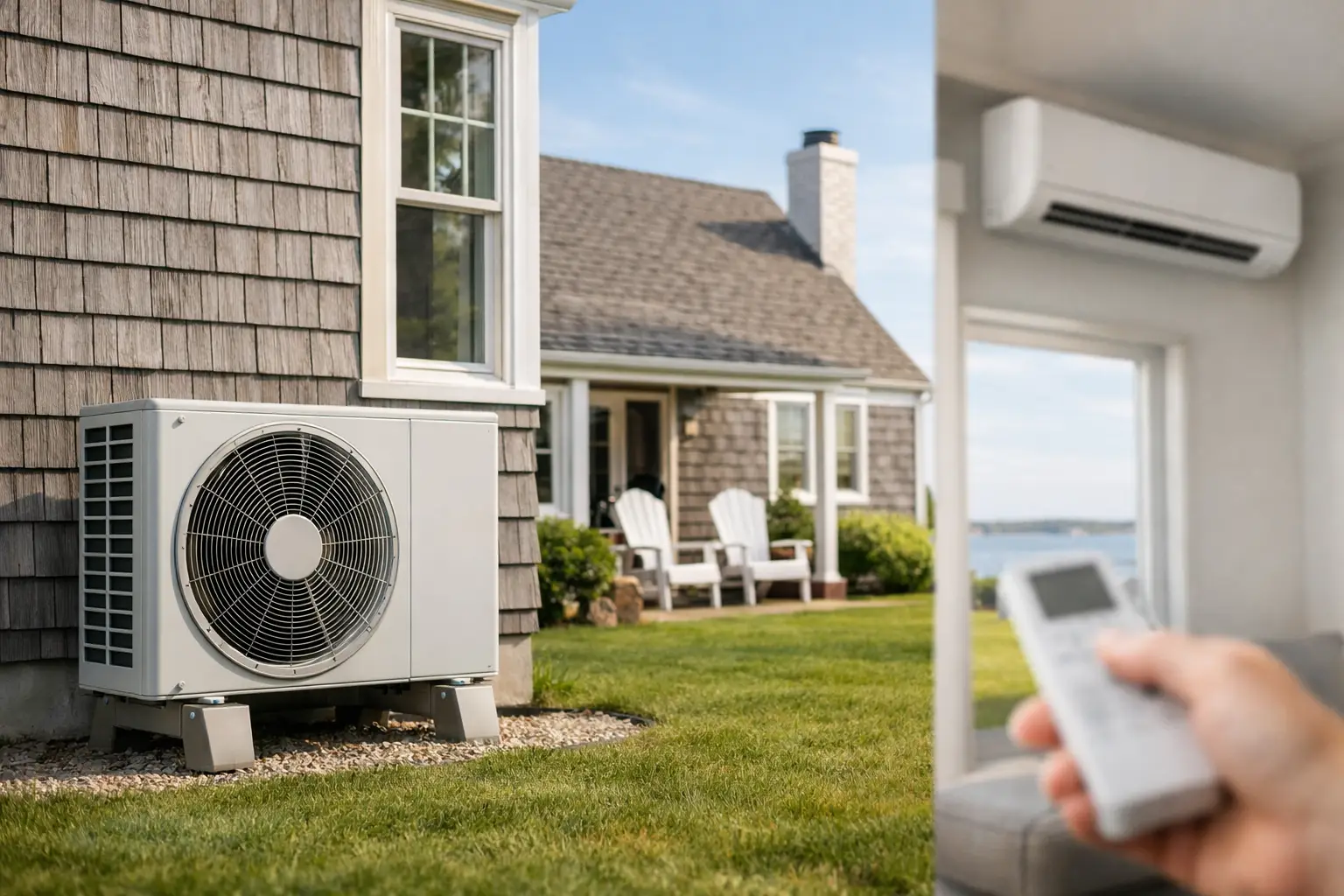
A heat pump has to do more on Cape Cod than simply keep a house comfortable. It needs to handle damp shoulder seasons, cold winter mornings, salt-air exposure near the coast, and the uneven room temperatures common in older homes. This guide for Cape Cod heat pumps explains what to look for before you replace a boiler, add cooling, or upgrade an aging HVAC system.
Why Heat Pumps Make Sense on Cape Cod
Heat pumps move heat rather than creating it through combustion. In summer, they pull heat from indoors and move it outside. In winter, the process reverses, drawing available heat from outdoor air and bringing it into the home. That makes one system capable of both heating and air conditioning.
For many Cape Cod homeowners, the appeal is straightforward: efficient comfort, room-by-room temperature control when needed, and a way to reduce reliance on oil, propane, or electric resistance heat. A properly selected cold-climate heat pump can operate efficiently well below freezing, which matters during a Massachusetts winter.
The right system can also solve a common local problem: a home that has heat but no central air. Ductless mini splits can add cooling and heating without opening up walls to install a full duct system. For additions, converted attics, enclosed porches, and rooms that never seem to match the thermostat setting, that flexibility can make a major difference.
Still, a heat pump is not automatically the best answer for every property. The home's insulation, electrical capacity, existing heating equipment, layout, and year-round occupancy all affect the recommendation.
Choosing the Right Cape Cod Heat Pump Setup
The first decision is usually whether a ductless, ducted, or hybrid system fits the building best.
Ductless mini splits
A ductless system uses an outdoor unit connected to one or more indoor wall-mounted, ceiling-mounted, or concealed air handlers. Each indoor unit has its own temperature control, so bedrooms, living areas, and home offices can be adjusted independently.
Ductless heat pumps are often a strong fit for older Cape homes without existing ducts. Installation is typically less disruptive than adding ductwork, and a multi-zone system can serve several areas from one outdoor unit. The trade-off is appearance and placement. Indoor heads need thoughtful locations to distribute air effectively, and a poorly planned layout can leave closed-off rooms underconditioned.
Ducted heat pumps
A ducted heat pump moves conditioned air through supply and return ducts, much like a conventional central air system. It can be a practical option for homes that already have well-designed ductwork or for major remodels where ducts can be installed correctly.
Duct condition matters as much as the equipment itself. Leaks, undersized returns, poor insulation, and dirty ducts can limit comfort and efficiency. Before connecting a new heat pump to existing ductwork, have the system evaluated rather than assuming it can handle the new equipment.
Hybrid heat pump systems
Some homes are best served by keeping an existing boiler, furnace, or other heating source while adding a heat pump. The heat pump can cover cooling and much of the heating season, while the existing system provides supplemental heat during the coldest weather or serves as a backup.
A hybrid approach can be sensible when a current heating system is in good condition, the home has a complex layout, or a full conversion would require extensive electrical or distribution-system work. It is not a compromise in workmanship. It is often the most practical path to better efficiency without replacing equipment that still has useful life.
Sizing Is About the House, Not Just Square Footage
An oversized heat pump can short-cycle, meaning it turns on and off too frequently. That can reduce efficiency, increase wear, and make humidity control less consistent in summer. An undersized system may struggle during cold snaps and leave rooms uncomfortable.
Square footage is only a starting point. Proper sizing should consider insulation levels, window type and direction, air leakage, ceiling height, the number of occupants, room use, and existing heating performance. A sunny room with large west-facing windows has different cooling needs than a shaded bedroom of the same size.
Older homes in Barnstable, Dennis, and other Cape communities can have especially varied construction. Additions, crawlspaces, cathedral ceilings, and partially insulated knee walls may all affect the load calculation. A contractor should assess the actual property and recommend equipment based on measured needs, not a rule-of-thumb estimate.
Cold-Weather Performance and Backup Heat
Modern cold-climate heat pumps are designed to provide meaningful heat at low outdoor temperatures. But “works in cold weather” does not mean every model performs the same way. Ask about the unit's heating capacity at low temperatures, not only its high-efficiency rating under mild conditions.
Defrost cycles are another normal part of winter operation. When frost builds on the outdoor coil, the unit temporarily reverses operation to clear it. You may see steam rising from the outdoor unit during this cycle. That is generally expected, but repeated ice buildup or unusual noise should be inspected.
Backup heat is worth discussing before installation. Depending on the system and home, backup can come from an existing boiler or furnace, electric heat strips, or a dual-fuel setup. The goal is not necessarily to run backup heat often. It is to ensure the home remains comfortable during severe weather and that the system is designed around real Cape Cod conditions.
Installation Details That Affect Long-Term Results
The equipment itself is only part of the job. Placement, drainage, electrical work, and protection from the elements all matter.
The outdoor unit needs a stable, elevated base with enough clearance for airflow and snow management. It should be located where roof runoff, drifting snow, falling icicles, and salt spray are considered. Condensate management is equally important. In heating mode, outdoor units produce water during defrost cycles, and that water needs a safe place to drain without creating ice near a walkway or foundation.
Indoor unit placement should support even airflow without blowing directly onto seating or beds. Refrigerant lines and electrical connections should be installed cleanly and protected appropriately. A qualified installer will also confirm that the electrical panel has sufficient capacity and address upgrades if needed.
For commercial spaces, system design should account for occupancy patterns, business hours, equipment loads, and areas such as offices, retail floors, or tenant spaces that may need separate controls.
Costs, Rebates, and Financing
Heat pump costs vary widely because every project is different. A single-zone ductless unit is a very different installation from a whole-home ducted system with electrical upgrades and multiple indoor zones. The least expensive proposal is not always the lowest long-term cost if it skips load calculations, electrical planning, drainage, permits, or proper commissioning.
Mass Save rebates may help eligible Massachusetts homeowners reduce upfront costs for qualifying heat pump equipment and related efficiency improvements. Available programs and requirements can change, so confirm current eligibility before making final decisions. Financing can also make a larger comfort upgrade more manageable, especially when a system replacement cannot wait.
When comparing estimates, ask what is included. You should understand the equipment model, number and location of indoor units, electrical work, permit requirements, warranty coverage, startup testing, and whether old equipment will be removed.
Heat Pump Maintenance for Coastal Homes
Heat pumps need regular care, and coastal conditions make that care especially valuable. Keep the outdoor unit clear of leaves, snow, grass clippings, and stored items. Do not cover it tightly while it is operating, since restricted airflow can cause performance problems.
Inside, clean or replace filters according to the manufacturer's guidance. Ductless filters are accessible, but they need consistent attention to maintain airflow. Schedule professional maintenance to inspect electrical components, refrigerant operation, coils, drains, and overall performance.
A practical maintenance routine includes these steps:
- Check filters regularly, especially during heavy heating and cooling use.
- Keep at least a clear perimeter around the outdoor unit for airflow.
- Watch for unusual ice, water drainage, odors, or new operating noises.
- Have ducts inspected and cleaned when buildup, restricted airflow, or indoor air quality concerns are present.
- Arrange professional service before winter or summer demand puts the system under its heaviest load.
When to Call a Professional
Call for service if a heat pump is blowing cold air when it should be heating, failing to cool, cycling constantly, tripping breakers, leaking water indoors, or making grinding and banging sounds. Small performance changes can become more expensive repairs when ignored.
The best heat pump is the one designed for your specific home, installed with care, and supported after the job is complete. Durfee Plumbing & Heating can help Cape Cod property owners evaluate practical options, plan for efficiency incentives, and keep their systems ready for the weather ahead.