A replacement air conditioner in Falmouth, MA is often a decision homeowners make after one frustrating heat wave too many. The system runs constantly, rooms cool unevenly, repair bills start adding up, and the house never quite feels comfortable. On Cape Cod, the right replacement is not simply about buying the biggest unit available. It is about selecting equipment that fits your home, your existing ductwork, your budget, and the coastal conditions it will operate in.
A properly planned installation can improve summer comfort, lower operating costs, and give you more reliable heating options if you choose a heat pump. The key is replacing the system before a complete breakdown forces a rushed decision.
When Is It Time to Replace Your Air Conditioner?
Most central air conditioners last about 12 to 15 years, though maintenance history, installation quality, usage, and exposure to salt air can affect that timeline. A well-maintained system may run longer. Still, age alone is not the whole story. An older unit that cools reliably and needs only minor service may be worth keeping for another season. A newer unit with major compressor trouble or recurring refrigerant leaks may not be.
Replacement becomes the sensible choice when repair costs are rising, the equipment cannot keep up during hot weather, or your energy bills are climbing without a clear change in usage. Other warning signs include short cycling, frequent breaker trips, loud operation, excess indoor humidity, and noticeable temperature differences from one room to another.
If your system uses an older refrigerant that is increasingly difficult or expensive to service, replacement can also be the more practical long-term move. Continuing to put money into equipment with limited parts availability may delay the purchase, but it does not always reduce the total cost of ownership.
For homeowners considering a replacement air conditioner in Falmouth, MA, it helps to schedule an evaluation before the peak summer season. You have more time to compare options, consider financing, and choose an installation date that causes less disruption.
The Right Size Matters More Than Most People Think
An oversized air conditioner is not a shortcut to a cooler house. It may cool the air quickly, then shut off before it has removed enough humidity. The result can be a home that feels cool but clammy, with uneven temperatures and unnecessary wear from constant starts and stops.
An undersized system has the opposite problem. It may run for long periods on hot afternoons without reaching the thermostat setting. That can increase utility costs and leave bedrooms, additions, or second floors uncomfortable.
A qualified HVAC contractor should calculate the home’s cooling load rather than base equipment size on the unit being removed. Square footage matters, but so do ceiling height, insulation, window placement, sun exposure, air leakage, occupancy, and the condition of the duct system. A Cape home with large west-facing windows or a finished attic can have very different cooling needs than a similarly sized home with more shade and better insulation.
This assessment also identifies problems that a new outdoor unit alone will not fix. Leaky ducts, inadequate return air, poor attic insulation, or a poorly located thermostat can all limit comfort. Addressing these items during replacement can make the new system perform as intended.
Central Air, Ductless Mini Splits, or a Heat Pump?
The best replacement depends on how your home is built and how you use it. Central air conditioning is often the natural choice for homes with existing ducts in good condition. It can cool the entire house through one integrated system and may be paired with a compatible furnace or air handler.
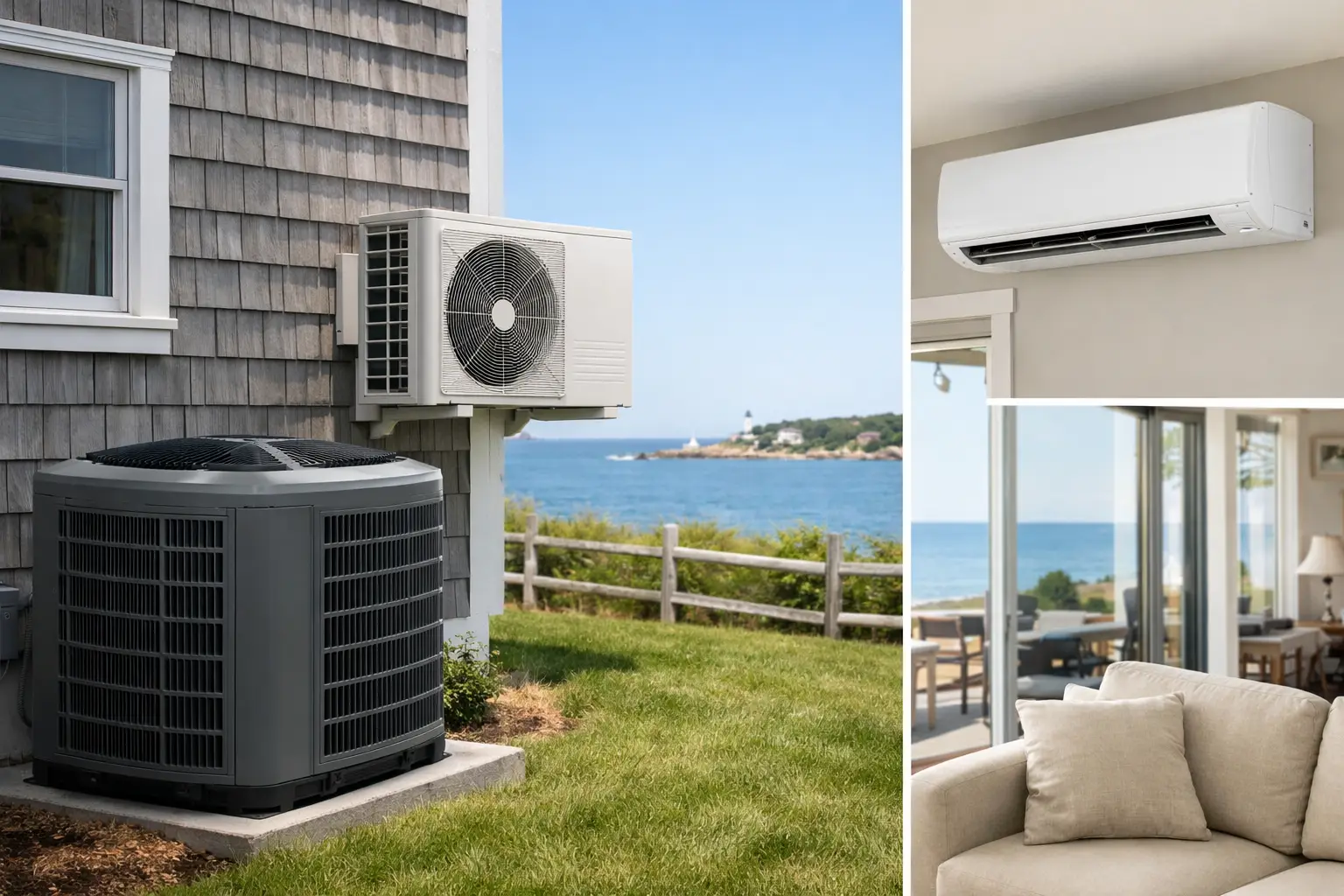
Ductless mini splits are useful when ductwork is not available or when specific areas need better comfort. They work well in additions, converted garages, finished basements, bedrooms that stay warm, and older Cape Cod homes where adding full ductwork would be disruptive. Because indoor units create separate temperature zones, they can also reduce energy use in areas that are not occupied all day.
For many homeowners, an air-source heat pump deserves serious consideration. Modern heat pumps provide efficient air conditioning in summer and heating in colder months. They can be installed as a ducted system, a ductless system, or a combination of both. The trade-off is that equipment selection and installation details matter greatly, particularly if the heat pump will carry a significant share of your winter heating load.
A heat pump may be especially appealing if you are replacing both aging cooling equipment and an older heating system, or if you want to reduce reliance on delivered fuel. Available Mass Save rebates may also affect the final cost of qualifying energy-efficiency upgrades. Eligibility and incentive amounts can change, so it is wise to review current program requirements before making a final decision.
Coastal Conditions Need Attention
Falmouth’s coastal environment is one more reason installation quality matters. Salt air, moisture, and wind-driven debris can increase corrosion and place added stress on outdoor equipment. Homes closer to the water may need more frequent cleaning and inspection than homes farther inland.
The condenser should be placed where it has proper clearance for airflow and service access. It should sit on a stable base, away from roof runoff and locations where drifting leaves or shrubs can block the coil. In some settings, equipment protection and regular coil cleaning can help preserve performance, but nothing replaces routine maintenance.
During an installation, the contractor should also inspect the refrigerant line set, electrical disconnect, condensate drainage, and outdoor pad. These details affect reliability just as much as the brand name on the cabinet. A new system connected to damaged lines or an improperly sized electrical circuit can create avoidable problems from day one.
What to Expect During AC Replacement
A professional replacement starts with a site visit and a clear conversation about what is not working in your current setup. That includes comfort concerns, rooms that run hot, noise, humidity, seasonal occupancy, and your plans for the property. For a year-round home, the recommendation may differ from what makes sense for a seasonal cottage or rental property.
Once the system is selected, the installation team removes the old equipment, prepares the new unit, verifies electrical and refrigerant connections, and tests the system in operation. If duct modifications, a new thermostat, or drainage improvements are needed, those should be discussed before work begins rather than treated as a surprise after installation starts.
A good final walkthrough should cover thermostat operation, filter replacement, recommended maintenance, warranty information, and any steps you should take to keep outdoor equipment clear. Ask how to recognize common issues, such as a clogged condensate drain or a dirty filter, so you can act before a small problem interrupts cooling.
Cost Depends on More Than the Equipment
There is no honest one-price answer for air conditioner replacement. Cost can vary based on capacity, efficiency rating, system type, electrical upgrades, duct repairs, thermostat controls, access to the equipment location, and whether the job involves a heat pump conversion.
Higher-efficiency equipment generally costs more upfront, but may use less electricity over its service life. That does not automatically mean the highest available efficiency is the best value for every household. The best choice balances purchase price, expected use, comfort goals, available incentives, and anticipated length of ownership.
Financing can make it easier to move forward with the right solution instead of selecting the lowest initial price under pressure. It is also worth comparing the cost of repeated repairs against the benefits of a new system with warranty coverage. Durfee Plumbing & Heating offers licensed HVAC service, financing options, and a 1-year parts and labor warranty to help local property owners make a confident decision.
Protect Your New System After Installation
Regular maintenance is the simplest way to protect a replacement system. Change or clean filters on schedule, keep plants and debris away from the outdoor unit, and do not block supply or return vents with furniture. If you use a programmable or smart thermostat, avoid extreme temperature setbacks that force the system to work unnecessarily hard to recover.
Annual professional service is also worthwhile. A technician can clean coils, inspect electrical components, verify refrigerant performance, clear the condensate system, and spot wear before it becomes an emergency call. For coastal homes, that inspection can be particularly valuable.
The right replacement should make your home feel quieter, drier, and more consistent from room to room. Planning the project before the next hot stretch gives you the time to choose equipment that serves your property well for years, rather than settling for whatever is available after the old system quits.