A tower problem rarely announces itself at a convenient time. It often starts with warmer indoor temperatures, a chiller working harder than usual, or an unexpected rise in water use. For facilities that rely on commercial cooling towers, a small mechanical, water-quality, or control issue can quickly become a business interruption.
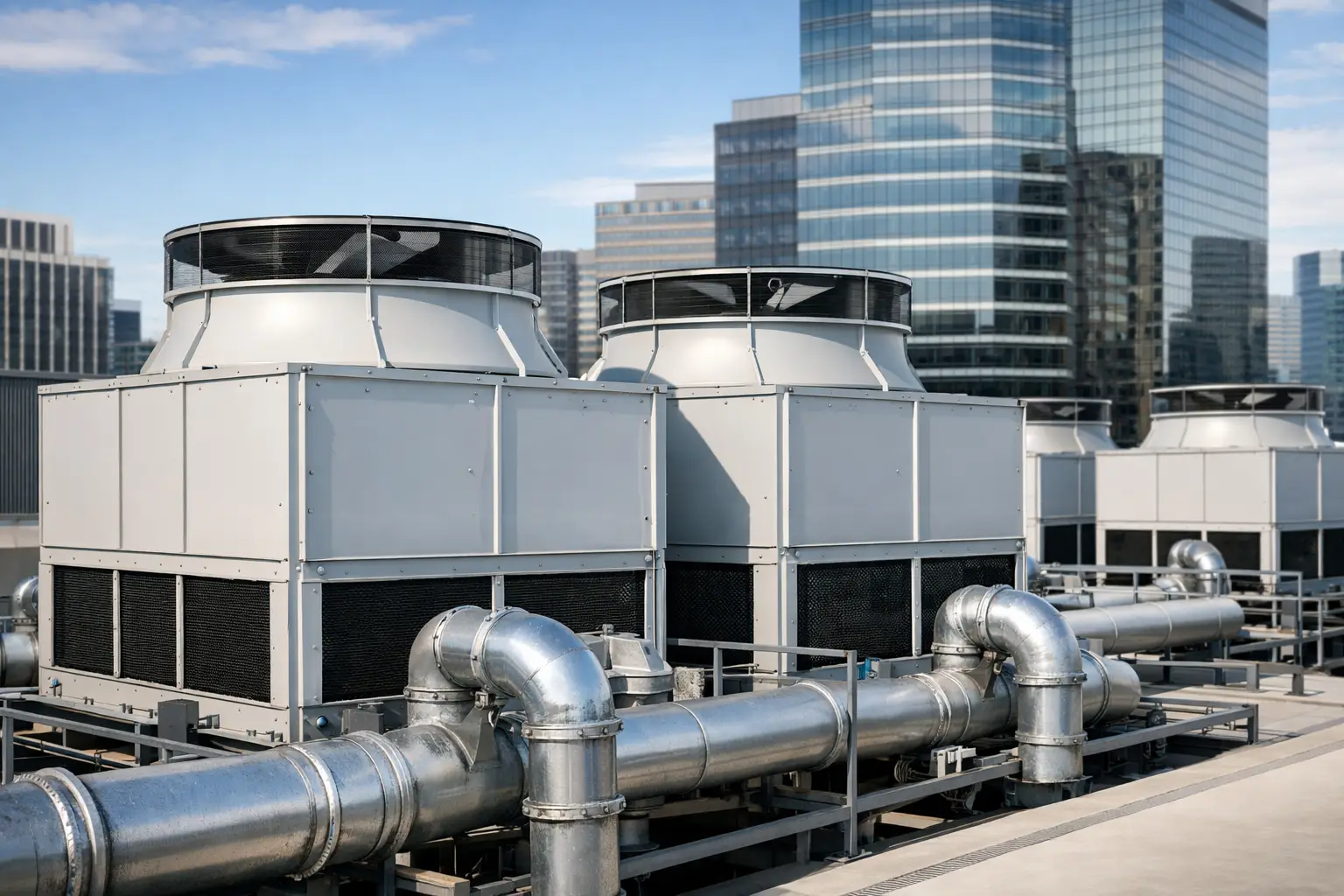
Commercial properties use cooling towers to move unwanted heat out of a building's cooling system. They are common in larger office buildings, hotels, healthcare facilities, manufacturing spaces, multifamily properties, and other operations with significant cooling loads. Because the equipment sits at the intersection of HVAC, piping, electrical controls, and water management, it needs a service plan built around prevention rather than last-minute repairs.
How Commercial Cooling Towers Remove Heat
Most commercial cooling towers work with a water-cooled chiller. Inside the building, the chiller removes heat from conditioned spaces. That heat is transferred to condenser water, which travels to the tower. At the tower, a small portion of the water evaporates, carrying heat away before the cooled water returns to the chiller.
The process is effective because evaporation can reject large amounts of heat without requiring an oversized mechanical refrigeration system. The trade-off is that an open tower depends on clean water, dependable circulation, proper airflow, and correctly operating controls. When any of those elements falls behind, efficiency drops and equipment wear increases.
A few tower designs are used in commercial applications. Open-circuit towers expose circulating condenser water directly to the air. Closed-circuit fluid coolers keep process fluid inside a coil while water passes over the outside of that coil. Evaporative condensers combine heat rejection and refrigeration condensing functions in one unit. The right design depends on the building load, available space, water requirements, maintenance resources, and the connected HVAC equipment.
For a property owner or manager, the main question is not simply which tower is installed. It is whether the tower, pumps, piping, chiller, and controls are operating as one coordinated system.
Why Tower Maintenance Cannot Wait
A cooling tower handles water continuously, often during the hottest and most demanding months of the year. Minerals remain behind as water evaporates. Without controlled blowdown and water treatment, scale can build on heat-transfer surfaces. Scale acts like insulation, forcing the chiller and pumps to use more energy to achieve the same cooling result.
Sediment, airborne debris, algae, and corrosion create different problems. Dirty fill can restrict air and water flow. Corrosion can weaken basins, piping, valves, and structural components. A clogged strainer or failed pump can reduce condenser-water flow enough to trigger chiller alarms or a shutdown.
There is also a health and compliance consideration. Cooling tower water must be managed carefully to limit conditions that can support harmful bacteria, including Legionella. A qualified water-treatment provider should develop and document a program appropriate for the facility, including testing, chemical treatment, cleaning, and response procedures. Building owners should understand their responsibilities and keep service records organized.
Cape Cod's coastal environment adds another factor. Salt air and moisture can accelerate corrosion on exterior equipment, electrical connections, metal components, and nearby piping. Seasonal inspections are especially valuable for facilities in Barnstable County that operate tower equipment through humid summers and changing shoulder-season conditions.
Warning Signs Your System Needs Attention
Not every cooling complaint starts at the cooling tower, but these symptoms deserve prompt investigation:
- The building cannot maintain set temperatures during hot weather.
- Chiller alarms, high head pressure readings, or repeated equipment resets are becoming more common.
- Water bills rise without a clear change in building use.
- The tower shows visible scale, rust, leaks, excessive vibration, unusual fan noise, or overflowing water.
- Pumps cycle improperly, strainers clog repeatedly, or condenser-water pressure and flow appear inconsistent.
A technician should look beyond the obvious symptom. High chiller head pressure, for example, may point to fouled tower fill, insufficient fan airflow, poor water flow, a control issue, a refrigerant-side concern, or several issues occurring together. Replacing a part without identifying the cause can leave the facility facing the same failure again.
Commercial Cooling Tower Service Priorities
A practical service program begins before cooling season, continues while the equipment is under load, and includes a shutdown plan when seasonal operation ends. The exact schedule depends on the tower type, operating hours, water chemistry, and the critical nature of the building. A hotel or healthcare property has less room for downtime than a lightly occupied office building, for example.
Before startup, the system should be inspected for basin condition, leaks, fan and motor operation, belts or drive components where applicable, electrical connections, vibration, float-valve function, strainers, pumps, and control operation. The tower should be cleaned as needed, and the water-treatment program should be confirmed before the system begins regular operation.
During the season, maintenance teams should watch operating temperatures, water levels, chemical readings, blowdown performance, make-up water use, and vibration. Routine checks are far less disruptive than a mid-summer emergency response. They also provide useful trend data. A gradual increase in fan amperage or make-up water use may reveal an issue before comfort complaints reach the front desk or property office.
At seasonal shutdown, equipment may need to be drained, cleaned, protected from freezing, and prepared for the next startup. On Cape Cod, freeze protection is not an afterthought. A damaged basin, exposed pipe, or improperly winterized component can turn a dormant system into an expensive spring repair.
Repair, Upgrade, or Replacement?
A repair is often the sensible choice when the tower structure is sound and the issue is isolated, such as a failing motor, damaged belt, float assembly, valve, sensor, or control component. Timely repairs can protect the more expensive chiller equipment connected to the tower.
Replacement deserves consideration when corrosion is extensive, leaks are recurring, energy use remains high after service, parts are increasingly difficult to source, or the equipment no longer matches the building's actual cooling demand. Older fan systems and controls may also use more power than current alternatives. A modern variable-speed fan and better controls can reduce energy use during mild weather, when the tower does not need to run at full output.
Still, replacement is not automatically the best answer. A new tower must fit the site, structural support, water supply, drainage, electrical capacity, noise limits, and chiller specifications. The project may involve crane access, shutdown planning, permits, and coordination with other trades. An honest evaluation compares the cost and risk of continued repairs with the operational value of a properly sized upgrade.
Keep the Whole Cooling System in View
Cooling towers do not operate alone. Pumps move water, valves direct it, sensors report conditions, controls stage equipment, and the chiller relies on all of it to reject heat. A breakdown in one area can look like a problem somewhere else.
For that reason, commercial service should include the connected piping and valves, pump performance, electrical disconnects, control signals, insulation where needed, and visible evidence of leaks or corrosion. It is also wise to confirm that building staff know which alarms require immediate action and who to call after hours. Waiting until a tenant, guest, customer, or employee reports uncomfortable conditions puts the facility behind the problem.
For Cape Cod property managers and business owners, Durfee Plumbing & Heating can help evaluate related commercial HVAC and piping concerns, coordinate practical repairs, and keep communication clear when a cooling issue affects daily operations. Licensed technicians, stocked service vehicles, and a responsive plan matter most when the building cannot afford to wait.
The best time to address tower performance is while the system is still keeping up. A scheduled inspection, clear maintenance records, and early attention to unusual readings give your building a better chance of staying cool when the next heat wave arrives.