A new home can have beautiful finishes and still create daily frustration if the plumbing was not planned correctly behind the walls. Residential new construction plumbing is more than connecting fixtures and running pipe. It is the process of designing a water, drain, vent, gas, and hot-water system that will perform reliably for years.
For homeowners building on Cape Cod, early decisions carry extra weight. Seasonal use, well water, coastal conditions, high-efficiency equipment, and future additions can all affect the right plumbing plan. Getting the system right before drywall goes up is far less disruptive and costly than correcting problems after move-in.
Residential New Construction Plumbing Starts With the Plan
A strong plumbing installation begins before the first trench is dug or framing is completed. The plumbing layout should work with the home’s floor plan, not fight it. Grouping kitchens, bathrooms, laundry rooms, and utility areas near one another can reduce pipe runs, simplify venting, and make future service easier.
This does not mean every fixture needs to be stacked in a straight line. Home design, accessibility, and comfort matter too. But when a primary bath is on the opposite end of the house from the mechanical room, the contractor should account for longer hot-water delivery times, pressure loss, and additional installation cost.
At the planning stage, a licensed plumber should review fixture locations, pipe routes, drainage slopes, vent paths, water-heating needs, and the location of shutoff valves. This is also the time to discuss whether the home will have municipal water and sewer or a private well and septic system. Those details influence sizing, code requirements, equipment choices, and the overall installation sequence.
Think Beyond Move-In Day
A new build should serve the household you have now while allowing reasonable flexibility later. A young family may eventually need another bathroom, a finished basement, an outdoor shower, or a future accessory space. Adding capped plumbing connections or planning clear access to key lines during construction may add modest cost now and save significant work later.
The same thinking applies to appliance choices. If a homeowner may want a gas range, gas fireplace, outdoor kitchen, pool heater, or standby generator, those possibilities should be discussed early. A properly designed gas system has to be sized for the total anticipated load, not just the first appliance installed.
Water Supply and Drainage Need Proper Sizing
Pipes that are too small can lead to weak showers, slow fixture fill times, and noticeable pressure changes when more than one fixture is running. Oversizing is not always the answer either. The correct design depends on the home’s square footage, number of bathrooms, fixture demand, incoming water pressure, pipe material, and water source.
A plumber evaluates expected use rather than simply counting sinks. A home with three full baths, a large soaking tub, multiple shower heads, a laundry room, and an irrigation system has very different demands than a compact seasonal cottage. If the property uses a well, the pump and pressure tank should be part of the conversation.
Drain and vent piping deserve the same level of attention. Drains need the correct slope to carry waste effectively without leaving solids behind. Vents protect drain traps and help wastewater flow without gurgling, odors, or slow drainage. Once walls are closed, correcting an improperly routed drain or missing vent can become a major project.
Fixture Placement Affects Comfort and Serviceability
A bathroom layout may look simple on a drawing, but the plumbing behind it must still be accessible and code-compliant. Toilets, tubs, showers, and vanity drains need enough room for proper connections. Mechanical equipment needs service clearance. Main shutoffs, fixture stops, cleanouts, and water-heater valves should be positioned where they can be reached when needed.
This practical access matters during emergencies. A visible, labeled shutoff can limit water damage from a failed supply line. A reachable cleanout can make drain service faster and less invasive. These are small details during construction that make a real difference when a problem occurs years later.
Choose a Water Heater for the Household, Not the Trend
Water heating is one of the biggest comfort and energy decisions in a new home. Traditional tank water heaters, tankless water heaters, and heat pump water heaters can all be good choices. The right option depends on household demand, fuel availability, installation space, ventilation, electrical capacity, and budget.
A tank water heater offers stored hot water and a familiar installation approach. It can be a practical fit for many homes, particularly when sized correctly. Tankless units provide hot water on demand and can free up floor space, but they must be sized for the home’s required flow rate and temperature rise. A unit that is too small may struggle when several fixtures run at once.
Heat pump water heaters can reduce energy use, but they need suitable air volume and can cool the room around them. In a tight utility space, garage, or conditioned area, that trade-off needs to be considered. Homeowners may also be eligible for available rebates or incentives, depending on the equipment and program requirements.
For larger homes, a recirculation system may be worth discussing. It can reduce the wait for hot water at distant fixtures, but it needs thoughtful design to avoid unnecessary energy use. Demand-controlled options are often a better fit than systems that circulate water constantly.
Cape Cod Conditions Should Shape the Installation
Cape Cod homes range from year-round residences to vacation properties that may sit empty for extended periods. That changes how a plumbing system should be protected. Pipes in exterior walls, crawl spaces, attics, and unconditioned areas need careful routing and insulation to reduce freeze risk.
Winterization planning is especially valuable for seasonal properties. A system designed with accessible shutoffs and drain points is easier to prepare for cold weather. Outdoor faucets should be frost-proof where appropriate, and interior piping should not depend on luck or a space heater to avoid freezing.
Water quality can also vary by property. Well-water homes may need testing for minerals, iron, acidity, or other concerns that affect fixtures, appliances, and pipe longevity. A treatment solution should be based on actual water conditions, not a one-size-fits-all recommendation.
Permits, Inspections, and Testing Protect the Investment
New construction plumbing is regulated work for good reason. Local permits and inspections help verify that the system follows applicable plumbing and gas codes before it becomes concealed behind finishes. Skipping permits or relying on unlicensed work can create trouble with insurance, resale, financing, and future repairs.
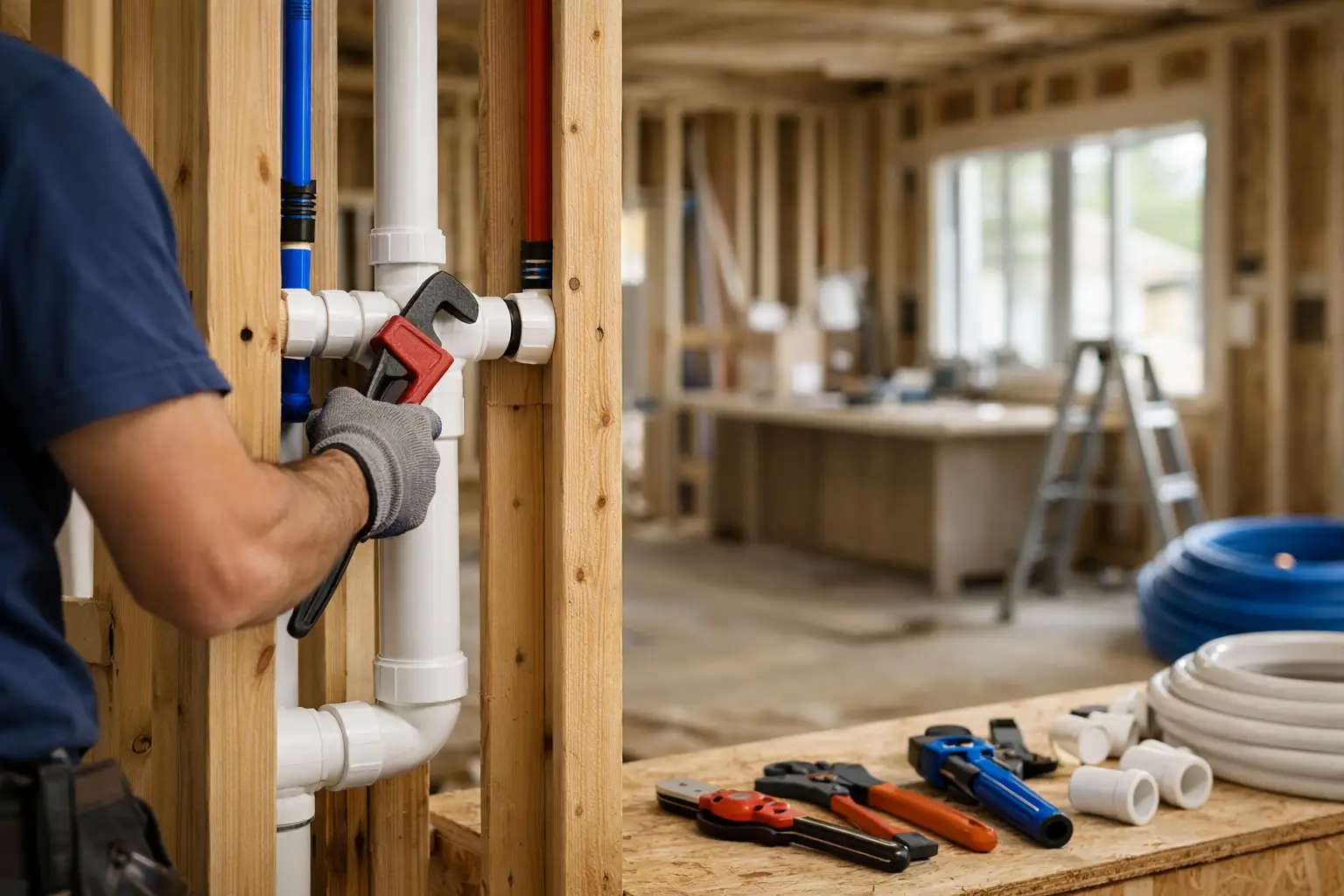
The installation generally moves through defined stages. Underground piping is installed before the slab or foundation work is complete. Rough plumbing follows framing, when supply, drain, waste, and vent lines are placed inside the structure. After inspection and wall finishes, the plumber completes trim work by setting fixtures, connecting appliances, and testing the finished system.
Testing should never be treated as a formality. Water lines need to be checked for leaks under pressure. Drainage and vent systems must be tested before concealment. Gas piping requires its own code-required testing. At final completion, fixtures should be operated, drains observed, hot-water performance checked, and every homeowner question answered.
Work With a Plumber Who Coordinates the Whole Job
New construction schedules move quickly, and plumbing affects several other trades. A dependable plumbing contractor coordinates with the builder, electrician, HVAC team, insulation crew, and finish contractors so pipe locations, equipment clearances, and utility connections do not create avoidable conflicts.
Ask who will pull permits, handle inspections, perform pressure tests, and remain available after the project is complete. It is also reasonable to ask about licensing, warranty coverage, equipment options, and how changes will be priced if the plan shifts during construction. Clear answers early prevent surprises later.
Durfee Plumbing & Heating LLC provides licensed plumbing, gas, water-heating, and HVAC support for new homes across Cape Cod. A contractor with broad in-house capabilities can help align mechanical decisions before they become expensive changes in the field.
Before construction moves past the rough-in stage, walk the home with the plumbing plan in hand. Confirm where shutoffs, cleanouts, hose connections, water-heating equipment, and future connections will be. That one walk-through can turn a good-looking new house into a home that is genuinely easier to live in and maintain.