
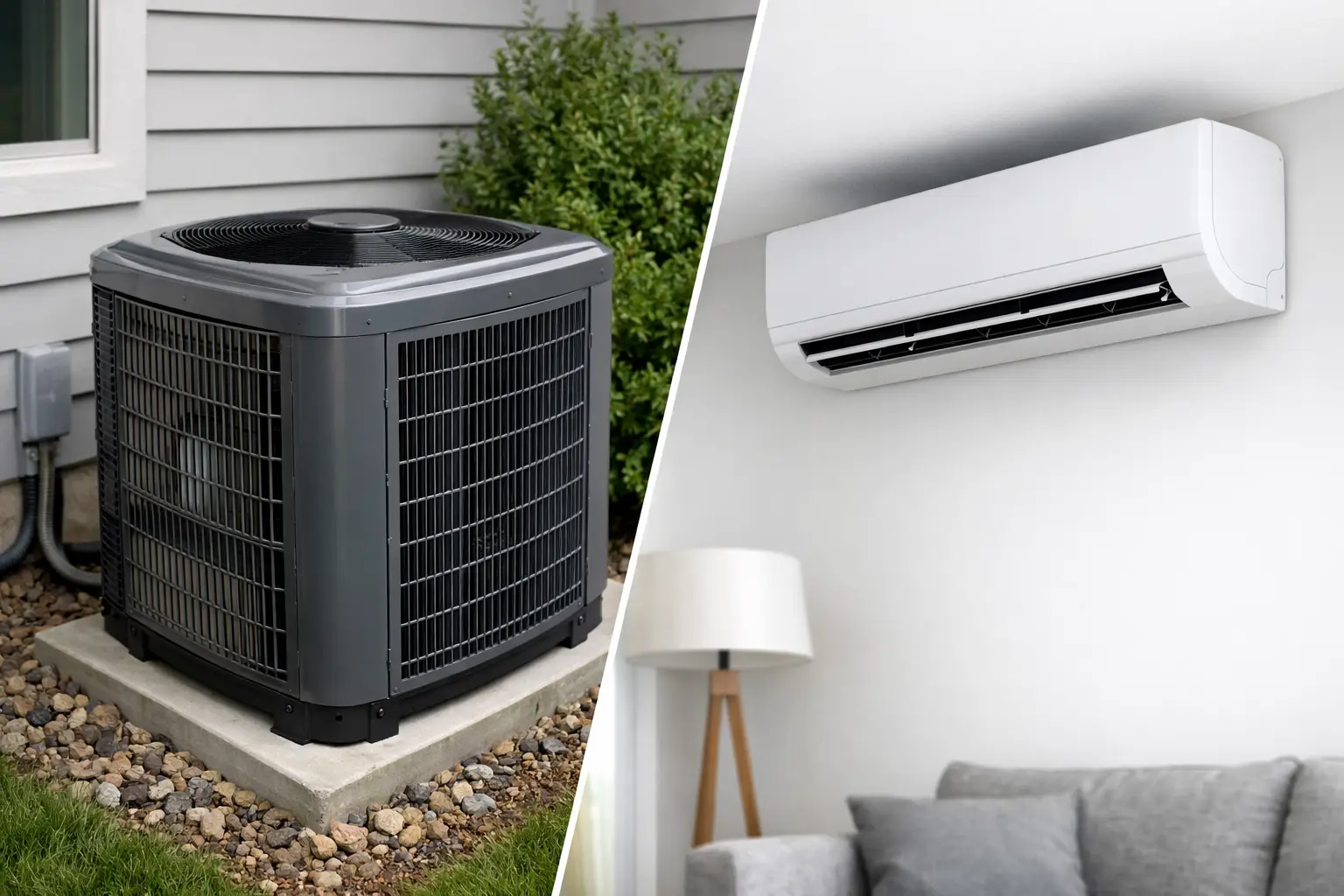
If you have been comparing heat pump vs mini split options, there is a good chance you have already run into conflicting advice. One contractor says they are basically the same thing. Another treats them like completely different systems. That confusion is common, especially for homeowners trying to lower energy bills without choosing the wrong equipment.
Here is the simple version. A mini split is a type of HVAC system that usually uses heat pump technology. So the comparison is not always apples to apples. In many homes, a mini split is a heat pump. The real question is usually whether you should install a ductless mini split heat pump, a ducted heat pump, or stay with a more traditional heating and cooling setup.
Heat pump vs mini split: the basic difference
A heat pump is a system that moves heat rather than generating it. In cooling mode, it pulls heat out of your home and sends it outside. In heating mode, it does the reverse. That is why heat pumps can handle both heating and air conditioning in one system.
A mini split refers to a ductless system with an outdoor unit connected to one or more indoor air handlers. Most mini splits are heat pumps, which means they provide both heating and cooling without using ductwork. So when people say mini split, they are usually describing the system layout. When they say heat pump, they are often describing the technology.
That overlap matters because the better comparison is usually ducted heat pump vs ductless mini split, not heat pump vs mini split in the broadest sense.
When a mini split makes more sense
Mini splits work especially well in homes where adding ductwork would be expensive or disruptive. That includes older Cape Cod homes, room additions, finished basements, garages, and areas that never seem to stay comfortable.
Because each indoor unit can serve a separate area, mini splits are also useful when different rooms have different heating and cooling needs. A bedroom over the garage may need more cooling in summer. A sunroom may need extra help in winter. A mini split gives you zone control without forcing the whole house to run the same way.
Installation is often faster than a full ducted system because the contractor does not need to open walls and ceilings to run large ducts. That can reduce labor and make the project more practical in homes with limited space.
There is a trade-off, though. Some homeowners do not like the look of the wall-mounted indoor units. There are alternatives, such as ceiling cassette and floor-mounted styles, but aesthetics still come up in the decision.
When a ducted heat pump is the better fit
If your home already has ductwork in good condition, a ducted heat pump may be the cleaner solution. It can heat and cool the whole house through existing vents, which keeps the equipment less visible inside the living space.
For homeowners who want a more traditional feel, this setup is often easier to live with day to day. You set the thermostat and the system conditions the home more uniformly. In a larger property, that can feel simpler than managing multiple indoor heads.
Ducted systems can also be a strong choice for commercial spaces or homes where appearance is a major concern. If you want conditioned air without visible wall units, ducted equipment usually wins on looks.
The catch is that ductwork has to be designed well and sealed properly. Leaky or poorly insulated ducts can reduce efficiency and comfort. If the duct system is undersized, oversized, or routed through difficult attic spaces, the performance may not match what you expect from the equipment itself.
Efficiency depends on the house, not just the equipment
One reason these comparisons get messy is that both systems can be efficient when matched to the right property. A mini split often has an edge in spaces where duct losses would hurt performance. Since it delivers air directly into the room, there is less opportunity to waste energy through leaky ducts.
That does not automatically mean a mini split is always more efficient. In a home with a well-designed duct system and proper insulation, a ducted heat pump can perform very well too. The bigger issue is whether the system is sized correctly and installed by licensed technicians who understand airflow, load calculations, and local climate conditions.
On Cape Cod, that local climate matters. Coastal humidity, shoulder-season temperature swings, and winter cold snaps all affect how a system performs. A high-quality cold-climate heat pump may handle the region well, but not every unit is built the same way. Equipment selection should match the home, not just a price point.
Cost: installation and long-term operation
Upfront cost depends on the number of zones, the size of the home, electrical requirements, and whether ductwork is already in place. A single-zone mini split for one room is usually less expensive than installing a whole-home ducted system. A multi-zone mini split setup across several rooms can become more costly, especially if the layout is complex.
A ducted heat pump can be cost-effective when existing ducts are in good shape. If ducts need major repairs or a full replacement, the project cost rises quickly.
Operating costs are often where heat pumps earn their reputation. Compared with oil, propane, or electric resistance heat, many heat pump systems can lower monthly energy use. The exact savings depend on insulation, air sealing, thermostat settings, and the efficiency rating of the system.
Rebates and financing can also shift the math. For many Massachusetts property owners, Mass Save incentives can make a high-efficiency heat pump project more affordable than expected.
Comfort is not one-size-fits-all
A lot of homeowners focus on price first, then ask about comfort later. In practice, comfort is usually what decides whether people feel good about the installation after the work is done.
Mini splits are excellent for targeted comfort. If one area of the home always runs too hot or too cold, they can solve a problem central systems struggle to fix. They also allow selective conditioning, which can help when parts of the home are used less often.
Ducted heat pumps tend to offer a more familiar whole-home experience. Air is distributed through multiple vents, and the system can feel less room-specific. For some families, that is more convenient.
There is also the issue of airflow sensation. Mini splits can create a more direct stream of air near the indoor unit. Some people do not mind it. Others prefer the more diffused feel of a ducted system. That kind of detail sounds minor until you live with it every day.
Maintenance and service considerations
Both systems need regular maintenance. Filters need attention, coils need to stay clean, and outdoor units need to remain clear of debris. With mini splits, each indoor head has its own filter and components, so multi-zone systems may involve more routine cleaning inside the home.
Ducted systems add duct-related maintenance concerns. Dirty ducts, airflow restrictions, or hidden leaks can affect performance. If indoor air quality is a concern, the design of the whole system matters just as much as the equipment itself.
Serviceability is another practical point. It helps to work with a company that handles both HVAC diagnostics and installation so you are not guessing later when a repair or adjustment is needed. That is especially important with heat pump systems, where refrigerant charge, controls, and airflow all have to work together.
So which one should you choose?
If your home does not have ducts, or you need an efficient solution for additions, bonus rooms, or problem areas, a mini split often makes the most sense. It is flexible, efficient, and usually less invasive to install.
If you already have solid ductwork and want a more traditional whole-home setup with less visible equipment, a ducted heat pump may be the better fit. It can deliver strong comfort and efficiency when the design is right.
If you are still stuck on heat pump vs mini split, the best answer may be that you are asking the wrong comparison. In many cases, the real decision is between ductless and ducted delivery, not whether one uses heat pump technology and the other does not.
For homeowners and property managers, the smartest move is to base the decision on the building itself. Look at the age of the property, insulation levels, existing ductwork, how different rooms are used, and what kind of comfort problems you are trying to fix. A good recommendation should feel specific to your home, not copied from a sales script.
That is where a practical evaluation matters. A licensed HVAC team can look at the layout, electrical setup, and heating and cooling demands of the space before recommending a system. For homes across Cape Cod, that kind of local, on-site guidance usually saves more frustration than any online comparison chart ever will.
The right system is the one that fits your house, your budget, and the way you actually live in the space. When those three line up, the equipment starts to feel less like a big purchase and more like a long-term fix.