
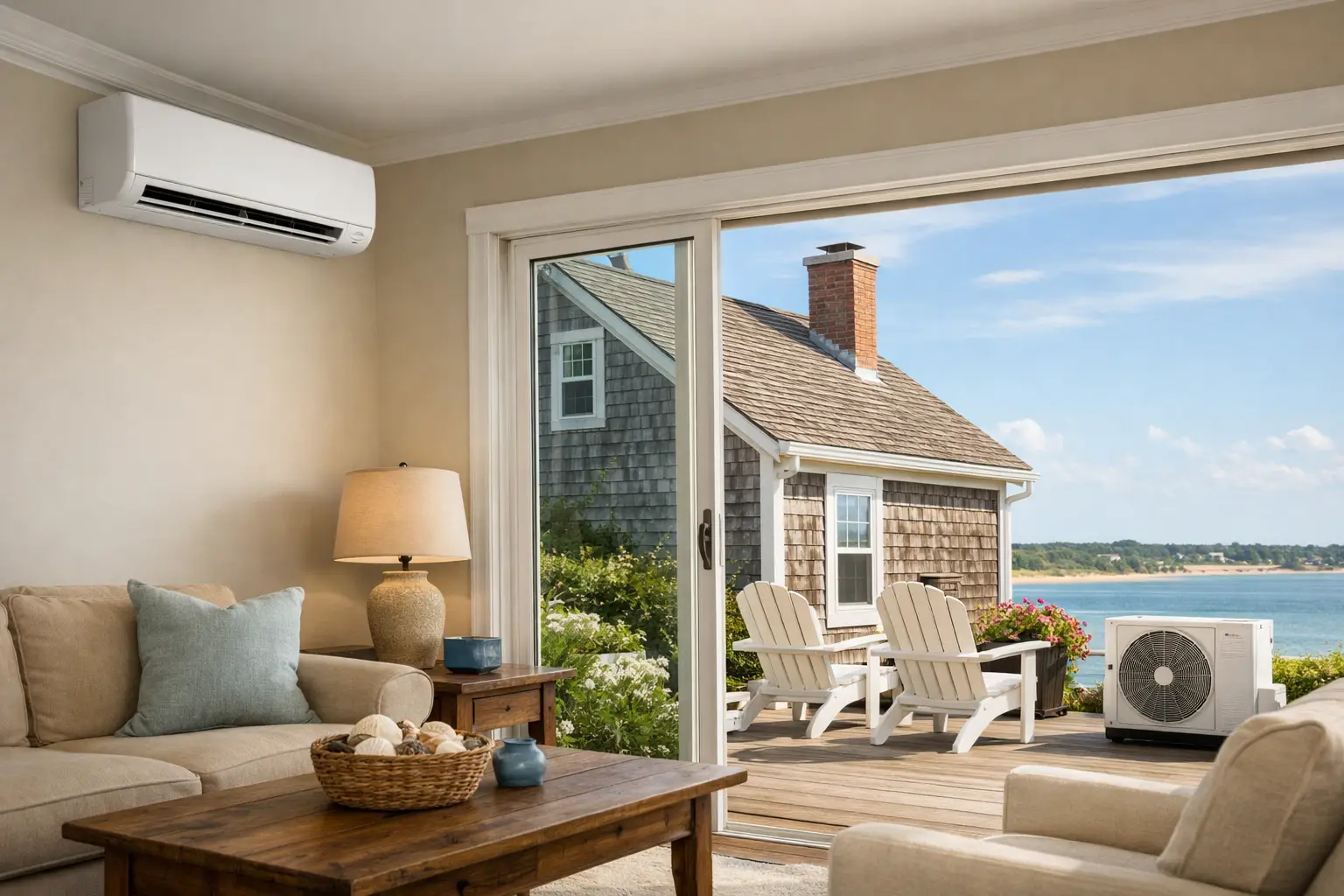
A Cape Cod home can be cool near the water in July, damp during shoulder season, and exposed to sharp winter winds in January. That is why the best ductless mini-split for Cape Cod homes is rarely just the highest-efficiency model on a spec sheet. It is the system that is correctly sized, rated for local winter temperatures, installed with care, and designed around the way your home is actually used.
For a year-round ranch in Barnstable, a finished room over a garage in Dennis, or a seasonal cottage that needs dependable heat on cold arrival days, ductless heat pumps can solve comfort problems that central systems and window units often leave behind. The right choice starts with the home, then moves to the equipment.
What Makes a Mini-Split Right for Cape Cod?
Cape Cod’s climate asks a lot from heating and cooling equipment. Summer humidity makes a room feel warmer than the thermostat suggests. Salt air can be tough on outdoor components. Winter temperatures may be moderate for much of the season, but cold snaps and wind-driven heat loss still happen.
A quality cold-climate ductless heat pump can provide efficient air conditioning and heating from the same system. Many models continue producing useful heat well below freezing, reducing reliance on electric baseboards, oil heat, propane, or an older central system. The key is to check the unit’s stated heating capacity at low temperatures, not just its efficiency rating.
For Cape homes, look for a system with strong low-ambient heating performance, an appropriate cold-climate rating, and a properly protected outdoor condenser location. A unit that performs well at 47 degrees is not automatically the right unit for a 10-degree morning in February.
The Best Ductless Mini-Split for Cape Cod Homes Depends on the Layout
There is no single best brand and size for every property. Mitsubishi Electric, Daikin, Fujitsu, LG, and other established manufacturers all offer equipment that may fit the job. A licensed HVAC professional should recommend specific equipment after evaluating the building, electrical service, insulation, windows, and heating goals.
A compact, well-insulated bedroom may need a small single-zone system. An open living room with cathedral ceilings, older windows, and frequent wind exposure may need substantially more capacity. Choosing a system based only on square footage is one of the fastest ways to end up with uneven temperatures, short cycling, or disappointing winter performance.
Single-Zone Systems
A single-zone mini-split uses one outdoor condenser and one indoor air handler. It is often a practical choice for a home office, sunroom, finished basement, addition, or a room that never seems to match the rest of the house.
Single-zone systems can be especially effective when the goal is targeted comfort rather than whole-home replacement. They are also a good option for seasonal homes where owners want efficient heating and cooling in the rooms they use most.
Multi-Zone Systems
A multi-zone system connects one outdoor unit to multiple indoor heads. This setup can work well for homes without ductwork, houses with separate sleeping and living areas, or properties where room-by-room temperature control matters.
The trade-off is design complexity. The outdoor unit must have enough capacity for the connected zones, and the indoor heads need thoughtful placement. A multi-zone system is not always the best value when only one or two areas need attention. In some homes, separate single-zone systems provide better performance and easier service access.
Do Not Skip a Real Load Calculation
Mini-splits are variable-speed systems, but they are not immune to oversizing or undersizing. An oversized unit may cycle too often in mild weather, which can reduce humidity control and comfort. An undersized unit may run continuously during a cold spell and still fail to maintain temperature.
A professional load calculation considers more than room dimensions. It accounts for insulation levels, air leakage, ceiling height, window area, sun exposure, foundation conditions, and how each space connects to the rest of the home. In older Cape Cod houses, those details can change the recommendation dramatically.
This evaluation is also the time to decide whether the mini-split will be your primary heat source, a supplement to existing heat, or a cooling-only comfort upgrade. If you plan to reduce use of an oil or propane system, the cold-weather heating output and backup plan deserve extra attention.
Features Worth Paying For
The right features can make a noticeable difference in day-to-day comfort and long-term operating costs. Rather than chasing every option, focus on features that address Cape Cod conditions and your household’s needs.
Cold-climate heating capability should be near the top of the list. Ask how much heat the unit supplies at 17 degrees and at lower outdoor temperatures, not merely its maximum heating capacity. This information helps determine whether your existing heating system should remain available as backup.
Variable-speed inverter compressors are standard on many better systems and are valuable because they adjust output instead of simply turning on and off. That steadier operation improves comfort, limits temperature swings, and can reduce energy use.
High efficiency ratings matter, but they should be considered alongside capacity. A high SEER2 rating supports efficient cooling, while HSPF2 helps compare heating efficiency. A slightly lower-rated unit that is correctly sized and installed well will usually serve a home better than a top-rated system selected without a load calculation.
Wi-Fi controls can be useful for second homes and rental properties. They allow owners to monitor temperatures, adjust settings before arrival, and receive alerts if indoor temperatures fall unexpectedly. For a winterized or occasionally vacant property, that added visibility can be worthwhile.
Indoor Head Placement Is Part of the System Design
An indoor wall head does not heat or cool a room evenly just because it is mounted high on a wall. Airflow direction, doorways, stairwells, ceiling shape, and furniture placement all affect performance.
In an open main living area, a wall-mounted head can often distribute conditioned air effectively. Bedrooms with closed doors may need their own indoor units if consistent comfort is the goal. A unit in the hallway will not reliably heat every closed bedroom, particularly in a drafty older home.
Wall heads are common, but they are not the only choice. Ceiling cassettes, floor-mounted units, and concealed ducted air handlers may be a better fit where wall space is limited or a more discreet appearance is preferred. Each option has installation and service-access considerations, so appearance should not be the only deciding factor.
Protecting Outdoor Equipment Near the Coast
The outdoor condenser needs clear airflow, a stable mounting surface, and room for service. It should also be positioned above expected snow accumulation and away from roof runoff, dripping gutters, and areas where wind-blown debris collects.
Coastal air can accelerate corrosion over time. Equipment with suitable coil protection and a location that avoids direct salt spray is a smart investment for homes near the shore. Regular maintenance also matters. Keeping leaves, sand, grass, and other debris away from the condenser helps preserve efficiency and prevents avoidable strain on the system.
Avoid placing the condenser where plowed snow, falling ice, or a deck roof can damage it. A qualified installer will review these practical site conditions before work begins, rather than treating the outdoor unit as an afterthought.
Rebates, Electrical Work, and Installation Quality
A ductless heat pump may qualify for Mass Save incentives, depending on the equipment, home, project scope, and current program requirements. Rebates can significantly improve project economics, but requirements can change. Confirm eligibility before selecting equipment or scheduling installation.
Some installations also require electrical upgrades. A small single-zone unit may fit within existing capacity, while a whole-home multi-zone design may need a new circuit, panel work, or coordination with other planned improvements. Addressing electrical needs early prevents surprises once the project is underway.
Installation quality is as important as the name on the outdoor unit. Correct refrigerant line sizing, pressure testing, evacuation, condensate drainage, electrical connections, and commissioning all affect performance. A licensed, certified technician should verify operation in both heating and cooling modes and explain how to use the controls before leaving the job.
Keep Your Mini-Split Working Efficiently
Homeowners can help protect their investment with simple routine care. Clean or rinse washable indoor filters as recommended by the manufacturer, keep supply and return areas clear, and avoid blocking the outdoor condenser. If cooling performance drops, the unit leaks water indoors, makes unusual noise, or struggles to heat, schedule service before a small issue becomes a system failure.
Professional maintenance should include checking electrical components, refrigerant performance, drains, coils, airflow, and overall operation. This is particularly valuable before the heating season and for homes exposed to coastal conditions.
The right ductless system should make a Cape Cod home easier to live in, not harder to manage. Start with a room-by-room evaluation, ask how the proposed equipment performs in real winter temperatures, and choose an installer who stands behind the work. Durfee Plumbing & Heating can help homeowners compare practical options, plan for rebates, and install a system built for dependable comfort through every season.