If your mini split has started smelling musty, dripping water, or struggling to keep up on hot or cold days, maintenance is usually the first place to look. A good mini split maintenance guide helps you catch small problems early, protect efficiency, and avoid the kind of breakdown that always seems to happen when you need the system most.
Ductless systems are reliable, but they are not maintenance-free. Because they move air directly through the indoor head and rely on clean coils, filters, and drains, even a little buildup can affect comfort fast. For homeowners and property managers, that means regular care is less about checking a box and more about keeping the system quiet, efficient, and dependable.
Why mini split maintenance matters
When a mini split is clean and properly adjusted, it can heat and cool very efficiently. When it is dirty or neglected, airflow drops, energy use climbs, and moisture problems become more likely. You may notice rooms taking longer to reach the set temperature, odd smells when the unit turns on, or water staining near the indoor head.
There is also a comfort issue that people do not always expect. A neglected system can still run, but it may run longer and deliver less consistent temperatures. In a humid coastal area, that can leave a room feeling cool but damp, or warm but stale. Maintenance helps the unit remove moisture properly and move air the way it was designed to.
For property owners on Cape Cod, salt air and seasonal use can add another layer. Systems in homes near the coast may need more attention because outdoor components can collect corrosive residue and debris faster than inland equipment.
Mini split maintenance guide: what homeowners can do
Some maintenance tasks are simple and safe for homeowners. Others should be left to a licensed HVAC technician. The key is knowing the difference.
Clean the filters regularly
This is the most important routine task. Most mini split indoor units have washable filters behind the front cover. If those filters are clogged with dust, pet hair, or cooking residue, airflow drops right away.
In a typical home, checking the filters every month is a good habit. If you have pets, heavy use, or a rental property with frequent turnover, you may need to clean them more often. Rinse them gently, let them dry completely, and reinstall them according to the manufacturer instructions. Putting damp filters back in place can create moisture issues inside the unit.
Wipe the indoor unit exterior and visible vents
Dust on the outer casing is not a major mechanical problem, but buildup around the louvers and vent openings can affect airflow and cleanliness. Use a soft dry cloth or a lightly damp cloth. Avoid spraying cleaners directly into the unit.
This is also a good time to check for anything unusual, such as staining on the wall, a mildew smell, or signs that the unit is blowing weaker than normal.
Keep the outdoor unit clear
The outdoor condenser needs open space to reject heat in summer and absorb heat in winter. Leaves, weeds, windblown debris, and overgrown shrubs can crowd the unit and reduce performance.
Keep the area around it clear and make sure nothing is blocking the coil. If you can see debris stuck on the exterior fins, use a gentle approach. Do not bend the fins or use high-pressure water. A damaged coil can reduce efficiency and become an expensive repair.
Watch for drainage issues
Mini splits remove moisture as they cool, and that water needs to drain properly. If the drain line clogs, water may back up into the indoor unit and leak onto the wall or floor.
A little condensation is normal inside the system. Water dripping where you can see it is not. If you notice active leaking, shut the system off and have it inspected before moisture causes drywall or finish damage.
What professional mini split maintenance should include
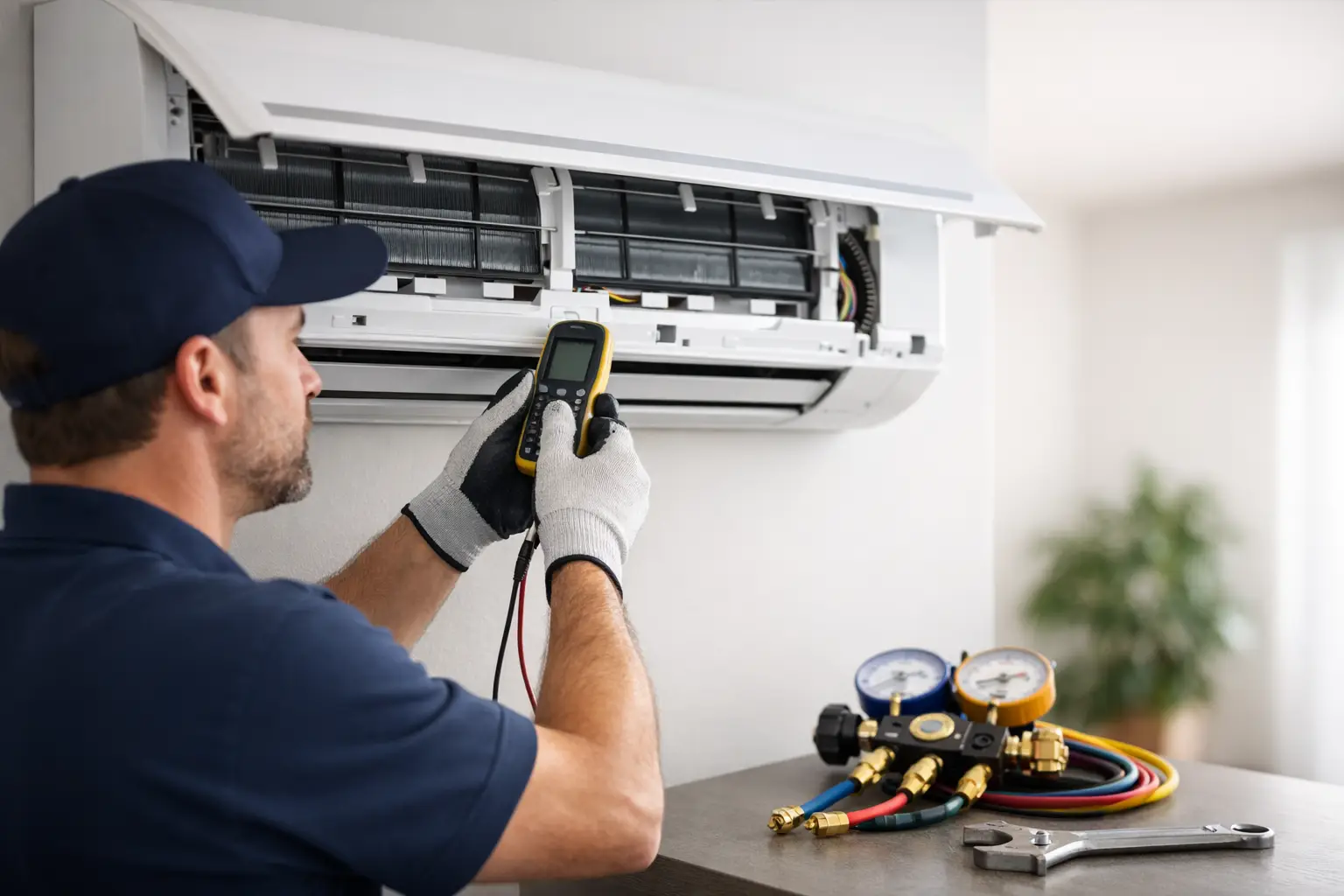
A true mini split maintenance guide should go beyond filter cleaning. Professional service is where deeper cleaning, testing, and early problem detection happen.
Coil cleaning
Both the indoor evaporator coil and outdoor condenser coil need to stay clean. These surfaces handle heat transfer, so dirt buildup can make the system work much harder than it should. Indoor coils are especially prone to collecting fine dust and biofilm because of condensation.
Professional cleaning matters here because these components are delicate and not always easy to reach without partially disassembling the unit. A surface wipe is not the same as a proper coil cleaning.
Drain and condensate inspection
A technician should inspect and clear the condensate drain system, especially if there has been any sign of dripping, odor, or slow drainage. This is one of the easiest ways to prevent water damage and mold-related concerns.
Electrical and control checks
Mini splits rely on boards, sensors, wiring, and communication between indoor and outdoor units. When something is off, the issue may not be obvious at first. You might only notice short cycling, flashing lights, or inconsistent operation.
During maintenance, a technician can inspect electrical connections, test operating performance, and look for signs of wear before a small fault becomes a no-cool or no-heat call.
Refrigerant and performance review
Mini splits do not consume refrigerant like fuel. If refrigerant is low, that usually means there is a leak or another system issue. A technician can evaluate temperatures, pressures, and overall performance to see whether the unit is operating as it should.
This is a good example of why DIY maintenance has limits. Topping off refrigerant without diagnosing the cause is not a real fix.
How often should maintenance be scheduled?
For most homes, professional maintenance once or twice a year is a smart plan. If the mini split handles both heating and cooling year-round, two visits can make sense - one before summer and one before winter. That schedule gives the system a better chance of staying reliable during peak demand.
Usage matters. A guest room unit that runs occasionally does not have the same maintenance needs as a main living area system running every day. The same goes for commercial spaces or rental properties, where longer run times and heavier occupancy can add wear faster.
If your system is in a coastal environment, more frequent outdoor inspection may be worth it. Salt exposure can shorten equipment life if corrosion starts to develop unnoticed.
Signs your mini split needs service now
Sometimes the calendar matters less than the symptoms. If your system is showing clear signs of trouble, waiting for the next planned maintenance visit can lead to bigger repairs.
Call for service if you notice weak airflow, unusual noises, musty odors, visible leaking, ice on the unit, flashing error lights, or a sudden increase in energy use without a clear reason. A unit that struggles to keep temperature or shuts off unexpectedly also deserves prompt attention.
It depends on the issue, but many problems start as maintenance-related concerns and turn into repairs when ignored. A clogged drain may become wall damage. Dirty coils may lead to strain on components. Restricted airflow can affect system performance enough to cause icing or comfort complaints.
Common maintenance mistakes to avoid
One of the biggest mistakes is assuming a mini split works fine because it still turns on. These systems can lose efficiency and develop hidden problems long before they stop completely.
Another common issue is overdoing DIY cleaning. Homeowners mean well, but aggressive brushing, pressure washing, or using the wrong chemicals can damage coils, fins, or internal components. Cleaning the filter and keeping the area clear is helpful. Taking apart the unit without the right tools and training usually is not.
Ignoring odors is another mistake. A musty smell may seem minor at first, but it can point to buildup inside the indoor unit or a drainage problem that needs professional cleaning.
A maintenance plan is usually cheaper than waiting
Emergency repairs are rarely convenient, and they are even less convenient during a heat wave or cold snap when service demand is high. Routine maintenance gives you more control. It helps reduce surprise breakdowns, protects efficiency, and gives you a clearer picture of your system's condition before a bigger expense appears.
For many homeowners, that peace of mind is the real value. You are not just paying for cleaning. You are paying to keep a critical comfort system running the way it should and to catch wear before it turns into disruption.
If your mini split has not been inspected in a while, now is a good time to get ahead of it. In homes across Cape Cod, where heating, cooling, and humidity all matter, consistent maintenance is one of the simplest ways to protect comfort without waiting for a problem to force the issue.