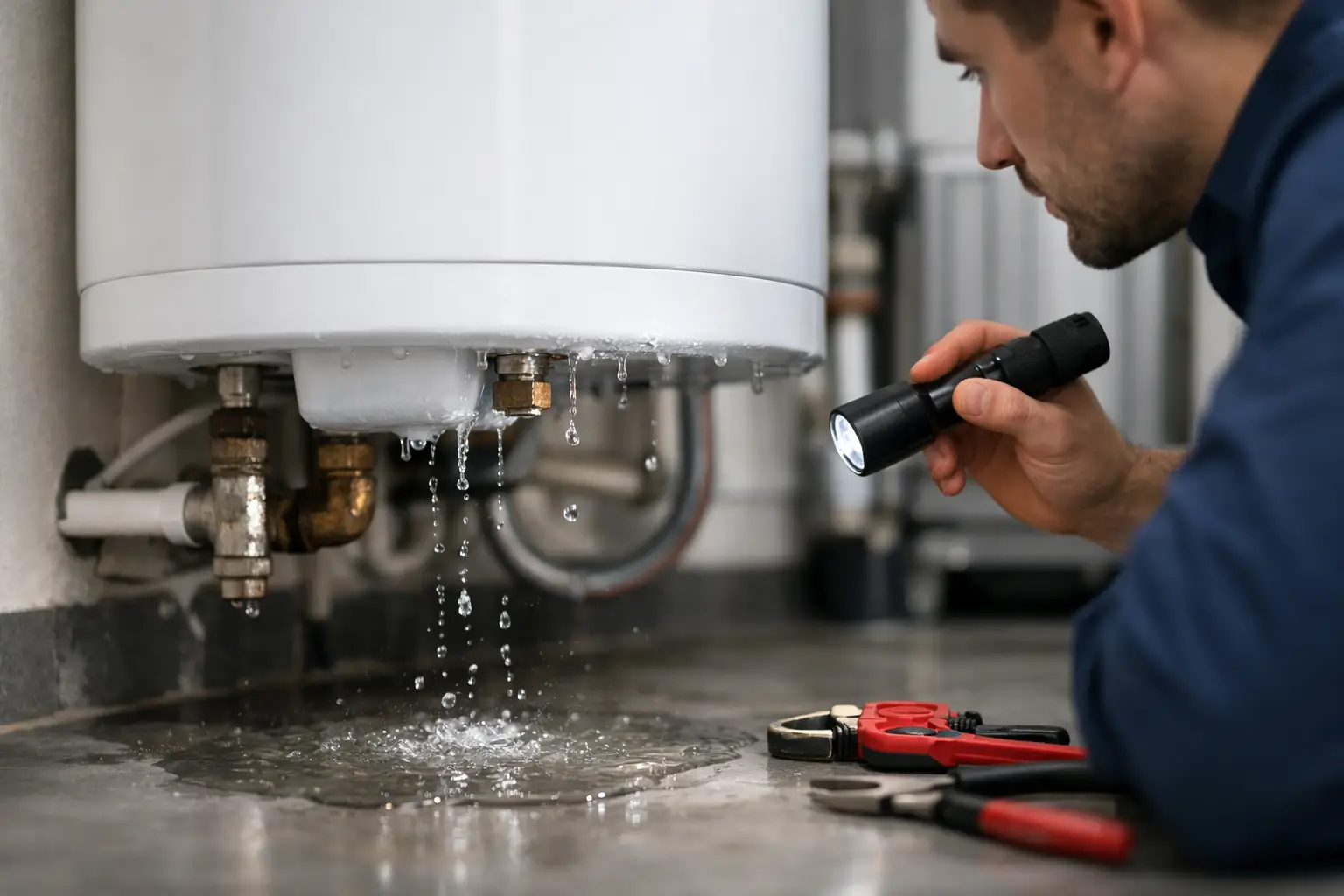
A puddle near the boiler usually gets noticed at the worst time - early morning, before guests arrive, or right when the weather turns cold. If your boiler is leaking, the main question is not just where the water is coming from. It is whether you are dealing with a simple pressure issue, a worn component, or a system problem that could turn into a no-heat call fast.
Some boiler leaks are minor and slow. Others point to failing internal parts, corrosion, or unsafe operating conditions. The sooner the source is identified, the better your chances of avoiding water damage, pressure loss, or a complete heating shutdown.
Why a boiler leaking problem should not be ignored
A boiler is a closed system. Water should stay inside the unit and move through the system as intended. When water starts showing up on the floor, around fittings, or underneath the jacket, something has changed.
The first risk is damage to the boiler itself. Low pressure can affect heat delivery and strain components. The second is damage to the surrounding area, especially in basements, utility rooms, and finished mechanical spaces. The third is that a leak can be a symptom rather than the whole problem. Excess pressure, a failing expansion tank, or corrosion inside the heat exchanger can all show up as visible water.
That is why it helps to treat a leak as an active heating issue, not a housekeeping issue.
Where the leak is coming from matters
Not every wet spot means the boiler block itself has failed. In many homes and light commercial buildings, the source is one of the connected parts rather than the main body of the boiler.
A common example is a leaking pressure relief valve. If system pressure gets too high, that valve may discharge water to protect the boiler. In that case, the valve may be doing its job, but the real issue could be high pressure caused by a bad expansion tank or an auto-fill problem.
Circulator pumps can also leak around seals or flanges. Pipe connections may drip at threaded joints. Older shut-off valves sometimes start weeping after years of service. On some systems, air vents and drain valves are the weak points. If the leak appears to be coming from the top or side, condensation from nearby piping or venting can even make it look like the boiler is leaking when the source is actually above it.
Then there is the more serious possibility - internal corrosion or a crack in the heat exchanger. If the boiler jacket is rusted, water is appearing from inside the cabinet, or the unit has a long history of makeup water issues, that usually points to a larger repair or replacement conversation.
What to check first when your boiler is leaking
Start with what you can safely observe without disassembling anything. Look at the pressure gauge. Most residential hot water boilers operate in a normal range that is often around 12 to 20 psi when the system is functioning properly, though the exact target depends on the building and system design. If the pressure is much higher than normal, that is useful information.
Next, look for the visible source. Is water dripping from a valve, a pump connection, a pipe joint, or from inside the boiler casing? Fresh water usually looks clear. Long-term leaks often leave rust stains, white mineral deposits, or greenish residue around fittings.
Listen, too. Gurgling, banging, frequent cycling, or hissing can help narrow the issue. A boiler that has been taking on fresh water due to a leak may also start showing signs of air in the system or inconsistent heat.
If the leak is active, place a bucket or towels to limit damage, but do not ignore electrical safety. If water is getting near controls, wiring, or the burner area, shut off power to the boiler and call for service.
When to shut the boiler down
Sometimes a leaking boiler can wait a few hours for a scheduled visit. Sometimes it should be shut down right away.
Turn the system off if water is leaking heavily, if pressure is rising quickly, if you see water near electrical components, or if the boiler is making unusual noises while losing water. If you smell gas, leave the area and follow gas safety procedures immediately.
If the leak is minor and clearly coming from an external fitting, the boiler may still operate for a short time, but that does not mean it is safe to leave alone. A small drip can become a major leak without much warning, especially when pressure and temperature change during a heating cycle.
For homeowners in Cape Cod and surrounding coastal areas, that timing matters. A heating problem during a cold snap is more than an inconvenience. Fast action can help prevent frozen pipes, tenant complaints, or business disruption.
Common causes of a boiler leaking issue
Pressure problems are high on the list. When the expansion tank loses its air charge or fails internally, the system may over-pressurize as water heats up. That often leads to discharge from the relief valve. Replacing the valve alone does not solve the root cause if the tank has failed.
Worn seals and gaskets are another common cause, especially on older circulators and serviceable components. These parts age gradually. They may hold for years, then start leaking during heavy seasonal use.
Corrosion is more serious. Boilers and connected piping can corrode from age, poor water quality, oxygen entering the system, or repeated addition of fresh water. Once metal is compromised, repairs may be limited by the condition of the surrounding parts.
Loose fittings can also be to blame, though tightening the wrong connection can make matters worse. Some leaks look simple but are tied to failing threads, brittle valves, or hidden deterioration.
There is also the installation factor. If a boiler was piped incorrectly, sized poorly, or matched with the wrong expansion setup, leak issues may repeat until the system design problem is corrected.
Repair or replace? It depends on the leak
This is where experience matters. A leaking flange, faulty relief valve, bad circulator, or failed expansion tank is often repairable if the boiler itself is in solid condition. These are common service calls, and many can be handled efficiently when the technician has the right parts on the truck.
A boiler with internal corrosion or a cracked heat exchanger is different. If the heat exchanger is compromised, replacement is often the more practical option. The same goes for older units with multiple failing components, chronic pressure issues, and declining efficiency. At some point, continuing to repair an aging boiler costs more in disruption and repeat visits than replacing it.
Property owners often want a yes-or-no answer right away, but the honest answer is that it depends on the age of the boiler, the source of the leak, the condition of the surrounding system, and how reliable the heat needs to be. A homeowner may choose a repair to get through the season. A property manager may decide replacement makes more sense to reduce downtime and repeated service calls.
What not to do with a leaking boiler
Do not keep adding water without understanding why the system is losing it. Repeated makeup water introduces oxygen and minerals that can speed corrosion.
Do not try to cap, plug, or patch a relief valve discharge. That valve is a safety device.
Do not assume every boiler leak is minor because the heat still works. Boilers can continue running while the underlying problem gets worse.
And do not postpone service because the leak seems to stop. Some leaks appear only when the system is hot and under pressure, which means they come and go until the failure becomes more obvious.
How professional diagnosis saves time
A proper service call should do more than identify the wet spot. The goal is to understand why the leak started, whether the system is operating safely, and what else may be affected.
That usually means checking pressure behavior, inspecting the expansion tank, testing relief valve operation, examining pumps and fittings, and looking for signs of internal corrosion. On older systems, the technician may also assess whether replacement parts are readily available and whether repair makes financial sense.
For customers who need heat restored quickly, that approach matters. A fast diagnosis, licensed workmanship, and a stocked truck can make the difference between a same-visit repair and a drawn-out problem. Durfee Plumbing & Heating LLC serves homeowners and property managers who need that kind of practical response, especially when a leak starts acting like a bigger heating emergency.
Preventing the next boiler leak
Not every leak can be predicted, but a lot of them give warning signs first. Pressure fluctuations, occasional relief valve discharge, rust around fittings, air in the system, and inconsistent heating are all reasons to schedule service before there is water on the floor.
Routine maintenance helps because boilers tend to fail at connection points, moving parts, and safety components long before the entire system quits. Catching a weak expansion tank or corroded circulator early is usually much easier than dealing with a leak during peak heating season.
If your boiler is leaking, the smartest next step is not guessing - it is getting the source identified before a manageable repair turns into no heat, water damage, or an avoidable replacement.