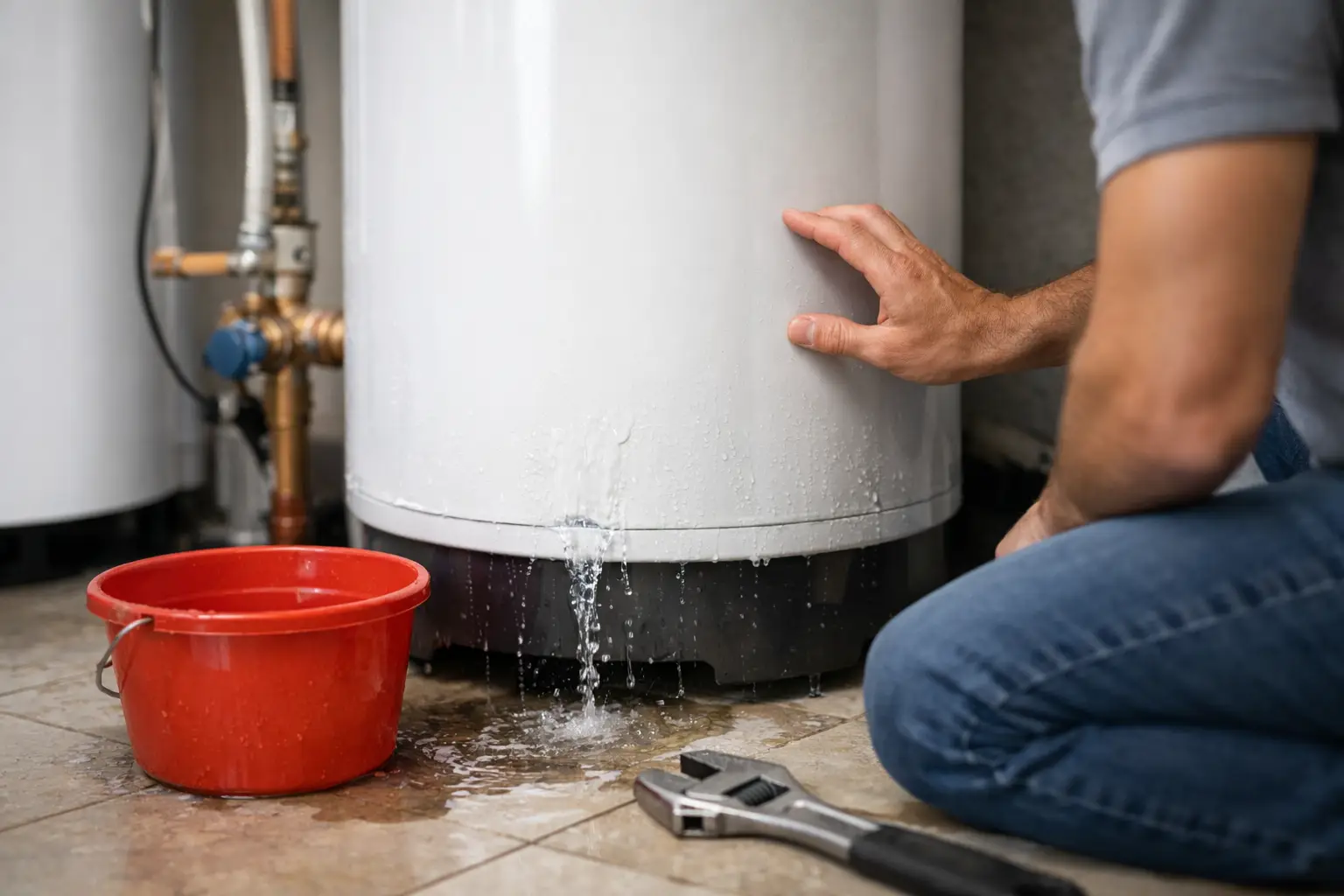
A puddle around the tank usually shows up at the worst possible time - before work, during a cold snap, or right before guests arrive. If your water heater leaking has turned into a sudden problem, the right first step is not guesswork. It is figuring out where the water is coming from, how serious it is, and whether the unit is still safe to run.
Some leaks are minor and repairable. Others mean the tank is failing and replacement is the only smart move. The difference matters, especially if you want to avoid water damage, rising utility bills, or a complete loss of hot water.
What to do first when a water heater is leaking
Start by staying calm and checking how much water is present. A few drips under the unit can point to a loose fitting or a valve issue. A growing pool of water, active dripping from the tank body, or moisture near gas or electrical components calls for faster action.
If the leak is more than minor, shut off the power source to the heater. For an electric unit, turn it off at the breaker. For a gas unit, switch the gas control to off. Then close the cold water shutoff valve feeding the heater. This limits how much more water can enter the tank.
If water is spreading across the floor, protect the area around the heater and move stored items out of the way. In finished basements, utility closets, and commercial spaces, even a slow leak can damage flooring, drywall, and nearby equipment. If you are not sure whether the unit is safe to approach, call a licensed plumber right away.
Why a water heater leaking problem happens
The phrase water heater leaking covers a wide range of problems. Sometimes the water is not even coming from the tank itself. Condensation, a nearby pipe leak, or water running down from above can make the heater look like the source.
That is why location matters. Water at the top of the heater usually means one kind of repair. Water at the bottom may mean something very different. A trained technician will trace the source before recommending repair or replacement, but there are a few common trouble spots worth knowing.
Loose inlet or outlet connections
At the top of the heater, you will usually see cold water entering and hot water leaving through threaded connections. Over time, those fittings can loosen slightly or corrode. When that happens, water may drip down the jacket of the tank and collect on the floor below.
This is one of the better-case scenarios. If the tank itself is still sound, tightening or replacing a fitting may solve the issue. The key is confirming that the leak is truly from the connection and not from corrosion that has already spread into the tank body.
Temperature and pressure relief valve issues
The temperature and pressure relief valve, often called the T&P valve, is a safety device. It opens if the pressure or temperature inside the tank gets too high. If water is dripping from this valve or the discharge pipe, the valve may be faulty, but it can also mean the heater is running under unsafe pressure.
That is where DIY assumptions can get expensive. Replacing the valve may help if the valve has simply worn out. But if the root problem is excess pressure in the plumbing system or overheating inside the tank, the issue will return until the underlying cause is fixed.
Drain valve leaks
Near the bottom of the tank, the drain valve is used when flushing the heater. Sediment, age, or a valve that no longer seals tightly can cause a slow drip. This type of leak can be easy to overlook because it often starts small.
In some cases, the valve can be tightened or replaced. In others, the valve has been weakened by age and any attempt to force it can make the leak worse. That is one reason many homeowners choose to have a plumber inspect it rather than experiment.
Internal tank corrosion
This is the problem no one wants to hear, but it is common in older units. Traditional tank water heaters eventually corrode from the inside out. Once the steel tank itself develops a crack or pinhole leak, repair is generally not a lasting option.
If water is leaking from the bottom of the tank body and not from a valve or fitting, replacement is usually the practical answer. Most standard tank heaters last around 8 to 12 years, though water quality, maintenance history, and usage levels can shift that range in either direction.
Sediment buildup and overheating
Cape Cod homes can experience mineral buildup in plumbing equipment over time, especially in systems that have gone years without maintenance. Sediment settles at the bottom of the tank and creates extra strain. It can cause popping sounds, reduce efficiency, and in some cases contribute to overheating or damage near the base of the tank.
Sediment alone does not always cause a visible leak, but it often accelerates wear. If your heater is older and leaking near the bottom, sediment may be part of the story.
Repair or replace?
This is the question most property owners want answered quickly. If the leak is coming from a fitting, valve, or connection, repair may make sense, especially if the unit is relatively new and otherwise operating well. If the tank itself is leaking, replacement is almost always the safer investment.
Age matters here. A seven-year-old unit with a leaking valve is a different conversation than a twelve-year-old tank with rust, inconsistent hot water, and water pooling underneath. In the second case, putting money into a repair often delays the inevitable by a short time.
Operating cost matters too. An aging heater may still produce hot water, but it can do so inefficiently. If replacement is already on the table, many homeowners and property managers compare a standard tank unit with a tankless water heater or heat pump water heater. The best option depends on household size, hot water demand, available space, fuel type, and budget. Sometimes the cheapest fix today is not the lowest-cost decision over the next several years.
Signs the leak is urgent
Some water heater leaks can wait a few hours for a scheduled appointment. Others should be treated like an emergency.
A fast response is wise if you notice water actively flowing from the tank, signs of rust around the base, no hot water at all, fluctuating water temperature, a sulfur smell, or water reaching electrical components. The same is true if the heater is in an attic, finished area, utility room with other equipment, or commercial setting where downtime and property damage can spread quickly.
Gas water heaters deserve extra caution. If you smell gas, leave the area and follow gas safety procedures before addressing the leak itself. Water and gas issues together are never something to take lightly.
Can you still use the water heater if it is leaking?
Usually, that depends on the source and severity of the leak. A few drops from a fitting do not carry the same risk as a compromised tank. But continuing to run a leaking heater always carries some downside. Even a small leak can worsen under pressure, and a failing tank can rupture without much warning.
Electric water heaters should not operate if water is reaching electrical components. Gas heaters should not be used if there is any concern about the burner area, venting, or gas supply. If there is doubt, shut it down and have it inspected.
How to reduce the chance of another leak
Water heaters do not fail without warning as often as people think. The warning signs are just easy to miss. Rust-colored water, reduced hot water, rumbling sounds, moisture around fittings, and age past the expected service life all deserve attention.
Routine maintenance helps. Flushing sediment, checking the anode rod, testing the relief valve, and inspecting fittings can extend service life and catch problems early. For rental properties and commercial buildings, scheduled inspections are especially useful because small leaks are often discovered late.
If replacement is needed, proper sizing and professional installation matter as much as the unit itself. An undersized heater works too hard. A poorly installed heater can leak early, run inefficiently, or create pressure issues elsewhere in the system. That is why many homeowners in Cape Cod choose a licensed technician who can handle both the immediate leak and the bigger picture around safety, efficiency, and long-term reliability.
When a water heater starts leaking, speed matters, but so does accuracy. The goal is not just to stop the water on the floor. It is to make the right call before a small plumbing problem turns into a damaged room, a failed system, or an expensive repeat visit.