
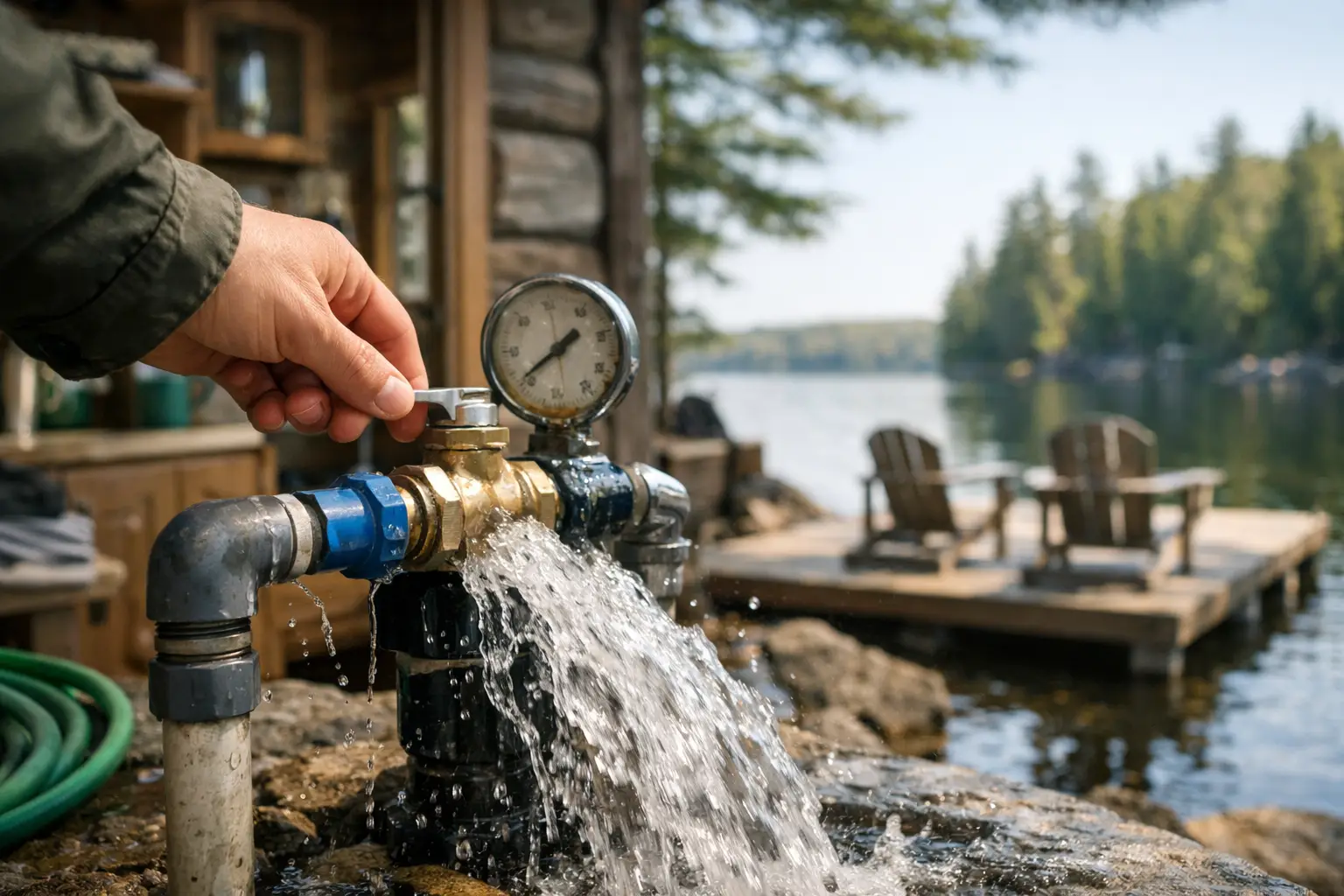
That first spring visit to the cottage should feel easy. You unlock the door, let in some fresh air, and get the place ready for the season. But a rushed cottage water turn on can turn that good weekend into a soaked basement, a burned-out pump, or a leak hidden behind a wall until the next visit.
If your property on Cape Cod sits empty through the winter, turning the water back on is not just a matter of opening one valve and hoping for the best. Seasonal plumbing systems need a careful restart. A few extra minutes at the beginning can prevent major repairs later.
Why cottage water turn on needs a plan
Seasonal homes go through a different kind of wear than year-round properties. Pipes sit unused for months. Seals dry out. Sediment settles in tanks. Small winter damage may not show itself until pressure returns to the system.
That is why the safest approach is slow, deliberate, and observant. You are not just restoring water service. You are checking whether the plumbing system came through the off-season intact.
For cottages with private wells, pumps, filtration equipment, or older shutoff valves, the process matters even more. A mistake at startup can put stress on parts that are already aging. What looks like a simple spring chore can quickly become a service call if a fitting cracks or a pump runs dry.
Before you turn anything on
Start with a walk-through inside and outside the property. Look for obvious signs of trouble before the system is pressurized. Water stains, split pipe insulation, cracked filter housings, rust marks below fittings, and puddling near the foundation are all warnings worth taking seriously.
Inside, check around sinks, toilets, tubs, water heaters, washing machine hookups, and any exposed pipes in crawl spaces or utility rooms. If the property was professionally winterized, there may still be drain plugs removed, supply lines disconnected, or water heater settings left off for safety.
Outside, pay attention to hose bibs, irrigation connections, outdoor showers, and exposed piping. These are common freeze-damage points, especially in coastal Massachusetts where wind exposure can make winter damage worse than homeowners expect.
If your cottage has a well system, inspect the pressure tank, switch, and visible piping before restoring power to the pump. If anything looks corroded, loose, or damaged, stop there. It is better to inspect first than force a failing part to work under pressure.
How to handle a cottage water turn on safely
A proper cottage water turn on is usually done in stages. The goal is to bring the plumbing system back online gradually so you can catch problems before they spread.
Keep fixtures off at first
Make sure faucets are mostly closed before restoring the main supply, but choose one fixture - often a sink faucet on the lowest floor - to open slightly. This helps release trapped air and reduces sudden pressure shock when water starts moving again.
If your system was drained for winter, expect sputtering and uneven flow at first. That is normal. What you do not want is a loud hammering sound, a fixture that never clears, or water appearing where it should not.
Open the main valve slowly
Turn the main water supply on slowly, not all at once. A fast opening can hit the system hard, especially in older cottages with aging copper, galvanized pipe, or mixed-material repairs. Slow pressurization gives you time to listen and look.
As the line fills, move through the property and watch every accessible pipe and fixture. Check under sinks. Look behind toilets. Inspect around the water heater. Listen for running water when no fixture is calling for it.
Restore the water heater carefully
Do not power on an electric water heater until the tank is completely full. Dry firing an electric element can ruin it quickly. If you have a gas water heater, make sure the area is dry and follow proper relight or startup procedures if it was shut down for winter.
This is one of the most common spring startup mistakes. Homeowners get the water on, flip every switch, and do not realize the heater tank is still filling. A little patience here saves money.
Bring fixtures online one at a time
After the main system is holding pressure, run each faucet and fixture one at a time. Start with cold water, then hot. Flush toilets. Test showers. Run laundry and dishwasher hookups only after you are confident the basic system is stable.
This step helps clear air, sediment, and stale water while isolating problems. If a leak appears after you open one specific fixture, you know where to focus instead of guessing.
Problems that often show up during spring startup
The issue with seasonal plumbing is that damage is not always obvious while the system is empty. It shows up when pressure returns.
Small split pipes are common, especially in unheated crawl spaces, exterior walls, and around outdoor connections. Cracked shutoff valves are another frequent problem. They may look fine until the system repressurizes and a slow drip starts.
Water filters and treatment equipment can also fail at startup. Plastic housings become brittle with age. O-rings shift. Sediment can clog parts that were already near the end of their service life. If your cottage uses a private well, low pressure, short cycling, or no water at all may point to pump, tank, or pressure switch trouble rather than a basic plumbing leak.
There is also the less obvious category of damage - the leak you do not see right away. A pipe feeding an upstairs bathroom may drip into a wall cavity for hours before any stain becomes visible. That is why a quick startup and immediate departure is risky. After restoring water, stay on site long enough to confirm the system is stable.
When a DIY turn on makes sense - and when it does not
Some homeowners are comfortable handling a cottage water turn on themselves, especially if the system is newer, the winterization process was straightforward, and there is easy access to shutoffs and fixtures. If the property has a simple municipal supply and no signs of winter damage, a careful owner can often manage the startup process safely.
But it depends on the setup.
If your cottage has a well pump, older piping, a history of freeze issues, multiple buildings, filtration equipment, or a water heater that was drained and shut down, the margin for error gets smaller. The same goes for owners who live off-Cape and cannot monitor the property closely after startup. In those cases, having a licensed plumber handle the reopening can save a lot of stress.
For rental cottages and managed properties, professional startup is often the smarter choice. A hidden leak discovered after guests arrive is far more disruptive than a preseason service visit.
What a professional looks for during cottage water turn on
A trained technician does more than open a valve. The real value is in spotting weak points before they become failures.
That includes checking for freeze damage, confirming shutoffs work properly, inspecting exposed supply lines and drain connections, making sure the water heater is filled and operating safely, and testing the system under pressure. On well systems, it may also include evaluating pump behavior, pressure tank performance, and any treatment equipment tied into the line.
For homeowners in places like Falmouth, Dennis, or Barnstable, where many properties are used seasonally, spring startup issues are common enough that experience matters. A technician who regularly works on cottages knows where damage tends to show up and what corners should never be cut.
A few smart habits for the rest of the season
Once the water is back on, use the first week or two to stay alert. Check under sinks after the first few uses. Reinspect the water heater area. Look at exterior faucets after they have been used under pressure. If the cottage will sit vacant between visits, consider whether leak detection devices or a more structured seasonal maintenance plan make sense.
It is also a good time to think ahead to fall. The easier the system is to winterize, the safer the next spring startup tends to be. Replacing weak shutoffs, aging hoses, or brittle filter housings now is usually cheaper than waiting for them to fail later.
A good spring opening should give you confidence, not surprises. If anything seems off during your cottage water turn on - low pressure, unexplained dripping, air that never clears, pump issues, or signs of hidden leakage - it is worth getting it checked before a small problem becomes water damage. Getting the season started right is one of the best ways to protect the property and actually enjoy your time there.