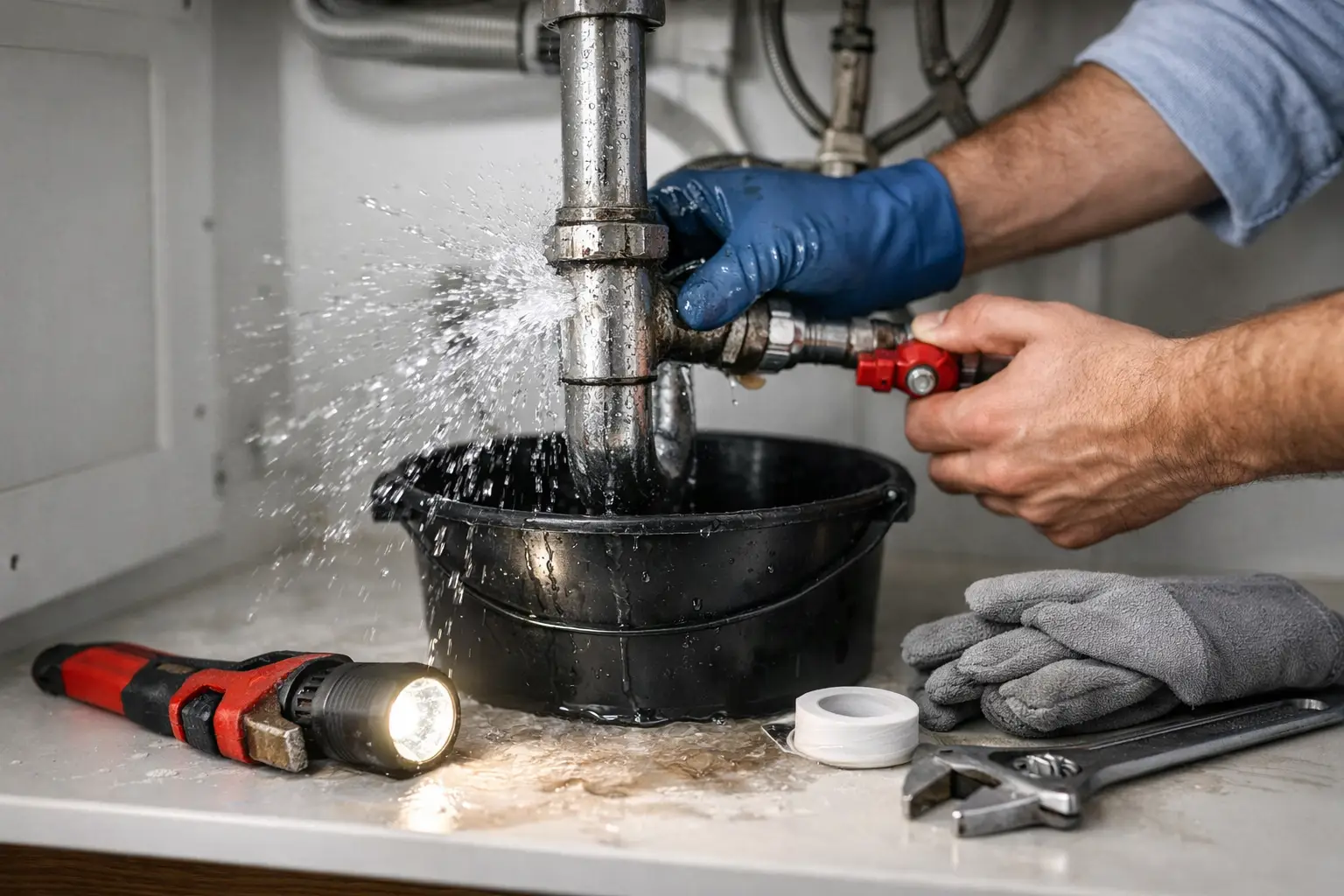
A burst pipe can release gallons of water in minutes, soaking insulation, flooring, walls, inventory, and electrical equipment before you have time to think. Emergency burst pipe repair begins with one priority: stop the water source safely. Then, get a licensed plumber on the way before a small break becomes a costly restoration project.
For Cape Cod homeowners and property managers, frozen pipes are a familiar winter risk. But pipes can also burst because of corrosion, high water pressure, failed fittings, shifting building materials, or an aging water heater connection. The cause matters, but the first actions are largely the same.
First, Shut Off the Water
If water is actively spraying or flowing from a pipe, locate your main water shutoff valve and turn it clockwise until it stops. In many homes, the valve is near the water meter, where the water line enters the foundation, or in a utility room. In commercial spaces, it may be in a mechanical room or near the building service entrance.
Do not spend time searching for the perfect fix while water continues to run. A bucket, towel, or temporary clamp may reduce the mess, but it will not stop pressure from feeding a broken line. The main shutoff is the fastest way to limit damage.
If the break is isolated to a supply line serving a toilet, sink, washing machine, or appliance, you may be able to close that fixture's local shutoff valve instead. This keeps water available to the rest of the building. If you are uncertain which valve controls the damaged line, shut off the main supply.
Turn Off Electricity When Water Is Near It
Water and electricity are a dangerous combination. If water is near outlets, extension cords, appliances, a panel, or electrical equipment, do not walk through standing water to reach a switch. Leave the area and contact an electrician or emergency responder if there is an immediate safety hazard.
If you can safely access the electrical panel from a dry location, turn off power to the affected area. Never touch wet wiring, a wet appliance, or a breaker panel that may be exposed to water.
Call for Emergency Burst Pipe Repair Right Away
Once the water is off, call a licensed emergency plumber. Fast action matters because the visible pipe break is only part of the problem. Water can travel behind drywall, beneath flooring, through ceiling cavities, and into insulation. A plumber can identify the failed section, make a durable repair, check nearby piping, and help you understand whether additional drying or restoration is needed.
A qualified technician should not simply patch the opening and leave. The repair should account for why the pipe failed. For example, a frozen copper line may have more than one split. A corroded galvanized pipe may indicate that adjacent sections are also near the end of their service life. A failed fitting can point to pressure problems, poor prior workmanship, or pipe movement.
Durfee Plumbing & Heating provides 24/7 emergency service across Cape Cod with licensed technicians and fully stocked trucks, which can help avoid the delay of waiting on parts for common repairs. For an active leak, calling or texting for service as soon as the water is shut off gives the repair team the best chance to limit disruption.
What You Can Do While You Wait
After shutting off the water and arranging service, focus on protecting people and property. Move furniture, electronics, boxes, and valuables away from the wet area if it is safe to do so. Place containers beneath drips, and use towels or a wet-dry vacuum to remove standing water from hard surfaces.
Open cabinets around the damaged plumbing to improve airflow. If a pipe froze inside a vanity, kitchen cabinet, or exterior wall, opening those enclosed areas can also help the plumber inspect the line. Take photos and short videos of the leak, visible damage, and affected belongings before extensive cleanup. Documentation may be useful for an insurance claim.
Avoid using the plumbing system until the repair is complete. Even with the main water off, drains can still carry water from appliances or upper floors. Do not run a dishwasher, washing machine, shower, or faucet near the affected area.
For a significant leak, contact your insurance carrier promptly. Your policy may cover sudden and accidental water damage, but coverage varies. A plumbing invoice, photos, mitigation records, and a clear timeline are often helpful. Insurance questions should never delay the emergency repair itself.
What Not to Do With a Burst Pipe
Temporary measures have limits. Tape, epoxy putty, rubber patches, and clamps can sometimes slow a small leak until help arrives, but they are not dependable answers for a burst pressurized pipe. They can fail without warning, especially after water service is restored.
Do not use an open flame to thaw a frozen pipe. Torches and heat guns can damage piping, ignite nearby materials, or create a carbon monoxide and fire risk. If a pipe is frozen but has not burst, gentle heat from a hair dryer may be appropriate only when the area is dry, accessible, and you can see the pipe clearly. When in doubt, call a plumber instead.
It is also tempting to turn the main water back on after a leak appears to stop. Wait until the plumbing repair is complete and the system has been tested. Restoring pressure too soon can reopen the break or expose another weak point.
Why Burst Pipes Happen on Cape Cod
Cold weather is a common trigger, especially in crawl spaces, garages, unheated basements, exterior walls, seasonal properties, and vacant units. A pipe does not always burst at the point where ice forms. As water freezes and expands, pressure can build elsewhere in the line and split the pipe at a weak section.
Seasonal homes deserve extra attention. A thermostat failure, power outage, empty fuel supply, or an accidentally opened window can allow interior temperatures to drop quickly. Plumbing winterization is often a sensible safeguard for properties that will sit vacant through cold weather, although the right approach depends on how the property is used and monitored.
Not every burst pipe is caused by freezing. Older pipe materials can deteriorate from the inside, and high pressure can stress fittings, appliance hoses, and valves. Repeated minor leaks, discoloration around pipe joints, unexplained water bills, and rust on exposed piping are signals worth addressing before an emergency occurs.
The Repair May Be Small, but the Scope Can Change
A straightforward emergency burst pipe repair may involve cutting out a damaged section and replacing it with properly sized new pipe and fittings. In other cases, the repair can reveal a larger issue. A pipe inside a finished wall may require access through drywall. A frozen line may need a careful inspection of nearby branches. A failed water heater connection may require evaluating the appliance, shutoff valves, and pressure relief components.
The best solution depends on pipe material, location, access, the age of the system, and the source of the failure. A responsible plumber will explain what needs immediate repair, what should be monitored, and whether a planned upgrade would reduce the risk of another failure. That distinction helps homeowners and facility managers make sound decisions under pressure rather than agreeing to work they do not understand.
Ask whether the repair includes pressure testing and whether parts and labor are covered by a warranty. Clear documentation is particularly valuable for rental properties, commercial buildings, and homes with an insurance claim in progress.
Reduce the Odds of Another Emergency
After the immediate repair, take a few practical prevention steps. Know where the main shutoff is and make sure everyone responsible for the property can access it. Label it if necessary. Insulate exposed pipes in unheated areas, seal obvious drafts near plumbing, and keep indoor temperatures consistent during cold snaps.
For homes that will be empty, arrange regular checks or consider professional winterization. Property managers should also make sure tenants know who to call and where the emergency shutoff is located. Minutes matter when a leak starts at night, over a holiday, or while a building is unoccupied.
A burst pipe is stressful, but the response does not have to be complicated: shut off the water, protect the area, and bring in licensed help quickly. Keeping the main valve accessible and an emergency plumbing number handy can turn a chaotic moment into a manageable repair.