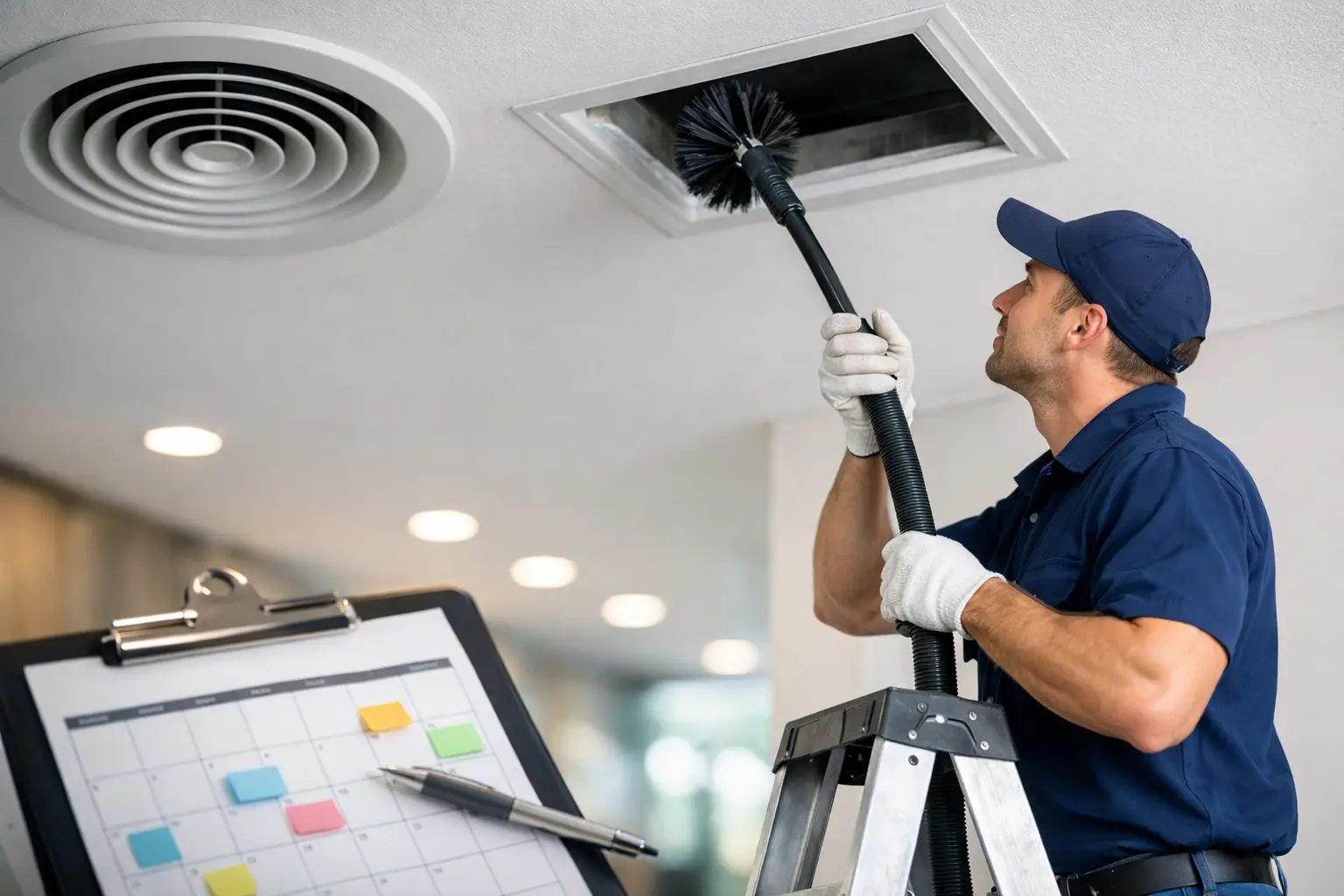
If one room always feels dustier than the rest, or your vents start blowing out that stale, closed-up smell when the system kicks on, it may be time to choose duct cleaning schedule timing based on how your building actually operates - not based on a generic reminder card. For homeowners and property managers, the right schedule depends on usage, occupancy, air quality concerns, and what has happened inside the space over the past few years.
Duct cleaning is one of those services that gets oversimplified. Some properties benefit from a routine cycle. Others need service sooner because of pets, renovations, water damage, or heavy HVAC use. A smart schedule protects indoor air quality, helps your system stay cleaner, and prevents you from paying for service more often than necessary.
Why your duct cleaning schedule should be property-specific
There is no single rule that fits every home or commercial building. A newer home with good filtration and no pets may go years before duct buildup becomes a concern. A rental property with frequent turnover, smokers, shedding pets, and inconsistent filter changes may need much more attention.
That is why the best way to choose a duct cleaning schedule is to look at conditions, not just time. Dust levels, allergy complaints, recent projects, HVAC performance, and the age of the duct system all matter. If you only use the calendar, you can end up cleaning too late or too often.
For many properties, a rough baseline is every 3 to 5 years. That is a starting point, not a guarantee. If your building falls into a higher-use or higher-dust category, the interval may need to be shorter. If your system is well-maintained and the indoor environment is controlled, you may be able to wait longer.
How to choose duct cleaning schedule timing for your home
For most homeowners, the first question is simple: what has your house been through lately?
If you recently completed remodeling work, had flooring replaced, opened walls, sanded wood, or dealt with drywall dust, your ducts may already contain a fine layer of debris. Even careful contractors cannot keep every particle out of the system. In that case, duct cleaning is often worth scheduling sooner rather than waiting for the normal cycle.
If you have pets, especially multiple pets, the schedule usually tightens up. Hair and dander do not just settle on furniture. They move through return vents and collect over time. The same goes for homes where windows are frequently open during pollen season or where occupants track in sand and outdoor debris. On Cape Cod, coastal air and seasonal occupancy patterns can make this more noticeable in some homes.
Families with asthma, allergies, or respiratory sensitivity also tend to benefit from closer monitoring. Duct cleaning is not a cure for indoor air problems by itself, but it can remove accumulated debris that contributes to recirculated dust. If you have already stayed on top of filter changes and still notice persistent issues, it may be time to inspect the ductwork.
Then there is the age and maintenance history of the system. If you bought an older home and have no record of prior duct service, that uncertainty alone may justify an evaluation. The same applies if filters have not been changed consistently or if the HVAC system has gone through years of heavy use without much preventive care.
Signs you may need duct cleaning sooner than planned
Sometimes the schedule gets set by conditions inside the property, not by a target year.
Visible dust around supply registers is one clue, especially if it returns quickly after cleaning. Musty or stale odors when heat or AC starts up can also point to buildup in the duct system, though odors can have more than one cause. If airflow seems reduced in some areas, the issue may be related to duct debris, but it could also involve dampers, blockages, leaks, or equipment problems.
That trade-off matters. Duct cleaning is valuable when contamination or buildup is present, but it is not a catch-all fix for every HVAC complaint. If rooms are unevenly heated or cooled, or if energy bills suddenly rise, the system may need a broader inspection rather than duct cleaning alone.
Other signs that may justify faster service include pest activity, smoke exposure, water intrusion, or mold concerns. Those are not situations to put on a future maintenance list. They call for prompt evaluation because contamination can spread through the system and affect the rest of the building.
Residential vs. commercial scheduling
Commercial buildings usually need a different approach. Offices, retail spaces, mixed-use properties, and multi-unit buildings see more foot traffic, more occupant turnover, and often more strain on HVAC equipment. That means the right duct cleaning schedule may be tied to business operations as much as indoor comfort.
In a commercial setting, scheduling often depends on occupancy patterns, the type of business, and how clean the environment needs to stay. A small office may go longer between cleanings than a salon, workshop, or property with frequent tenant changes. If the building runs HVAC systems for extended hours, dust and debris can circulate more aggressively.
Property managers also have practical concerns that homeowners do not always face. They need to limit complaints, avoid downtime, and maintain consistency across units or buildings. In those cases, a documented maintenance schedule makes sense, but it should still be adjusted when turnover, construction, or indoor air complaints increase.
What affects the right schedule most
If you are trying to decide whether your property should be cleaned every few years or checked more often, a few factors usually make the biggest difference.
Filtration is one of them. High-quality filters that are changed on time can reduce how much material enters the duct system. If filters are cheap, overdue, or poorly fitted, more dust passes through. HVAC run time also matters. Systems that operate year-round naturally move more air and more particles.
Lifestyle and property use are just as important. Pets, smoking, cooking volume, open windows, seasonal rentals, and renovation history all add to the picture. Even housekeeping habits can play a role. If the home tends to collect dust quickly despite regular cleaning, the ducts may be part of the reason.
Finally, duct condition matters. Older ductwork may have leaks, gaps, or sections where debris settles more easily. In that case, cleaning helps, but sealing or repairing the duct system may also be part of the long-term solution.
When not to overdo duct cleaning
More frequent is not always better. If your system is newer, your filters are changed regularly, no one in the home has major air sensitivity concerns, and there has been no renovation or contamination event, annual duct cleaning is usually unnecessary.
That is where homeowners can waste money. A service schedule should solve a real maintenance need, not create one. If there are no warning signs and the system is otherwise in good condition, sticking with periodic inspection and cleaning as needed is often the smarter move.
A trustworthy HVAC professional should be willing to explain why cleaning is recommended now, what conditions they are seeing, and whether other system issues should be addressed at the same time. If the answer is just, you are due because a certain number of months passed, that may not be enough.
A practical way to set your schedule
The easiest way to choose duct cleaning schedule timing is to start with your last known service date, then adjust based on real conditions. If the ducts have not been cleaned in 3 to 5 years, that is a reasonable point to evaluate the system. If you have pets, recent renovations, allergy concerns, or a commercial space with steady traffic, move that timeline up.
If you have no service history at all, schedule an inspection rather than guessing. That gives you a clearer picture of buildup, duct condition, and whether cleaning should happen now or later. It also helps you avoid treating every dust problem as a duct problem.
For homeowners and businesses in Cape Cod communities where systems often run through humid summers and chilly winters, it also makes sense to pair duct questions with broader HVAC maintenance. Looking at filters, airflow, equipment condition, and duct cleanliness together usually leads to a better long-term plan than addressing each issue separately.
Durfee Plumbing & Heating LLC works with property owners who need practical answers, not canned schedules. If your vents, dust levels, or indoor air quality have you wondering what makes sense for your building, the right next step is to base the schedule on what your system is telling you now - and not wait until a small problem becomes harder to ignore.