
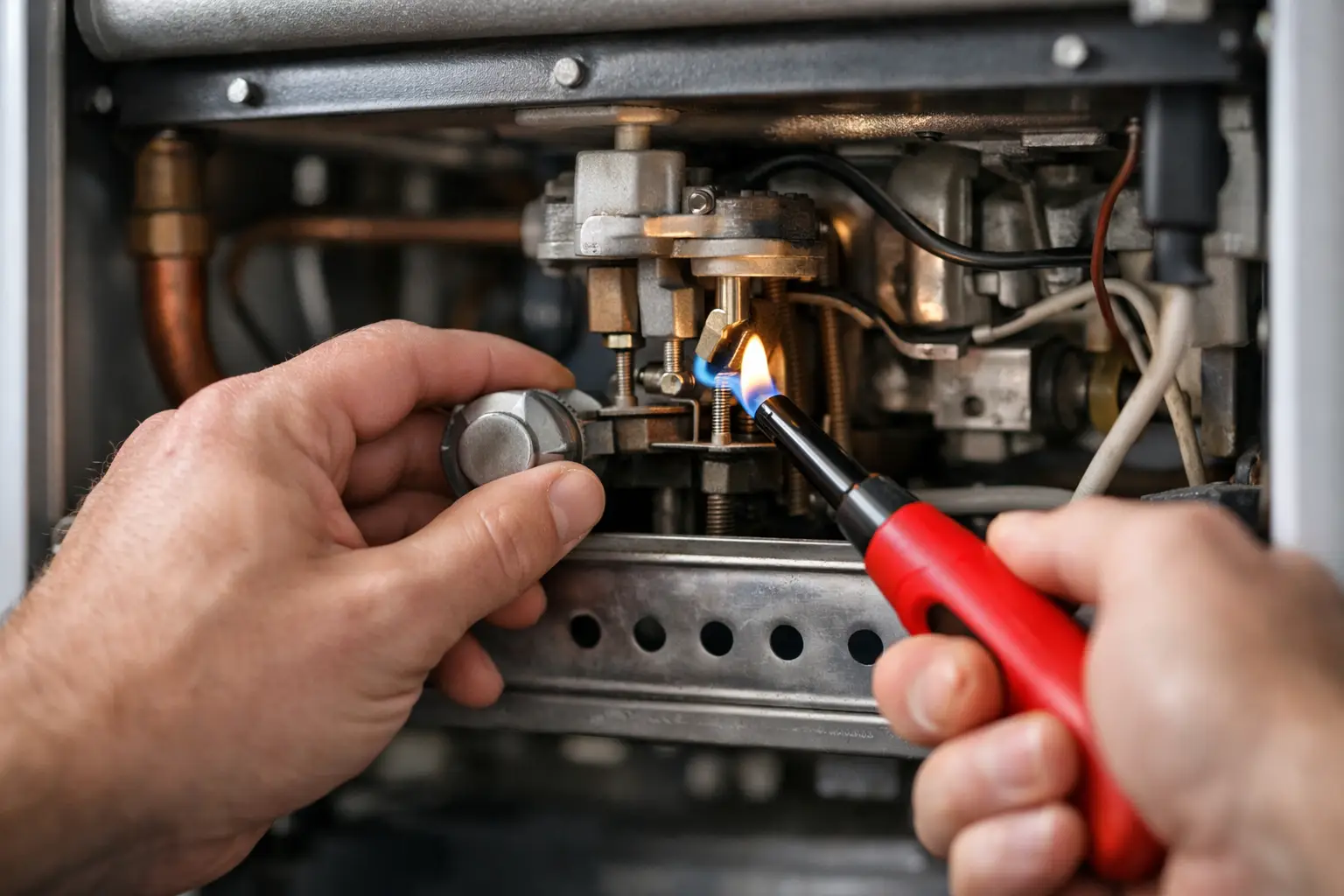
No heat and a cold house usually send people straight to the thermostat, but an older gas boiler often has another trouble spot - the pilot light. If you are searching for how to relight boiler pilot systems safely, the first thing to know is this: relighting is sometimes simple, but only when the boiler is designed for it and there are no signs of a gas or venting problem.
A pilot light is a small flame that ignites the main burner on certain older boilers. Newer systems may use electronic ignition instead, which means there is no standing pilot to relight. That distinction matters, because trying to relight a boiler that is not built for manual lighting can create confusion at best and a safety issue at worst.
Before you relight a boiler pilot
Start by identifying whether your boiler actually has a standing pilot. Many units have instructions printed on a rating plate or inside the access panel. Look for a gas control knob with settings such as Off, Pilot, and On. If you see that style of control, the boiler may be one you can relight manually.
Before doing anything else, pay attention to what the boiler is telling you. If you smell gas, hear hissing, or notice soot, scorching, or melted wiring near the burner area, stop right there. Do not try to light anything. Leave the area and arrange for professional service. The same applies if the boiler room feels unusually stuffy or you suspect a venting issue.
If everything appears normal, gather a flashlight and review the lighting instructions on the unit. Some boilers use a push-button igniter. Others require a long match or grill lighter, though many homeowners should avoid open-flame lighting unless the manufacturer specifically allows it.
How to relight boiler pilot systems step by step
The exact sequence varies by manufacturer, but the general process is usually straightforward.
1. Turn the boiler control to Off
Find the gas control knob and rotate it to Off. Then wait at least five minutes. This pause gives any residual gas time to clear out of the combustion area. Skipping that wait is one of the biggest mistakes people make.
While you are waiting, make sure the thermostat is not actively calling for heat. Turning the thermostat down can help prevent the boiler from trying to fire before the pilot is stable.
2. Set the control to Pilot
After the wait, turn the gas control knob to Pilot. On many boilers, you then press and hold the knob down or hold a separate pilot reset button. Holding that control allows gas to flow to the pilot assembly.
This is the point where the boiler's instructions matter most. Some systems use a piezo igniter button that creates a spark. Others need to be lit manually. If you do not see clear factory instructions, it is better to stop than guess.
3. Ignite the pilot flame
If your boiler has a spark igniter, keep holding the Pilot control and press the igniter button repeatedly until the pilot lights. You may need to look through a small access opening to confirm the flame is present.
If the manufacturer calls for manual lighting, use the approved lighting method listed on the unit. Keep your face and hands back from the opening. Never lean into the burner area while trying to ignite the pilot.
4. Keep holding the control
Once the pilot lights, continue holding the knob or reset button for about 30 to 60 seconds, or as directed by the manufacturer. This gives the thermocouple or flame sensor time to heat up and prove that the pilot flame is stable.
If you let go too soon, the flame may go out right away. That does not always mean something is broken. Sometimes it simply needed a little more time.
5. Turn the control to On
When the pilot stays lit after you release the button, turn the gas control from Pilot to On. Then raise the thermostat so the boiler calls for heat. You should hear or see the main burner ignite.
Let the boiler run for several minutes and pay attention. The flame should look steady, not weak or fluttering wildly. You should not smell gas or hear popping, rumbling, or other unusual burner noises.
When the pilot will not stay lit
This is where a simple relight turns into a repair issue. If the pilot lights but goes out as soon as you release the control, the thermocouple may be dirty, misaligned, or failing. If it lights and then drops out later, you could be dealing with draft problems, a clogged pilot orifice, a bad gas valve, or poor combustion air.
It also depends on how often this has happened. A one-time outage after a wind event or service interruption may not be a major concern. A pilot that goes out repeatedly is not something to keep relighting and hoping for the best. That pattern usually points to a component issue that needs proper diagnosis.
Warning signs that mean stop and call for service
Some situations are not DIY territory. If you notice any of the following, it is safest to have a licensed heating technician handle the boiler:
- A gas smell before, during, or after trying to relight
- Soot around the boiler or vent pipe
- Water leaking onto burner components or controls
- A pilot flame that is yellow instead of mostly blue
- The pilot will not light at all after following the instructions
- The pilot lights but the main burner will not come on
- Repeated pilot outages over days or weeks
In older homes across Cape Cod, especially where heating equipment has seen years of coastal moisture and seasonal wear, corrosion and venting problems are not unusual. That is one reason a boiler that seems like it just needs a quick relight may actually need a more careful inspection.
Common reasons a boiler pilot goes out
Knowing the likely cause helps you decide whether a relight is a one-time fix or just a temporary patch. A dirty pilot assembly is a common culprit. Dust and debris can restrict gas flow or affect the flame pattern. A failing thermocouple is another frequent issue, especially on older boilers.
Drafts can also blow out a pilot. That might come from a nearby door, poor venting, or changes in the mechanical room. In some cases, the gas control valve itself is the problem. If the valve is not delivering gas consistently, relighting will not solve the underlying issue.
Then there is the possibility that the boiler never had a standing pilot in the first place. Homeowners sometimes search for how to relight boiler pilot setups when the real issue is an electronic ignition fault, a tripped safety switch, or a thermostat problem. That is another reason to verify the boiler design before trying anything.
A few safety points that are easy to overlook
Do not force any knob or control. If it does not move easily, there may be a mechanical problem. Do not remove panels beyond what the manufacturer says is needed for lighting access. And do not keep cycling the gas control over and over if the pilot refuses to ignite.
It is also smart to check your carbon monoxide detectors any time you are dealing with fuel-burning equipment. A working boiler should not produce dangerous indoor carbon monoxide levels, but detector protection matters year-round, especially in heating season.
If your boiler is older and has had more than one pilot-related issue, ask whether repair still makes sense. Sometimes a service call leads to a straightforward fix. Other times, repeated ignition trouble is a sign that replacement planning should be part of the conversation, particularly if efficiency and reliability have both been slipping.
The practical answer for homeowners
For the right boiler, in the right condition, relighting a pilot can be a manageable homeowner task. The safe version is slow, methodical, and based on the manufacturer instructions - not guesswork. If the pilot relights once and the system runs normally, you may be back in business.
If anything feels off, though, trust that instinct. Heating equipment is not the place to push through uncertainty. A fast service visit is usually cheaper than the damage caused by a misdiagnosed gas, ignition, or venting problem, and it gives you a clearer answer on whether the issue was minor or the start of a bigger repair.
A boiler pilot should light cleanly, stay lit, and let the system run the way it was designed to. When it does not, the best next step is not always another match - sometimes it is getting the right set of trained eyes on the system.