If your house in Sandwich is still relying on older baseboard heat, a boiler that runs too often, or window AC units that never quite keep up, a heat pump starts to look less like a nice upgrade and more like a smart next step. Choosing the right heat pump installer Sandwich MA homeowners can rely on is just as important as choosing the equipment itself, because sizing, layout, and installation quality have a direct effect on comfort, efficiency, and long-term repair costs.
Why the installer matters as much as the equipment
A heat pump is not a one-size-fits-all product. Two homes on the same street can need very different solutions based on square footage, insulation levels, window quality, ductwork condition, and how the space is actually used day to day. A unit that is too small may struggle on the coldest winter mornings. A unit that is too large can short cycle, waste energy, and leave rooms feeling uneven.
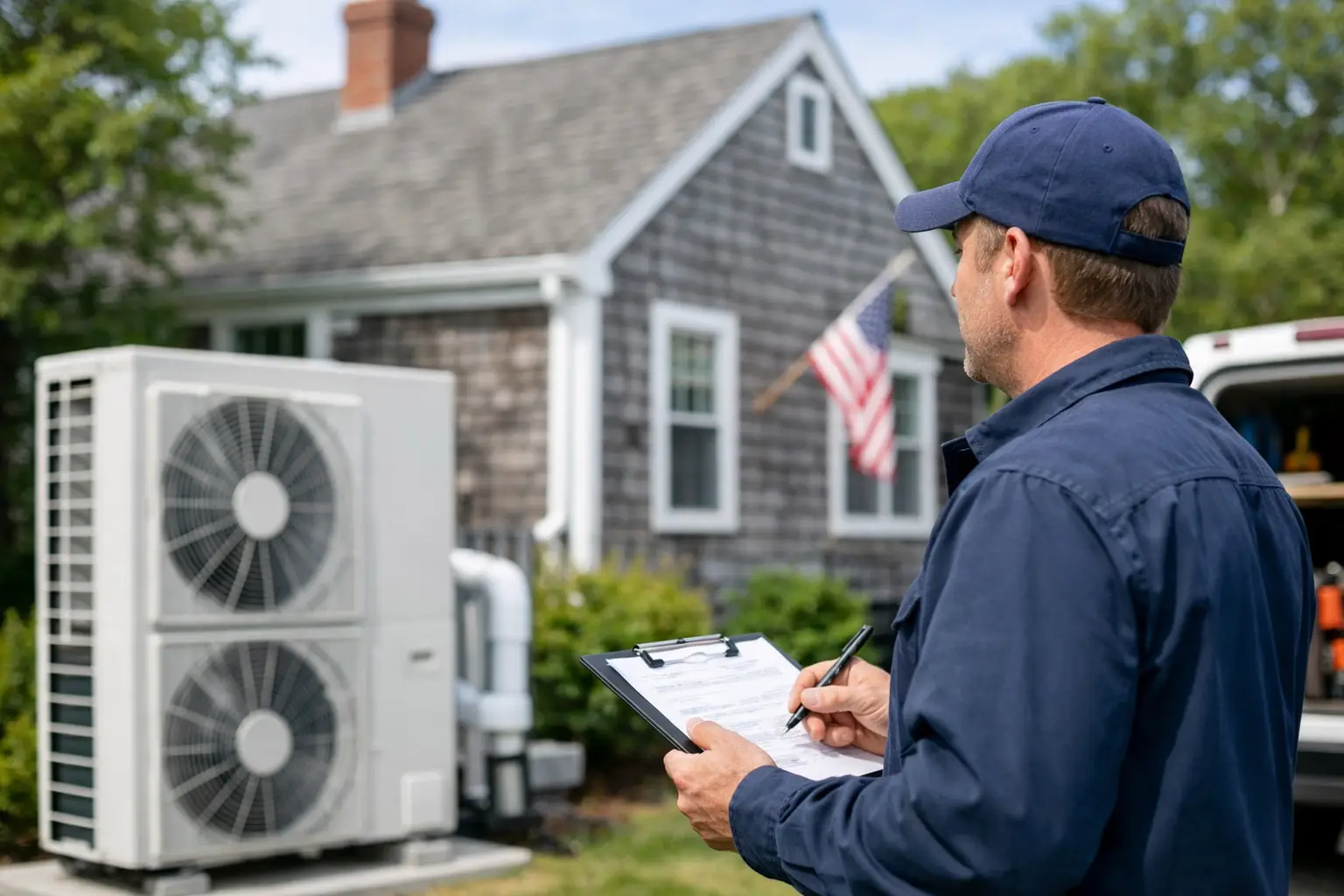
That is why installation is more than setting an outdoor unit and mounting an indoor head. A qualified contractor should evaluate the home, calculate the heating and cooling load, and explain whether a ductless mini split, a ducted system, or a hybrid setup makes the most sense. Good results come from the design stage, not just the day the equipment goes in.
What a heat pump installer in Sandwich MA should evaluate
On Cape Cod, homes vary quite a bit. Some are older properties with room-by-room heating and limited ductwork. Others are newer homes where central air already exists and the question is whether the current setup can support a heat pump conversion. That is why a careful site visit matters.
A solid installer should look at insulation and air leakage, existing heating equipment, electrical capacity, and the parts of the home that are hardest to keep comfortable. They should also ask how you live in the space. A retired couple using the whole house all day may want a different setup than a family that keeps certain rooms closed off during working hours.
This is also the point where trade-offs should be discussed clearly. Ductless systems are often efficient and flexible, but some homeowners do not love the look of wall-mounted indoor units. Ducted systems can be more hidden and familiar, but if the ductwork is undersized or leaky, the job may grow beyond a simple equipment swap. A dependable installer explains those realities up front.
Signs you may be ready for a heat pump
Sometimes the need is obvious. Your old system is failing, repair bills keep adding up, or your energy costs seem to rise without any improvement in comfort. Other times, the reason is more practical. You may want both heating and cooling in one system, better temperature control in additions or finished basements, or a way to reduce reliance on oil or propane.
Heat pumps are especially appealing when parts of the home have always been hard to manage. Maybe the upstairs gets too hot in summer, the sunroom is cold in winter, or a rental unit needs independent comfort control. In those cases, the right design can solve a long-running comfort problem rather than simply replacing old equipment with a newer version of the same limitations.
What affects heat pump installation cost
Homeowners often ask for a ballpark number first, and that is understandable. The challenge is that price depends on the type of system, the size of the home, electrical work, number of indoor zones, and whether existing ductwork can be used or needs modification.
A straightforward single-zone ductless installation is very different from a whole-home multi-zone project or a centrally ducted cold-climate heat pump system. If the panel needs upgrades, line-set runs are more complex, or condensate drainage requires extra work, costs can move as well. The lowest quote is not always the best value if it leaves out key items or glosses over design details that matter later.
A better question to ask is what is included. Does the proposal cover load calculations, equipment matching, startup testing, permit requirements, and warranty information? Does the installer talk through financing options and available rebates? That level of detail usually tells you more than the first number on the page.
Rebates, efficiency, and long-term value
For many property owners, rebates can make a major difference in timing. Programs tied to energy-efficiency improvements can help offset upfront cost, but only if the equipment and installation meet the right standards. That is another reason to work with a contractor who understands current program requirements and can guide the process correctly.
Long-term value is not just about utility savings, though those can certainly matter. It is also about comfort, reliability, and reducing the chances of emergency service in the middle of a cold snap or heat wave. A properly installed heat pump can provide steady performance with less temperature swing than many older systems.
The key phrase there is properly installed. High-efficiency equipment will not perform the way it should if refrigerant charge, airflow, controls, or sizing are off. A good installer protects your investment from day one.
Questions to ask a heat pump installer Sandwich MA homeowners are considering
Before moving forward, ask how the system will be sized and why that recommendation fits your house. Ask what happens on the coldest winter days and whether the design includes backup heat, partial backup, or none at all. The answer may depend on the home and your comfort expectations.
You should also ask who will perform the work, whether technicians are licensed and certified, and what warranty coverage is included for both parts and labor. It is reasonable to ask about service after installation too. If something needs adjustment, you want to know the company can respond quickly.
For many customers, communication matters just as much as credentials. If the estimate is vague, the timeline is unclear, or your questions get brushed aside before the job starts, that usually does not improve once the project is underway.
Heat pumps for homes, rentals, and commercial spaces
Not every installation is for an owner-occupied single-family home. In Sandwich, property managers and small commercial clients often need systems that are efficient, durable, and simple to manage across multiple spaces. A heat pump can be a strong fit in offices, retail areas, condos, and rental properties, but the design priorities may shift.
For rentals, durability and straightforward controls may matter more than advanced features. For commercial spaces, zoning and occupancy schedules can become more important. In either case, the installer should understand the building use, not just the equipment catalog.
That broader view is where a full-service plumbing, heating, and HVAC company can help. If a project also involves drainage, condensate routing, water heater coordination, or electrical planning with other system upgrades, it helps to work with a team used to handling the whole picture instead of only one piece of it.
Why local experience matters on Cape Cod
Homes near the water, seasonal properties, and older housing stock all create their own installation challenges. Salt air exposure, tight mechanical spaces, and shoulder-season occupancy patterns can affect equipment placement and service planning. A contractor who works regularly in this region is more likely to catch those details before they become expensive problems.
Local experience also matters when speed counts. If your existing heating system is near the end, or your cooling situation is no longer workable, you need a company that can respond, explain options clearly, and keep the process moving. That is one reason many homeowners and property managers prefer working with established local teams such as Durfee Plumbing & Heating LLC when planning larger comfort upgrades.
Choosing with confidence
The best heat pump installation is not always the biggest system, the cheapest quote, or the fastest sales pitch. It is the one built around your home, your comfort needs, and a clear plan for performance over time. When you are comparing options, look for straight answers, careful sizing, licensed workmanship, warranty support, and a contractor who treats the install as a long-term solution rather than a quick equipment sale.
If you are considering a heat pump, take the time to ask better questions before the work begins. A good installer will welcome them, and your home will feel the difference long after the job is done.