That higher water bill might not be a billing error. If your usage suddenly jumps, paint starts bubbling, or a room smells musty for no clear reason, you may need to spot hidden water leak signs before a small plumbing issue turns into structural damage, mold growth, or a major repair.
Hidden leaks are expensive partly because they stay quiet. A burst pipe gets attention right away. A slow leak behind a wall, under a floor, or above a ceiling can keep damaging drywall, framing, insulation, and finishes for weeks or months before anyone sees standing water. For homeowners and property managers, early detection is what keeps a repair manageable.
The most common hidden water leak signs
Some leak warnings are obvious once you know what to look for. Others are easy to brush off because they seem unrelated. The pattern matters more than any one symptom.
A rising water bill is often the first clue. If water use has not changed but the monthly charge has, water may be escaping somewhere in the system. This is especially worth checking if you have not filled a pool, watered landscaping more than usual, or had guests staying over.
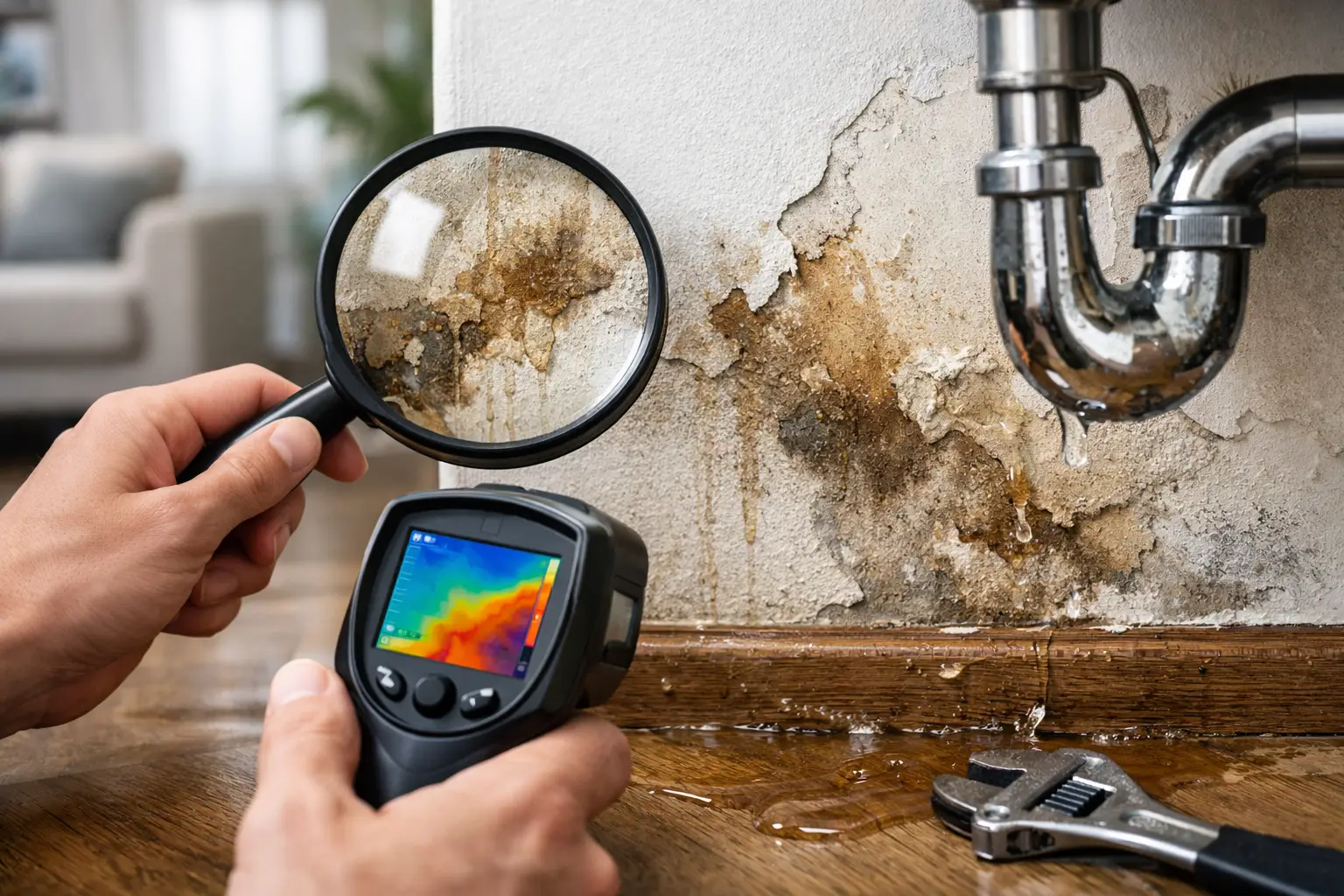
Stains on ceilings or walls are another common sign. Yellow, brown, or copper-colored marks usually mean water has traveled from another area and soaked through building materials. The actual leak may be several feet away from the stain, especially in ceilings where water can follow framing before it shows itself.
Peeling paint, bubbling drywall, and warped trim also point to moisture trapped where it should not be. In bathrooms, kitchens, laundry rooms, and utility spaces, these changes often show up before a drip becomes visible.
Then there is odor. A persistent musty smell usually means moisture has been sitting long enough to affect drywall, wood, insulation, or flooring. If a room smells damp even when surfaces look dry, that is reason to take a closer look.
Where hidden leaks usually happen
Most concealed leaks show up in predictable places. Supply lines behind walls are a major source, especially near kitchens, bathrooms, and hose bibs. Drain lines can also leak slowly at joints, creating long-term moisture problems without causing a sudden flood.
Water heaters, shutoff valves, refrigerator lines, dishwasher connections, washing machine hoses, and plumbing under sinks are all common trouble spots. In older homes, aging pipes and corrosion increase the odds. In seasonal or coastal areas like Cape Cod, winterization issues, freeze-thaw stress, and salt-air wear can also contribute over time.
Slab leaks are harder to catch because the piping sits below the floor. In those cases, homeowners may notice warm spots on the floor, unexplained moisture, cracked flooring, or the sound of running water when no fixtures are in use.
Roof leaks and HVAC-related moisture can look similar at first, which is why location and timing matter. A ceiling stain after heavy rain may point upward. A wall stain near plumbing fixtures may point to a water line or drain issue instead.
How to spot hidden water leak signs before damage spreads
Start with your water meter. Turn off faucets, appliances, ice makers, irrigation, and anything else that uses water. Then check the meter. If it continues moving while everything is off, that strongly suggests a leak somewhere in the system.
Next, compare your recent water bills. Look for a clear increase over previous months, not just a small fluctuation. A steady upward trend often signals a leak that is getting worse.
Walk through the property slowly and pay attention to subtle changes. Press lightly on suspicious drywall. If it feels soft, swollen, or crumbly, moisture may be trapped inside. Check for baseboards pulling away from the wall, flooring that feels spongy, or tile grout that is suddenly cracking.
Listen, too. If you hear a faint hissing, dripping, or running-water sound inside a wall when no fixtures are on, do not ignore it. Quiet leaks often announce themselves before they become visible.
If you suspect a leak under a sink or behind an appliance, use a flashlight and inspect the surrounding cabinet or floor. Look for darkened wood, rust on fasteners, mineral buildup, or even a slight sheen of moisture. Small leaks leave evidence even when they are not actively dripping during your inspection.
Signs homeowners often miss
Some of the most serious leaks start with symptoms people do not connect to plumbing.
One example is a room that suddenly feels more humid than the rest of the house. Another is recurring mold on a wall that has already been cleaned. Flooring can also tell the story. Hardwood may cup, laminate may lift at the seams, and vinyl can loosen when moisture gets underneath.
You might also see nail pops, hairline cracks in drywall, or discoloration around window and door trim. These are not always plumbing-related, but when they appear near bathrooms, kitchens, laundry areas, or mechanical rooms, they deserve a closer look.
A drop in water pressure can also be part of the picture. It does not automatically mean there is a hidden leak, since clogs, valve problems, and municipal supply issues can cause similar symptoms. But if lower pressure shows up alongside staining, odors, or higher bills, the odds of a leak go up.
When it could be something else
Not every stain or smell means a water line is leaking. Condensation from HVAC equipment, poor bathroom ventilation, roof failures, window leaks, and foundation moisture can all create similar warning signs.
That is why diagnosis matters. The fix for a plumbing leak is different from the fix for exterior water intrusion or indoor humidity problems. Opening a wall without confirming the source can waste time and money. On the other hand, waiting too long can let the damage spread.
If the issue seems isolated to one plumbing area, like under a bathroom floor or behind a kitchen wall, plumbing is the likely first place to investigate. If the staining gets worse after storms, the source may be outside the plumbing system. Sometimes both problems exist at once, especially in older properties.
Why fast action matters
A slow leak can damage more than drywall. Water can rot framing, weaken subfloors, ruin insulation, stain finishes, and create conditions where mold spreads quickly. For commercial spaces and rental properties, even a small leak can interrupt operations, affect tenants, and lead to more expensive restoration work.
There is also the issue of repair scope. A leak caught early may need a straightforward pipe repair and minor patching. A leak found months later can require demolition, drying equipment, mold remediation, flooring replacement, and reconstruction. The plumbing repair is often the least expensive part once water damage spreads.
That is why many property owners call as soon as they notice the warning signs instead of waiting for confirmation. If you are hearing water where there should be silence, seeing stains grow, or watching your bill climb for no reason, it is usually better to investigate now.
What a professional inspection can reveal
A professional leak evaluation is useful when the signs are there but the source is not. Licensed plumbers can narrow down whether the issue comes from a supply line, drain line, fixture connection, water heater, or another part of the system. In many cases, the goal is to locate the problem with as little disruption as possible.
That matters in finished basements, tiled bathrooms, and occupied commercial spaces where unnecessary wall or floor opening creates extra cost. Experienced technicians also know how to separate plumbing leaks from lookalike moisture issues, which helps avoid chasing the wrong repair.
For homes and buildings in coastal Massachusetts communities, this is especially helpful when multiple factors may be involved, including aging piping, seasonal occupancy changes, or freeze-related stress from winter conditions.
What you can do right now
If you suspect a hidden leak, check the meter, inspect the most likely plumbing areas, and document what you find. Take photos of stains, warped materials, or damp spots and note whether they are changing. If water is actively spreading, shut off the local valve if you can identify it. If not, shut off the main water supply and have the system checked.
Do not paint over stains or ignore odors just to keep things looking normal. Cosmetic fixes only delay the real repair. And if the leak may be near electrical wiring, outlets, or fixtures, stay out of the area until it is safe to inspect.
Durfee Plumbing & Heating helps homeowners and property managers respond quickly when plumbing problems are hard to pinpoint. When the signs are subtle but the risk is real, the smartest move is to trust what the house is telling you and act before hidden water becomes visible damage.