
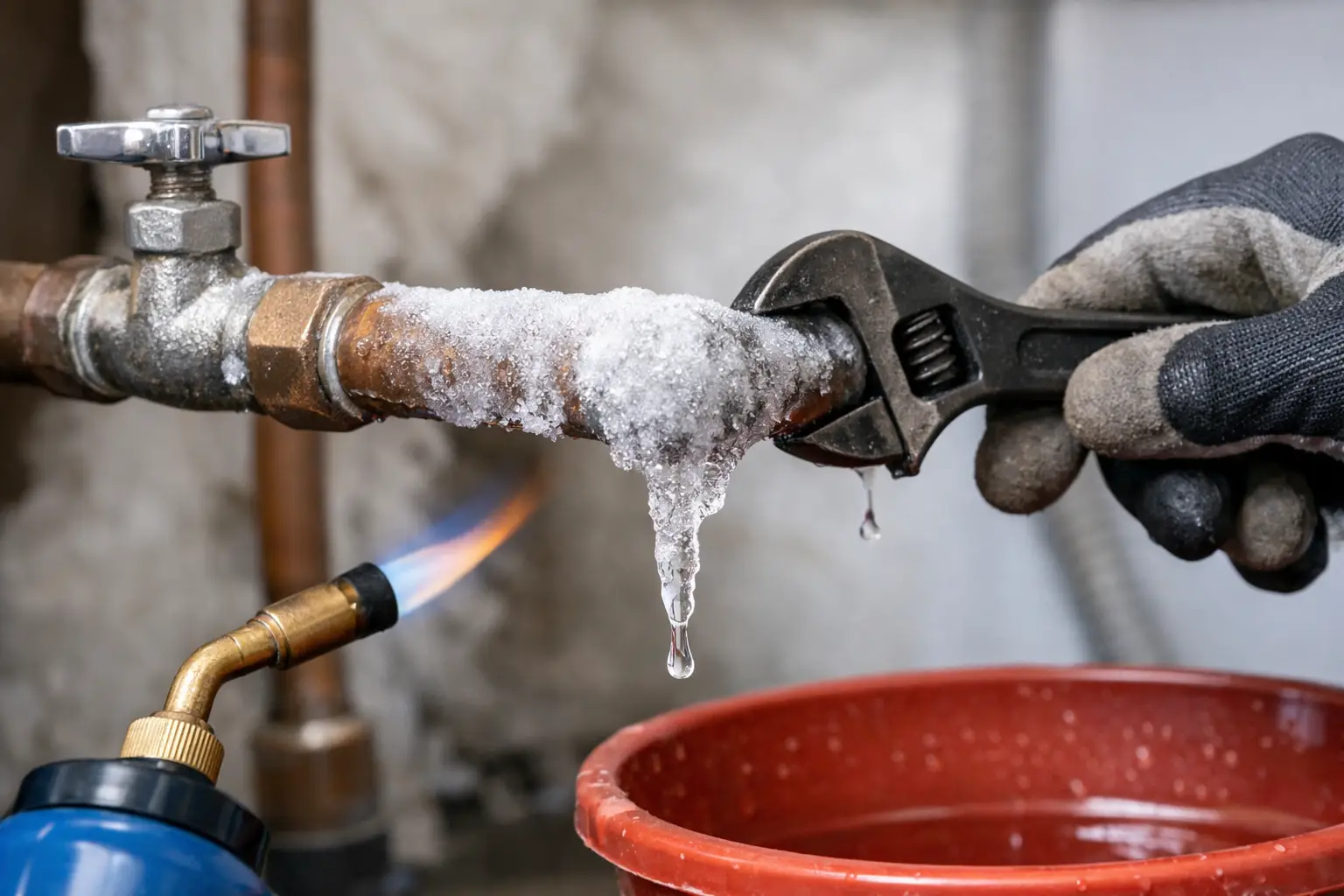
A frozen pipe often announces itself at the worst possible time: the faucet slows to a trickle, the heat has been working overtime, and temperatures outside have stayed below freezing for days. If you need to fix a frozen pipe emergency, the first priority is preventing a burst pipe and the water damage that can follow. Move carefully, act early, and know when the situation calls for a licensed plumber.
First, determine whether the pipe has burst
A pipe can freeze without breaking, but water expands as it turns to ice. That expansion puts significant pressure on the pipe walls, fittings, valves, and connections. A frozen pipe may be repairable with controlled warming. A burst pipe is an active water emergency.
Look for water under sinks, behind appliances, around baseboards, in a crawl space, or on ceilings below bathrooms and kitchens. Watch for bulging drywall, a hissing sound, damp insulation, or a sudden drop in water pressure. If you see water leaking, shut off your home’s main water supply immediately.
Every property owner should know where the main shutoff valve is before winter arrives. It is often near the water meter, where the main line enters the building, or in a utility area. Turn the valve clockwise to stop the water supply. Then open one or two faucets to relieve pressure in the plumbing system.
If water is near electrical outlets, a breaker panel, or appliances, do not step into pooled water. Shut off power to the affected area only if you can do so safely from a dry location. Otherwise, leave the area and contact emergency services and a qualified plumbing professional.
How to fix a frozen pipe emergency before it bursts
If there is no visible leak, open the faucet served by the suspected frozen pipe. Leave both the hot and cold sides open if the affected fixture has separate handles. As the ice begins to melt, moving water can help clear the line, and the open faucet gives pressure somewhere to go.
Next, locate the likely frozen section. Common trouble spots include pipes along exterior walls, under kitchen and bathroom sinks, in unheated basements, crawl spaces, garages, attics, and areas near poorly sealed doors or foundation openings. On Cape Cod, strong winds and prolonged cold can make exposed piping vulnerable even when the rest of the home feels comfortable.
Apply gentle, steady heat to the section of pipe closest to the faucet, then work back toward the colder area. A hair dryer on a warm setting, an electric heating pad, or towels soaked in hot water can provide controlled heat. Keep the heat moving rather than concentrating it on one small section of pipe.
Never use an open flame, propane torch, kerosene heater, charcoal grill, or any device that creates direct flame. These methods can ignite nearby materials, damage plumbing, and create carbon monoxide risks. Do not use high-powered heat equipment on plastic piping, either. PVC, CPVC, PEX, and older pipe materials can be damaged by excessive heat.
A portable space heater may help warm the room around accessible pipes, but it should never be left unattended. Keep it on a stable surface, away from water, curtains, insulation, and stored items. The goal is to gently raise the temperature around the pipe, not to overheat the space.
Stop if the pipe is inaccessible or will not thaw
Not every frozen pipe is safe to thaw on your own. If the pipe is inside a wall, ceiling, crawl space, or other concealed area, trying to reach it can cause more damage. You may also be dealing with a freeze farther along the line than expected.
Call for professional help if you cannot identify the frozen section, water does not begin to flow after careful warming, the pipe appears swollen or cracked, or you find any leak. A licensed plumber can safely locate the problem, thaw the line with proper equipment, repair damaged piping, and help prevent another failure.
What to do while waiting for a plumber
Once the water supply is shut off, focus on limiting damage. Remove towels, rugs, boxes, and valuables from wet areas. If water has reached flooring or drywall, begin drying the area with fans only after electrical hazards have been addressed. Take photos of visible damage for insurance documentation before making major cleanup changes.
Keep the heat on throughout the building. Even if one pipe has frozen, others may be at risk. Open cabinet doors under sinks along exterior walls so warmer indoor air can circulate around plumbing. Close garage doors, crawl-space access panels, and other openings that may be allowing cold air inside.
For commercial properties, notify the appropriate property manager, maintenance contact, or tenant representative promptly. Frozen pipes can affect restrooms, kitchens, sprinkler-adjacent plumbing, tenant spaces, and equipment rooms. Fast communication helps prevent a small plumbing issue from becoming a business interruption.
Why pipes freeze even when the thermostat is set correctly
A working heating system does not always mean every pipe is protected. Pipes freeze where heat cannot reach them consistently. A thermostat may read 68 degrees in the living room while an exterior wall cavity, garage ceiling, or crawl space remains near freezing.
Drafts are a major factor. Gaps around foundation penetrations, dryer vents, hose bibs, windows, and doors can direct cold air toward vulnerable plumbing. Inadequate insulation, disconnected ductwork, blocked heating registers, and unheated additions can create the same problem.
Vacant homes face added risk because indoor temperatures are often set too low, faucets are not used regularly, and a developing issue may go unnoticed. If you own a seasonal Cape Cod property, proper plumbing winterization is often a smarter choice than relying on a low thermostat setting alone.
Prevent the next frozen-pipe emergency
The right prevention plan depends on the building, pipe location, insulation quality, and whether the property is occupied year-round. For many homes, keeping indoor temperatures consistent, sealing drafts, and insulating exposed plumbing are the most effective starting points.
Before the next cold spell, inspect pipes in unheated or lightly heated spaces. Add pipe insulation where practical, especially on water lines near exterior walls and in basements, crawl spaces, and garages. Insulation slows heat loss, but it does not create heat, so it works best alongside dependable heating and proper air sealing.
Disconnect garden hoses before freezing weather arrives. Shut off and drain exterior hose connections when the plumbing layout allows it. A hose left attached can trap water against an outdoor faucet, increasing the chance that the faucet or supply pipe freezes and splits inside the wall.
During severe cold, let vulnerable faucets run at a small trickle if necessary. This is not a replacement for repairs or insulation, and it can increase water use, but it may help protect pipes during a short period of extreme weather. Open sink cabinets overnight when plumbing sits against exterior walls.
For second homes and vacant buildings, arrange regular checks during cold weather. Consider professional winterization, especially if the building will be unoccupied for an extended period. Draining and protecting the system correctly is far less costly than repairing burst pipes, damaged ceilings, soaked insulation, and flooring.
When emergency plumbing service is the safest choice
Call an emergency plumber right away when a pipe has burst, water is actively leaking, a frozen line cannot be safely accessed, or you suspect damage behind a wall or ceiling. The longer water remains in building materials, the greater the chance of mold growth, structural damage, and expensive restoration work.
A qualified emergency technician can do more than thaw a pipe. They can isolate the affected section, replace failed fittings or pipe, inspect nearby lines, and identify the conditions that caused the freeze. For properties with aging plumbing, recurring freezes, or uneven heating, the lasting solution may involve repiping a vulnerable section, improving insulation, sealing air leaks, or addressing a heating issue.
Durfee Plumbing & Heating provides 24/7 emergency plumbing support for homeowners and businesses across Cape Cod. Fully stocked service vehicles and licensed technicians help reduce delays when a frozen pipe threatens your property.
When temperatures drop, do not wait for a slow faucet to become a flood. Shut off water if needed, use only safe thawing methods, keep the building warm, and get qualified help before hidden damage has time to spread.



