When your boiler starts needing frequent repairs in the middle of a cold stretch, replacement stops feeling like a future project and starts feeling urgent. This guide to replacing old boiler systems is built for homeowners and property managers who need clear answers on when to replace, what to choose, and how to avoid paying for the wrong fix.
An aging boiler does not always fail all at once. More often, it gets louder, less efficient, and less reliable year by year. You may notice uneven heat, higher utility bills, slow recovery after the thermostat calls for heat, or water around the unit. In older homes across Cape Cod, those warning signs matter because heating systems often work hard through damp winter conditions, and waiting too long can leave you scrambling during a breakdown.
When replacing an old boiler makes more sense than repairing it
A repair is often the right call if the problem is isolated and the boiler still has useful life left. A failed circulator pump, pressure issue, or control problem can usually be handled without replacing the full system. But once the unit is older, the math changes.
If your boiler is around 15 to 20 years old, replacement deserves serious consideration. That does not mean every 15-year-old unit needs to go. Some systems last longer when they have been maintained well. Still, as components wear out, repair costs tend to stack up, and efficiency losses become harder to ignore.
Replacement is usually the better long-term move when the heat exchanger is compromised, when parts are obsolete, or when you are paying for repeated service calls every winter. It also makes sense when fuel bills keep climbing even though your usage has not changed. A newer unit may reduce operating costs, especially if your current boiler is significantly less efficient than modern options.
Guide to replacing old boiler systems without surprises
The biggest mistake property owners make is treating boiler replacement like a one-size-fits-all swap. It is not just about pulling out the old unit and sliding in a new one. The new boiler has to match the building, the heat distribution system, the fuel source, and your goals for comfort and efficiency.
A proper replacement starts with evaluating the home or building itself. Square footage matters, but it is not enough on its own. Insulation levels, window condition, pipe layout, number of heating zones, and hot water demand all affect sizing. If a contractor simply matches the old boiler’s output without checking whether the existing unit was oversized, you could end up with a system that short cycles and wastes fuel.
That is why professional load calculations matter. An undersized boiler can struggle to keep up in colder weather. An oversized boiler can wear out faster and cost more to run. The right size lands in the middle - enough capacity for real heating demand, without unnecessary excess.
Choosing the right boiler type
Most property owners start with fuel type because that affects both cost and practicality. In many cases, the choice comes down to natural gas, propane, or oil, depending on what the property already uses and what utility access is available.
If you already have a gas boiler and the gas service is reliable, staying with gas is often the simplest path. Modern gas boilers can offer strong efficiency and lower emissions than older equipment. Propane can be a good fit where natural gas is not available, though fuel pricing can vary. Oil still heats many older homes in Massachusetts, and replacing an aging oil boiler with a newer oil model may make sense if conversion costs are too high. In other cases, switching fuels during replacement creates better long-term savings.
Then there is the question of conventional versus condensing boilers. A condensing boiler is typically more efficient, especially in systems designed to return lower-temperature water. That can translate into meaningful energy savings over time. But higher efficiency equipment may cost more upfront, and not every older heating setup is ideal for maximum condensing performance. This is one of those areas where the best answer depends on the system already in place.
Should you replace the boiler and water heater together?
Sometimes yes, sometimes no. If your current boiler also supports an indirect water heater, or if both pieces of equipment are aging out around the same time, replacing them together can save labor and simplify system design. It may also improve efficiency and free up space.
On the other hand, if the water heater is newer and performing well, there may be no reason to replace it just because the boiler is being upgraded. The goal should be a system that works well together, not replacement for its own sake.
What boiler replacement costs really include
Boiler pricing is not just the equipment cost. Homeowners are often surprised by how much the surrounding work affects the final number. Installation can include removing the old unit, updating venting, replacing near-boiler piping, adding controls, adjusting zones, upgrading pumps, and bringing the system up to current code.
If the existing setup is outdated or poorly configured, more corrective work may be needed. That can raise the initial cost, but it often prevents repeat problems after installation. A low quote is not always the better value if it leaves old piping problems, weak controls, or venting issues untouched.
Financing can make a major difference for larger projects, especially when the existing system is already failing. For many households, spreading the cost over time is more realistic than waiting and risking an emergency breakdown. Rebates can also help, particularly when high-efficiency equipment qualifies through state or utility programs.
Timing matters more than most people think
The best time to replace an old boiler is before it becomes an emergency. That gives you time to compare equipment, ask questions, and plan around your schedule instead of the weather forcing the decision. It also reduces the chance of paying for a repair on a unit that is about to fail again.
That said, not every replacement can be planned months ahead. If your boiler quits during heating season, fast response matters. Working with a licensed heating contractor that offers prompt service, stocked trucks, and clear next steps can keep disruption to a minimum. In a place like Cape Cod, where winter coastal conditions can make heating reliability non-negotiable, waiting for a total failure is a risky strategy.
What to expect during installation
Most boiler replacements are straightforward, but they are not instant. The timeline depends on the condition of the existing system, whether fuel or venting changes are involved, and how much near-boiler piping needs to be rebuilt.
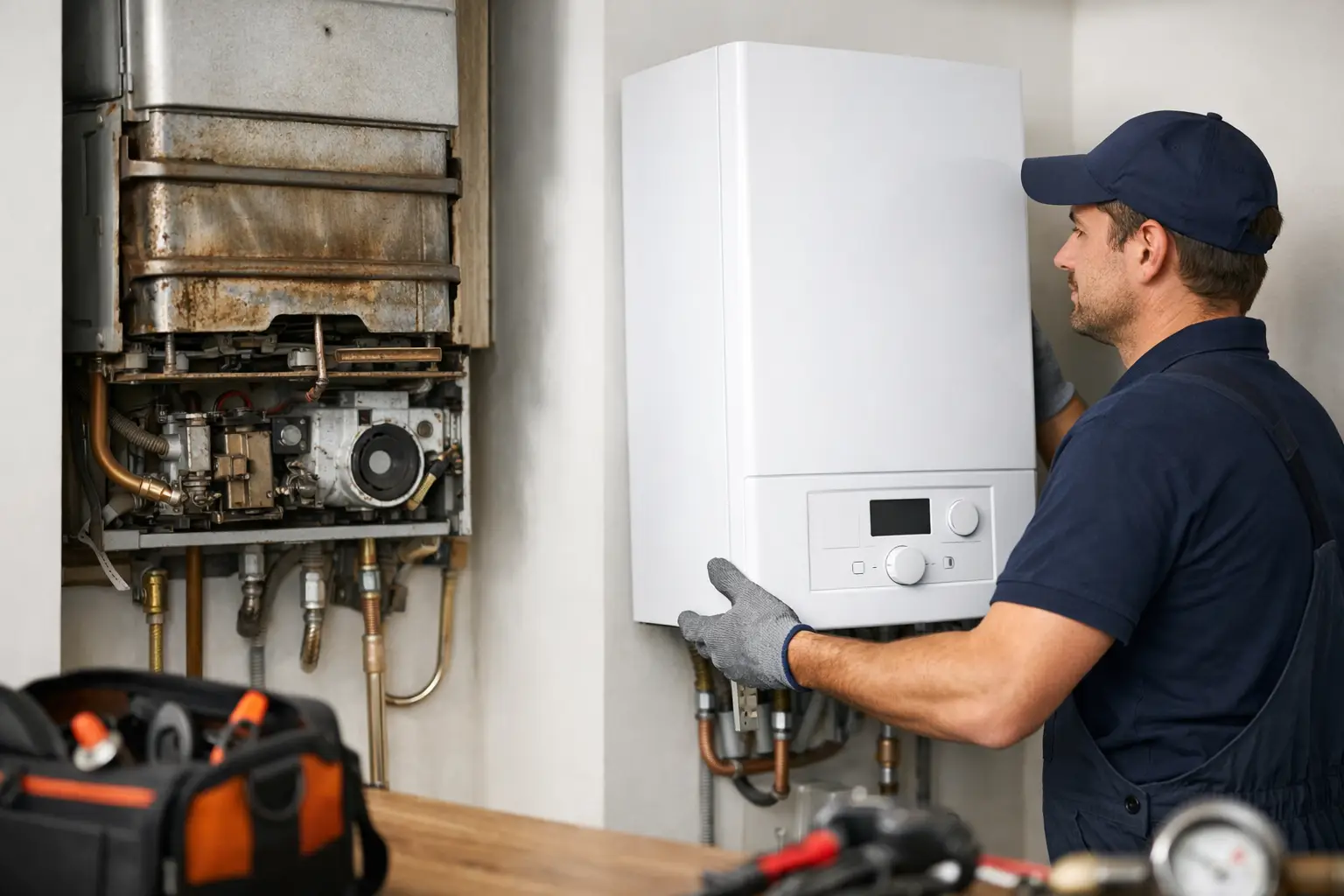
A standard replacement may take a day or two. More complex projects can take longer. During the job, the old boiler is removed, the new unit is set and connected, system components are updated, and the installer tests controls, pressure, circulation, and safe operation. A good installation should include cleanup, a walk-through of the new system, and guidance on maintenance.
This is also the right time to ask about thermostat compatibility, zoning improvements, and whether any older components should be addressed while the system is already being worked on. Small upgrades made during installation can be more cost-effective than returning to do them later.
Questions worth asking before you approve the job
You do not need to know how to pipe a boiler to make a smart decision. You do need clear answers. Ask how the system is being sized, what efficiency rating the boiler offers, what parts of the existing setup will stay in place, and what warranty coverage applies to both equipment and labor.
It is also worth asking whether permits are required and who handles them. If rebates may apply, ask whether the installer can help identify qualifying equipment. If the proposal includes options, have the contractor explain the trade-offs plainly. The cheapest option may have a lower upfront cost, while a higher-efficiency model may offer better value over years of use. Neither is automatically right for every property.
Don’t ignore the system around the boiler
A new boiler can only do so much if the rest of the heating system is neglected. Air in the lines, failing zone valves, old circulators, dirty components, and poor thermostat performance can all affect comfort. That is why a replacement should look at the full system, not just the box making the heat.
For some homes, this is also a chance to improve overall efficiency with better controls or updated distribution components. For others, the best move is simply a dependable boiler replacement with minimal changes. Again, it depends on condition, budget, and how long you plan to keep the property.
A boiler replacement is a big decision, but it does not have to be a confusing one. If your current system is aging, unreliable, or costing too much to keep alive, the smartest next step is to get a clear evaluation before the next cold snap makes the choice for you.