A Cape Cod summer can make an aging AC show its limits fast. If you are searching for replacement air conditioner service in Cotuit, MA, the goal is not simply to get cool air back. It is to choose a system that can handle humid weather, fit your home correctly, and provide dependable comfort without sending energy bills through the roof.
A new air conditioner is a significant home investment, so replacement should be based on more than a single repair estimate. System age, repair history, efficiency, indoor comfort, and the condition of existing equipment all matter. A qualified HVAC technician can help you weigh those details and avoid paying for a system that is too large, too small, or poorly matched to your home.
When Air Conditioner Replacement Makes More Sense Than Repair
Many AC problems can be repaired, including failed capacitors, worn contactors, refrigerant leaks, electrical issues, and clogged condensate drains. When the system is otherwise in good condition, a targeted repair may be the most practical choice.
Replacement becomes the stronger long-term option when repairs are frequent, expensive, or unlikely to solve the underlying problem. Most central air conditioners have an expected service life of roughly 12 to 15 years, although maintenance, usage, salt air exposure, and installation quality can shorten or extend that timeline. In coastal communities, outdoor equipment can face extra corrosion from salty, humid air.
Consider requesting an air conditioner replacement evaluation if your system has several of these warning signs:
- It is more than 12 years old and needs a major repair.
- Cooling is uneven, with hot bedrooms or sticky rooms that never feel comfortable.
- Your electric bills have climbed even though your household habits have not changed.
- The unit runs for long periods, cycles on and off repeatedly, or struggles on hot afternoons.
- It uses an older refrigerant that is increasingly difficult or costly to service.
A repair can still be sensible for a newer unit with a clear, isolated issue. But putting substantial money into an older system that has already become unreliable can turn into a series of emergency calls during the hottest part of the season.
Why Correct Sizing Matters in Cotuit Homes
Bigger is not automatically better when replacing an air conditioner. An oversized system may cool the house quickly but shut off before it has removed enough humidity. The result can be a cool but clammy home, uneven temperatures, more cycling, and unnecessary wear on equipment.
An undersized system has the opposite problem. It may run nearly nonstop during warm weather, use more electricity, and still fail to keep the house comfortable. Proper sizing starts with more than square footage. A contractor should consider insulation levels, window exposure, ceiling height, air leakage, household occupancy, existing ductwork, and the layout of the home.
This is especially relevant in older Cape Cod properties, where additions, converted attics, sunrooms, and renovations can make cooling needs very different from room to room. A load calculation helps determine the right capacity rather than relying on the size of the system being replaced.
Central Air, Heat Pumps, and Ductless Mini Splits
The best replacement option depends on the house and how you use it. If your existing ducts are in good condition and deliver balanced airflow, a central air system may be a straightforward replacement. Updating the indoor and outdoor equipment together helps ensure the components are properly matched for performance and efficiency.
For many homeowners, a heat pump is worth considering during an AC replacement project. It provides efficient cooling in summer and can also provide heating in milder weather. Depending on the equipment and installation, qualifying homeowners may be able to use available Mass Save incentives to reduce upfront costs.
Ductless mini splits can be a practical answer for homes without ductwork, additions that are difficult to cool, or areas with persistent temperature issues. Each indoor unit can be controlled independently, allowing you to cool occupied rooms without conditioning the entire home. The trade-off is that a whole-home ductless layout may require multiple indoor units, and placement should be planned carefully for comfort and appearance.
What a Professional AC Replacement Should Include
A reliable installation is more than swapping one outdoor unit for another. The quality of the work directly affects comfort, system life, efficiency, and warranty protection.
The process should begin with an in-home assessment. Your technician should review your current system, discuss comfort concerns, inspect ductwork when applicable, and explain equipment options in plain language. If the existing ducts have leaks, poor insulation, restricted airflow, or heavy buildup, addressing those issues can be just as important as selecting a new condenser.
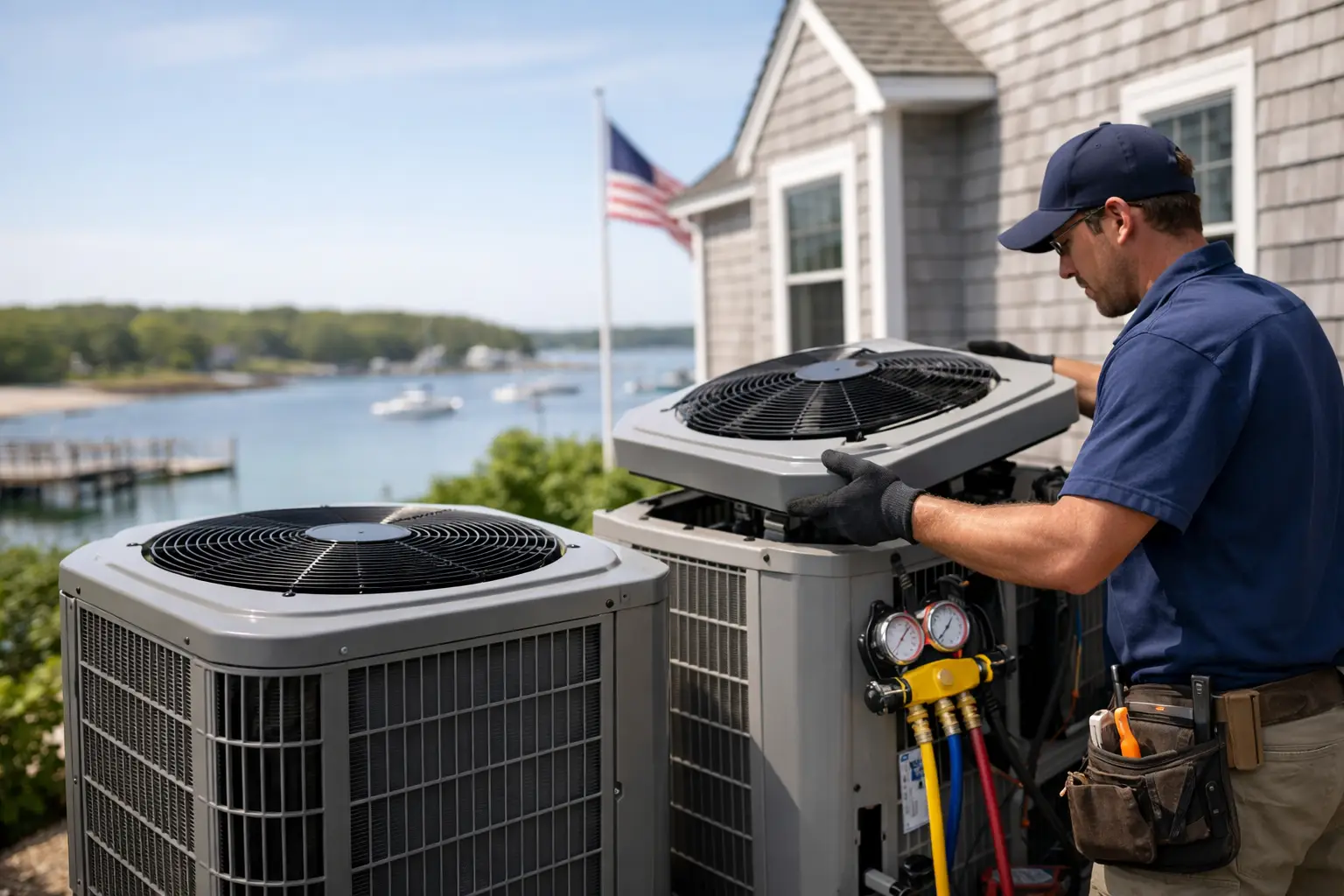
During installation, the technician should verify electrical requirements, refrigerant line condition, drainage, air handler or furnace compatibility, and thermostat controls. New equipment must be installed according to manufacturer specifications, with proper refrigerant charging and airflow setup. Those details are not shortcuts to overlook. Incorrect airflow or refrigerant levels can reduce efficiency, limit dehumidification, and shorten the life of a new system.
Before the job is complete, the system should be tested in operation. You should know how to use the thermostat, change filters, recognize normal operating sounds, and understand the recommended maintenance schedule. Keep your warranty information in a safe place, and ask what parts and labor coverage applies to the installation.
Questions to Ask Before Replacing Your Air Conditioner
A clear proposal helps you compare options without guessing what is included. Ask whether the quoted equipment is properly sized through a load calculation, whether ductwork repairs are recommended, and whether the indoor and outdoor components are a matched system.
It is also reasonable to ask about efficiency ratings, expected maintenance needs, warranty terms, permit requirements, and the timeline for installation. If financing is important, review the available payment options before the work begins so the project fits your budget.
Price matters, but the lowest quote is not always the lowest long-term cost. A proposal that leaves out electrical upgrades, duct corrections, permits, startup testing, or warranty support can create expensive surprises later. Licensed, certified technicians and a clear written scope protect the investment you are making in your home.
Prepare Your Home for Installation Day
Most replacement projects can be completed efficiently when the work area is accessible. Clear a path to the indoor equipment, move belongings away from the outdoor unit, and make sure pets are secured. If the air handler is in an attic, basement, crawlspace, or closet, remove stored items that could limit safe access.
You may be without cooling for part of the day, so plan accordingly during a heat wave. The installation team may need access to your electrical panel and several areas of the home while testing airflow and thermostat operation. A professional crew should keep you informed about the schedule, protect the work area, and remove old equipment when the job is complete.
Get Dependable Cooling Before the Next Heat Wave
Waiting until a system fails completely can leave you making a rushed decision when availability is limited and the house is already uncomfortable. Planning ahead gives you time to compare equipment, consider energy-saving upgrades, and schedule the installation around your needs.
For homeowners in Cotuit and across Cape Cod, Durfee Plumbing & Heating provides licensed HVAC service with responsive scheduling, fully stocked trucks, and a one-year parts and labor warranty. Whether your AC is nearing the end of its life or has stopped cooling altogether, a professional evaluation can give you a clear path forward and help keep your home comfortable when summer humidity arrives.