For water heater replacement in Osterville, MA, the right time to act is usually before a failing unit turns into a wet basement, a cold shower, or a disruption at your property. A water heater often gives warning signs, but Cape Cod homeowners and property managers should not assume they have months to decide. Once a tank begins leaking, replacement is typically the only practical solution.
The best new water heater is not automatically the largest or most expensive model. It needs to match the building’s hot-water demand, available fuel source, venting setup, electrical capacity, and budget. A licensed plumbing professional can assess those details, explain the trade-offs clearly, and install a system that is built for dependable daily use.
When Water Heater Replacement Makes More Sense Than Repair
A standard storage-tank water heater commonly lasts around 8 to 12 years, though water quality, maintenance history, installation conditions, and household demand all affect its lifespan. If your unit is nearing that range and needs a major repair, replacement may be the more sensible investment.
Age alone does not decide the issue. A newer heater with a faulty valve, igniter, thermostat, or heating element may be worth repairing. However, rust-colored water, corrosion at the tank seams, water collecting beneath the unit, or a visible crack in the tank point to a more serious problem. A leaking tank cannot be reliably repaired.
Pay attention to changes in performance, too. Running out of hot water faster than usual, hearing popping or rumbling from the tank, or seeing an unexplained increase in utility costs can signal sediment buildup or declining efficiency. These concerns do not always require immediate replacement, but they deserve a professional inspection before they become an emergency.
For seasonal homes, vacant properties, and rental units, it is especially important not to leave an aging water heater unchecked. A failure can cause damage long after occupants have left the property.
Choosing a Water Heater for Your Osterville Property
Every property has a different hot-water pattern. A two-person household with one full bathroom has very different needs than a busy family home, restaurant workspace, or multi-unit rental. Sizing a water heater correctly is about more than tank capacity.
A technician should consider how many bathrooms are in use, how often showers overlap, whether the home has a large soaking tub, the number of appliances using hot water, and the fuel already available at the property. For a tankless unit, the incoming water temperature and required flow rate are also critical. An undersized unit may struggle when multiple fixtures run at once. An oversized system can cost more upfront and may not deliver a meaningful benefit.
Traditional Tank Water Heaters
Conventional tank water heaters store a set amount of heated water and remain a familiar, reliable choice for many homes and businesses. They are generally less expensive to purchase and install than tankless systems, particularly when the existing plumbing, gas connection, or electrical service can be used.
The trade-off is standby heat loss. The system uses energy to keep stored water hot even when nobody is using it. Once the tank’s hot water is depleted, occupants must wait for it to recover. For many households, a properly sized high-efficiency tank remains a practical, cost-effective answer.
Tankless Water Heaters
Tankless water heaters heat water as it passes through the unit. Because they do not store a large tank of hot water, they can provide a continuous supply when correctly sized for the demand. They also take up less space, which can be valuable in compact utility rooms or finished basements.
Tankless installation is more involved than simply swapping one unit for another. Gas-fired models may require changes to gas piping and venting, while electric models can place substantial demands on the electrical system. They also need periodic maintenance, particularly in areas where mineral buildup can affect performance. Tankless may be an excellent long-term option, but the savings and comfort benefits depend on the property and usage habits.
Heat Pump Water Heaters
Heat pump water heaters pull heat from the surrounding air to warm the water, making them highly efficient in the right setting. They can be a strong fit for homeowners looking to lower electric water-heating costs and explore available energy-efficiency incentives.
These systems need sufficient surrounding space and work best in locations such as a basement, garage, or utility area that stays within the manufacturer’s recommended temperature range. They can cool and dehumidify the room around them, which may be helpful in a damp basement but less desirable in a small conditioned space. A professional evaluation can determine whether a heat pump water heater suits the home and whether Mass Save rebates or other incentives may apply.
What a Professional Replacement Should Include
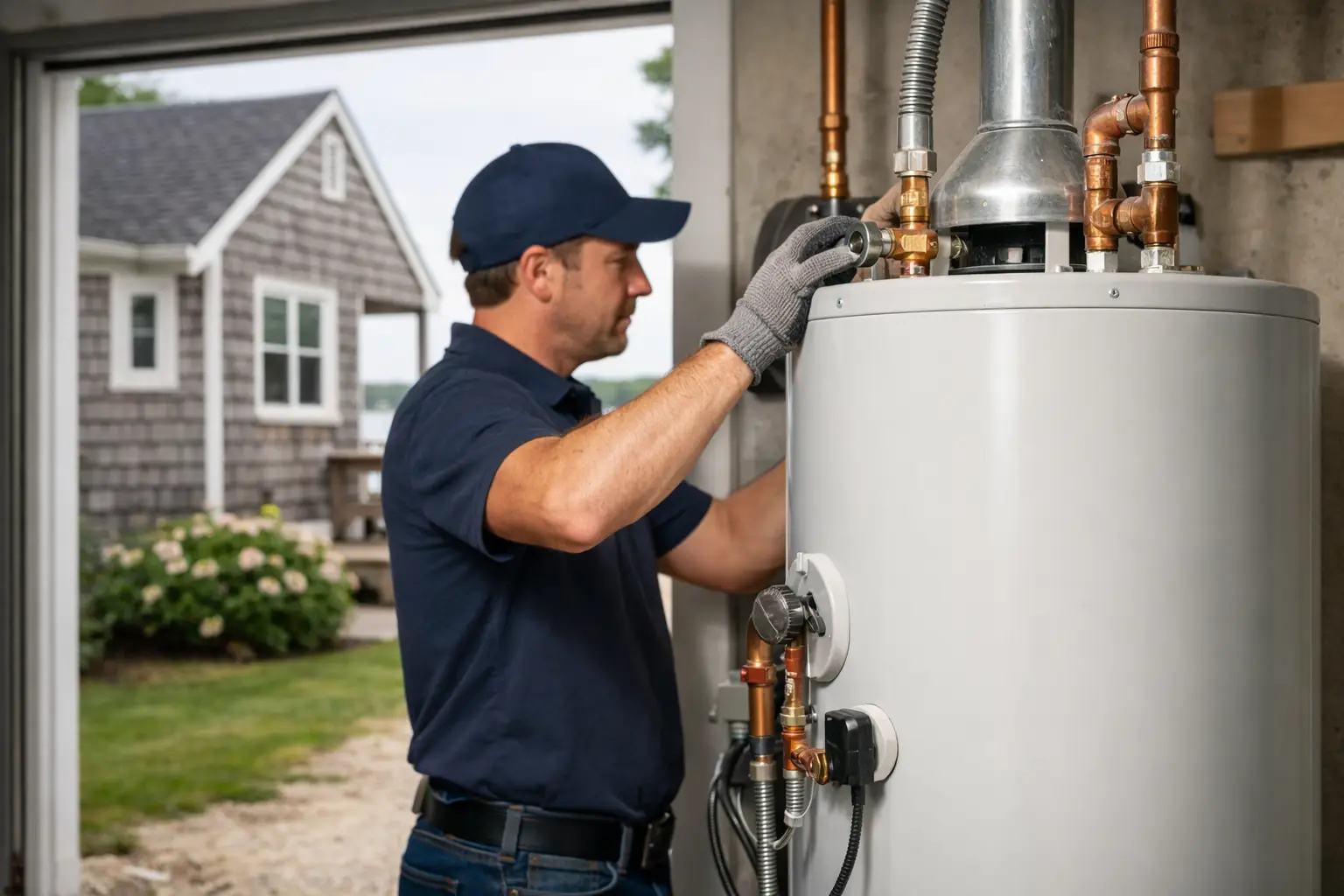
A water heater replacement is not just a matter of connecting pipes and turning on the power. Safe installation involves confirming the correct appliance size, securing required permits, following local code, and testing the completed system.
With a gas water heater, the installer must verify proper gas connections, combustion air, venting, and safe operation. With an electric or heat pump model, the electrical supply and disconnect requirements need to be addressed. The temperature and pressure relief valve, discharge piping, shutoff valves, drain connections, and expansion tank requirements also matter. These components are not extras. They protect the system, the property, and the people using it.
Professional installation also includes removing the old unit and checking the surrounding area for concerns that could affect the new system. Corroded piping, an outdated shutoff valve, inadequate drainage, or poor access are easier to address during replacement than after the new heater is already in place.
Licensed technicians can explain what work is necessary and what is optional, so there are no surprises about the scope of the installation. At Durfee Plumbing & Heating, fully stocked trucks and experienced technicians help keep replacement work moving when a household or business needs hot water restored quickly.
Planning for Cost, Timing, and Financing
The cost of water heater replacement depends on the equipment selected and the conditions at the property. A straightforward tank-for-tank replacement is usually less involved than converting to tankless, upgrading gas piping, modifying venting, or adding electrical capacity for a heat pump model.
It can be tempting to choose only on purchase price, especially when a water heater fails without warning. Still, it is worth comparing the total picture: installation cost, expected energy use, maintenance needs, warranty coverage, and how well the unit fits your actual demand. The lowest upfront option is not always the least expensive over time, and the highest-efficiency option is not always right for every building.
Financing can make a needed replacement or efficiency upgrade more manageable, particularly when the existing equipment has failed unexpectedly. Ask about available options, warranty coverage, and any current rebate opportunities before committing to a model.
Do Not Wait on an Active Leak
If water is actively leaking from the tank, turn off the water supply valve if it is safe to do so and contact a plumbing professional. If the leak is near electrical equipment, standing water is significant, or you smell gas, avoid the area and seek immediate assistance. Do not try to patch or ignore a leaking water heater tank.
A dependable hot-water system should fade into the background of daily life. If yours is showing its age, a timely inspection can give you clear choices before the next shower, tenant turnover, or busy workday becomes a cold-water problem.