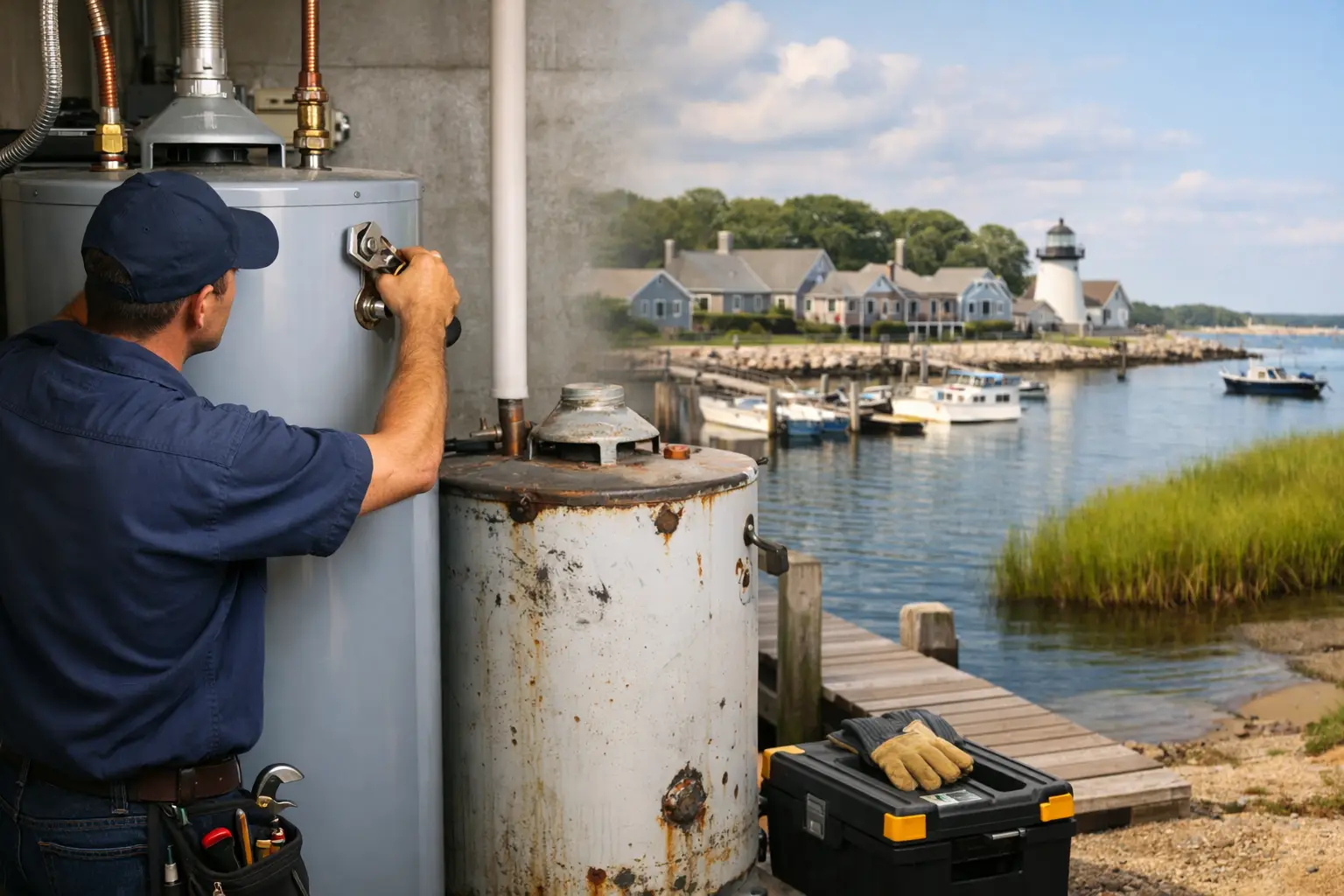
A water heater rarely fails at a convenient time. One day the shower runs cold, the next you notice rusty water, a damp spot near the tank, or a utility-room floor that should not be wet. If you are searching for water heater replacement west yamouth ma, the priority is getting clear answers quickly: whether the unit can be repaired, what replacement makes sense for your property, and how soon hot water can be restored.
For Cape Cod homeowners, property managers, and businesses, a replacement is more than a plumbing project. It is a decision about reliable daily comfort, energy costs, available space, fuel type, and the condition of the existing system. A licensed installer can assess the full setup and recommend a water heater that fits the building instead of simply replacing the old tank with the same size.
When Water Heater Replacement Makes More Sense Than Repair
Some water heater problems are repairable. A faulty thermostat, heating element, pressure-relief valve, thermocouple, or pilot assembly may be replaced without installing a new unit. If the tank itself is sound and the system is relatively young, repair can be the practical choice.
The calculation changes when a tank is leaking. Water escaping from the tank body usually means the internal lining has failed or corrosion has created a weak point. That is not a dependable repair situation. Shutting off the water supply and arranging replacement promptly can help limit damage to floors, walls, belongings, and nearby equipment.
Age matters, too. Many conventional tank water heaters last roughly 8 to 12 years, though water quality, maintenance history, installation conditions, and usage can shorten or extend that range. Repeated repairs on an older unit can become costly, especially when efficiency has declined and the risk of a tank failure is increasing.
Other signs that deserve a professional evaluation include discolored hot water, rumbling or popping sounds, inconsistent temperatures, weak hot-water recovery, and moisture around the base of the unit. Sediment buildup is common in tank water heaters and may be manageable in some cases. But if a unit is no longer meeting household demand or is showing several age-related issues at once, replacement is often the better long-term move.
Choosing a Water Heater for a West Yarmouth Property
The right water heater depends on the property, not just the number of bathrooms. A household with two people may need a very different setup than a seasonal rental, a multigenerational home, a restaurant, or a commercial building with high daily demand.
Conventional Tank Water Heaters
A storage-tank water heater remains a reliable option for many homes. It stores a set amount of heated water, typically 40 to 80 gallons in residential applications, and replenishes hot water after it is used. Tank systems can be a straightforward replacement choice when the existing plumbing, venting, and fuel source are already compatible.
Sizing is critical. A tank that is too small can leave the last person in the morning shower without enough hot water. An oversized unit may cost more to purchase and maintain than necessary. A technician should consider the number of occupants, fixture use, peak demand, and the appliance's first-hour rating rather than relying on tank capacity alone.
Tankless Water Heaters
Tankless water heaters heat water on demand instead of storing it in a tank. They can offer a compact footprint and an extended service life when properly installed and maintained. They are especially appealing where space is limited or where a household wants a continuous supply of hot water for back-to-back use.
There are trade-offs. Tankless systems must be sized for the number of fixtures likely to run at the same time, as well as the temperature of incoming water. A unit that is undersized may struggle when showers, a dishwasher, and laundry are operating together. Gas tankless installation may also require changes to gas piping, venting, electrical service, or condensate drainage.
Heat Pump Water Heaters
Heat pump water heaters move heat from the surrounding air into the water rather than generating all of the heat directly. They can significantly reduce water-heating energy use and may qualify for available efficiency incentives, including programs associated with Mass Save.
These systems work best in locations with adequate air volume and suitable temperatures, such as a basement, utility room, or garage. Because they cool and dehumidify the surrounding area, placement matters. A professional assessment can confirm whether the space, electrical capacity, drainage, and household usage make a heat pump water heater a good fit.
What a Professional Replacement Should Include
A proper installation starts before the new unit arrives. The installer should verify the water heater size, fuel type, location, venting requirements, electrical needs, shutoff valves, drain connections, and code considerations. This step helps prevent surprises that can delay the project or affect system performance.
During replacement, the old water heater is disconnected and removed, and the new equipment is installed with the appropriate safety components. Depending on the system, this can include a temperature and pressure relief valve, expansion tank, drain pan, venting materials, gas connections, condensate piping, and electrical connections. The system should then be filled, tested, and checked for safe operation.
Permitting and code compliance can be particularly important when a project includes gas work, vent modifications, or electrical upgrades. Licensed technicians understand how these details affect safety, equipment warranties, and future service. Cutting corners on installation may save time at first, but it can create expensive problems later.
Plan for Replacement Before the Tank Fails
A water heater can sometimes be replaced on an emergency basis, but planning ahead gives you more options. If your unit is approaching the end of its expected life, take a look at the label for its manufacture date and watch for declining performance. You can schedule an evaluation while you still have hot water, compare equipment choices without pressure, and consider financing if a higher-efficiency upgrade is the right fit.
For landlords and property managers, proactive replacement can prevent a disruption that affects tenants, turnovers, or business operations. For homeowners, it can prevent a weekend leak from turning into a larger restoration project. A simple inspection can clarify whether there is time to plan or whether replacement should be scheduled immediately.
Questions to Ask Before Approving the Work
Before selecting a replacement, ask what size and type of unit is recommended and why. Ask whether the existing gas line, venting, electrical service, and drainage support that choice. It is also reasonable to ask about expected maintenance, warranty coverage, estimated operating costs, and whether local efficiency rebates may apply.
The lowest equipment price is not always the lowest overall cost. A less expensive unit that does not meet demand, uses more energy, or requires frequent service can become frustrating fast. On the other hand, a premium system is not automatically the best answer if the property does not need its capacity or features. The right recommendation is based on the building and how hot water is actually used.
Get Reliable Help When Hot Water Cannot Wait
A leaking tank, no-hot-water call, or failed commercial water heater needs a quick, organized response. Durfee Plumbing & Heating LLC provides licensed plumbing support across Cape Cod, with fully stocked trucks and 24/7 availability for urgent situations. Whether the job calls for a standard tank, tankless unit, or heat pump water heater, professional installation helps protect the property and gives the new system the start it needs.
If your water heater is showing its age, do not wait for a small warning sign to become a flooded utility room. A timely evaluation can help you choose a dependable replacement, plan the work around your schedule, and restore the hot water your home or business relies on every day.